Microglossum atropurpureum
This species is an interesting conundrum. Molecularly, there appear to be two different clades of this species but, to date, micro- or macroscopic differences between the two clades have not been found. So it may be split but in the meantime, any finds of this should be carefully collected, dried and retained. Found twice this year, once on Agnew’s Hill in Antrim and once on Scawt Hill (by Matthew Flood) also in Antrim. It is easily recognised under the microscope by having hyaline spores that are not septate unlike the Geoglossums and having a longer spore length than M. olivaceum agg.
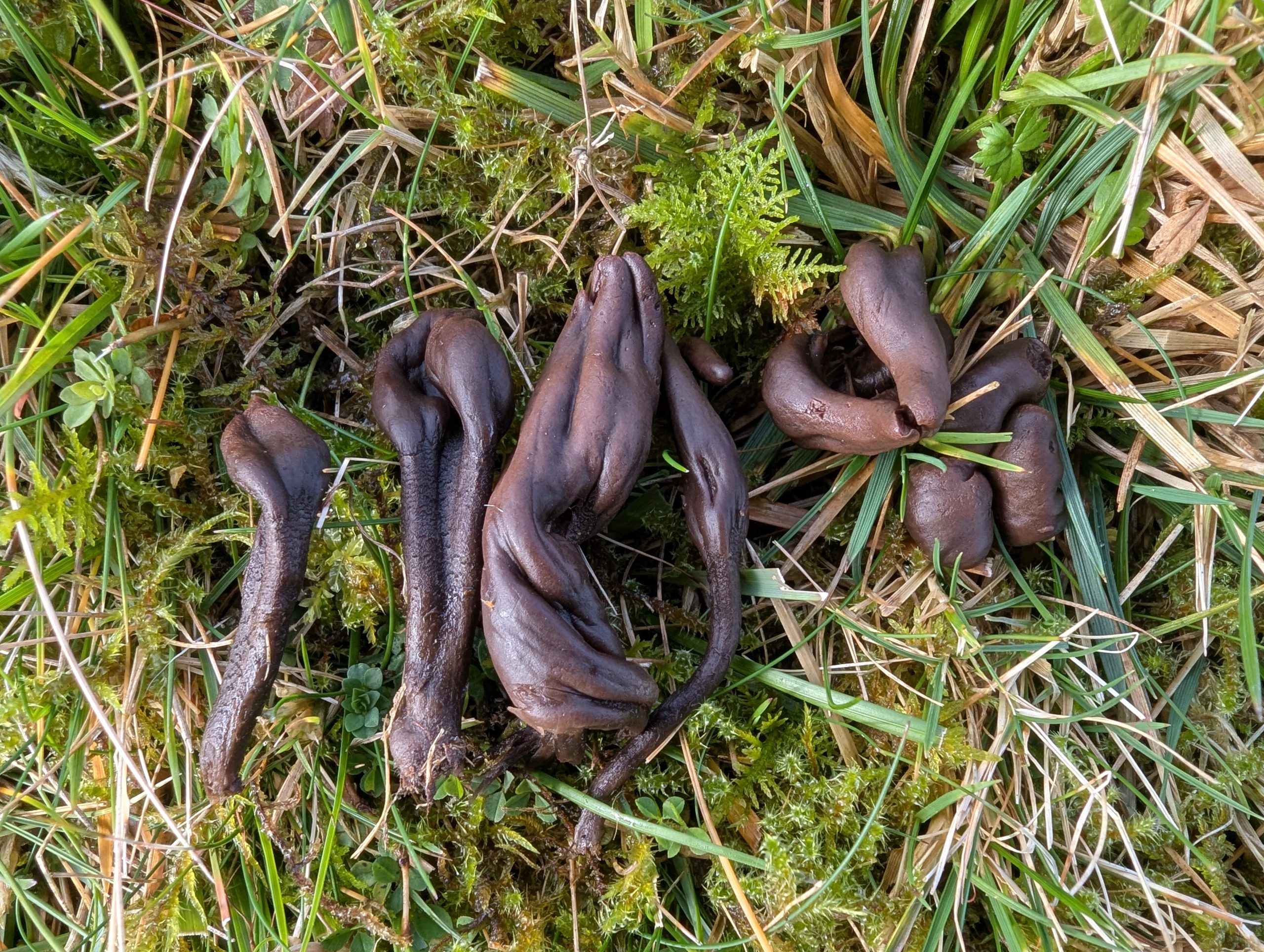
M.atropurpureum Agnew’s Hill
Microglossum olivaceum agg.
The Olive Earth Tongue, Microglossum olivaceum was long recognised as having lots of colour variants and it is now realised that these are usually different species. It takes a brave person to identify them without sequencing as there remain undescribed species in the group and so the keys are either incomplete or actually unreliable. One of the key features in the existing keys is spore length with species like M. pratense and M.tenebrosum have short spores. We often find short spored species that key to M. tenebrosum but that the sequences say they are M. truncatum or M. nudipes aff. (if comparing against the type sequences). This confusion can be because the published sequences are mislabelled maybe due to the species concepts being incorrect so we can only identify as best as we can at the moment and hope that future taxonomic work will help untangle the problem. The following are the species identified by sequencing this year:
Microglossum ‘brown clade’: One of the undescribed species. Found at the Curragh by Jolanda Smit
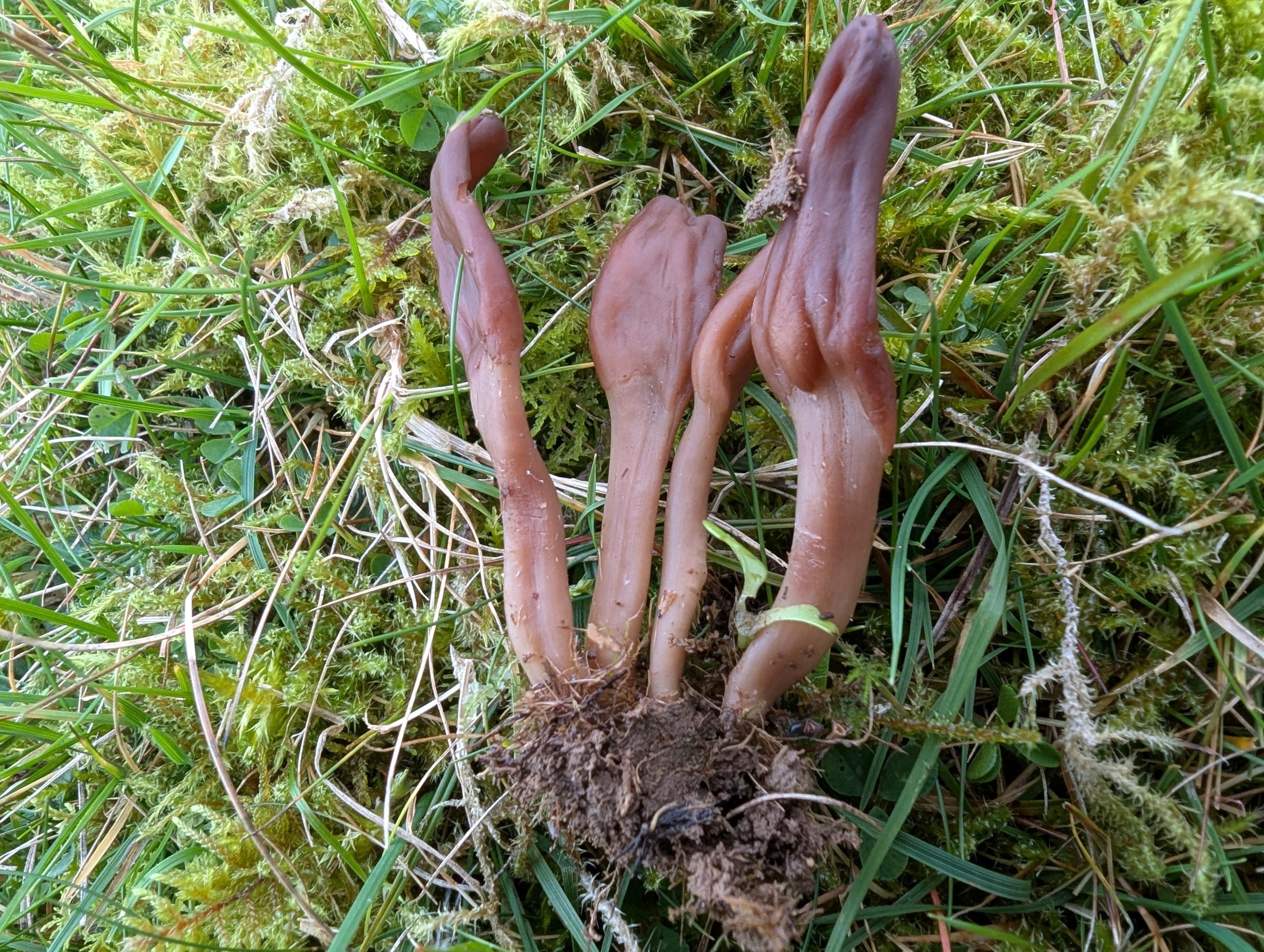
This is very difficult to tell apart from M. rufescens which is also totally brown
Microglossum nudipes aff.: There are two distinct clades of “nudipes aff.” which is another of the undescribed species. It is possible that one clade may be confirmed as the actual nudipes and the other as the actual M. olivaceum as it is still unclear what this actually is and if we have it in the British Isles. We have both clades in Ireland but this year’s finds were one of the clades whatever that may be. Found at Cushleake Mountain by Jolanda Smit, at Linford Barrows (twice) by Kathryn Keys and Matthew Flood and also at the Curragh by Jolanda Smit.
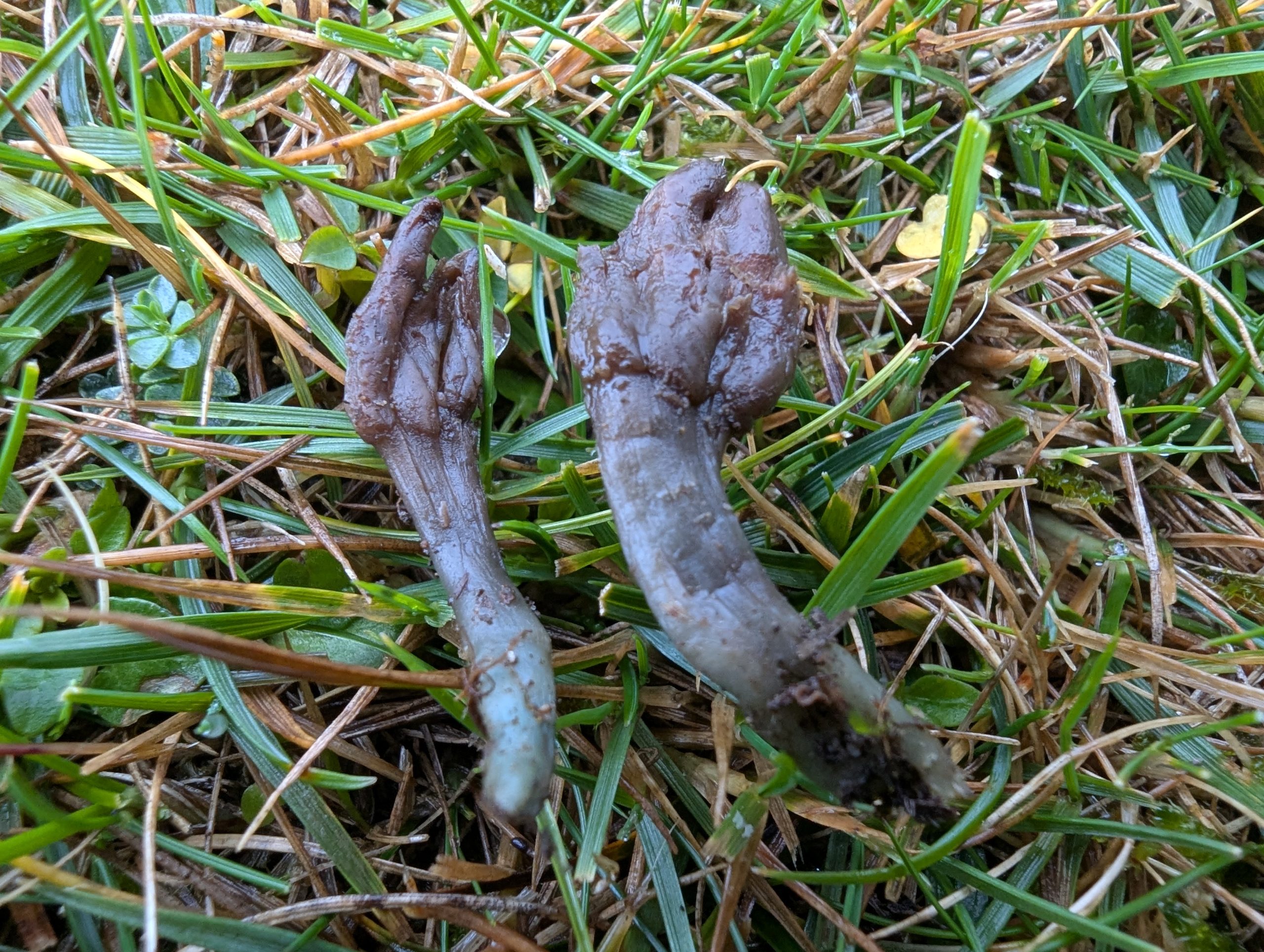
M. nudipes aff. – Cushleake Mountain
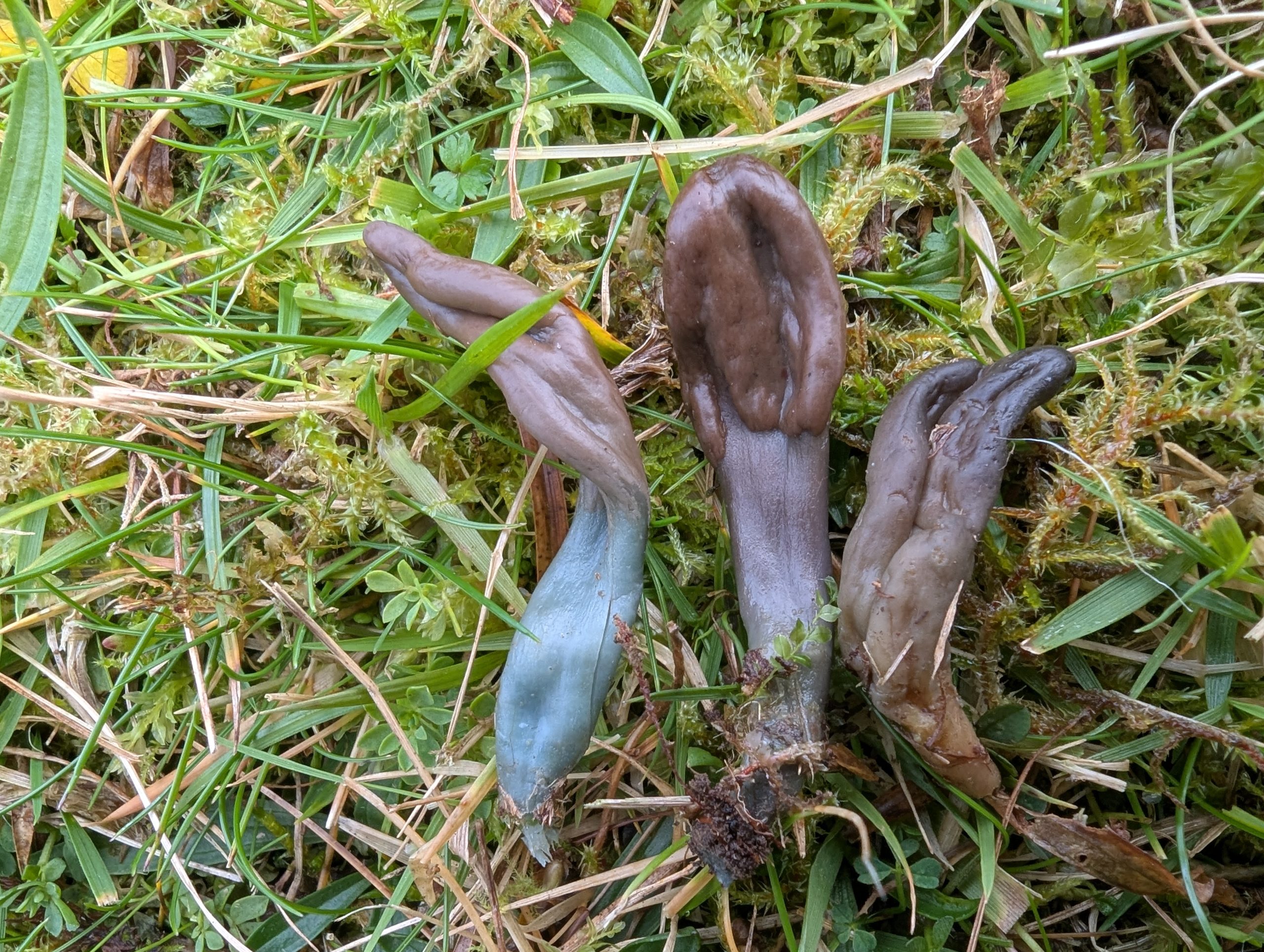
M. nudipes aff. – Linford Barrows Earth Rings
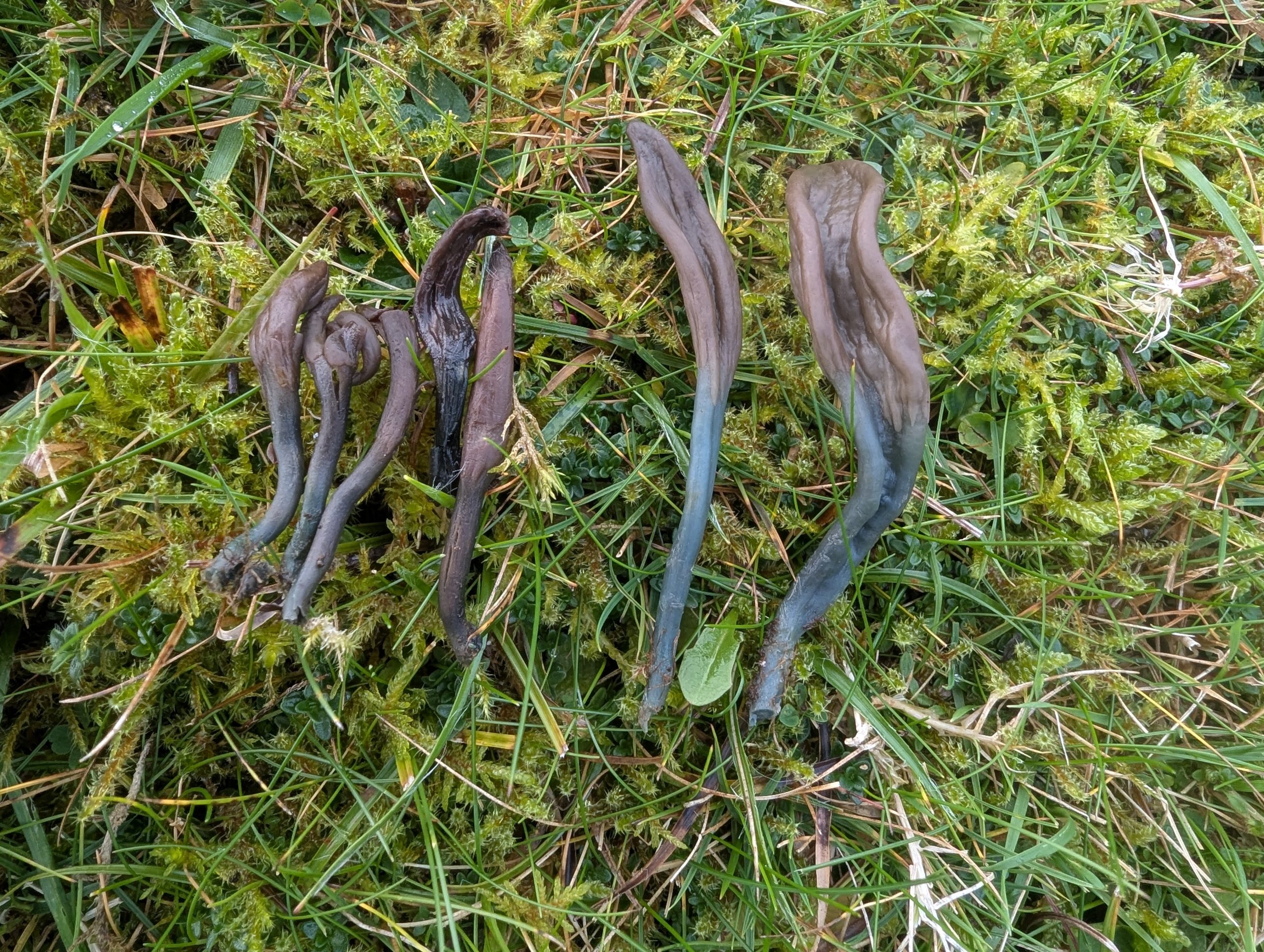
M. nudipes aff. – The Curragh
Microglossum pratense: This one may be clearer to identify in the field having both the “cap” and the stipe coloured green. Found at Christ Church, Ballynure in Antrim and the Curragh (found by Tomas Milan).
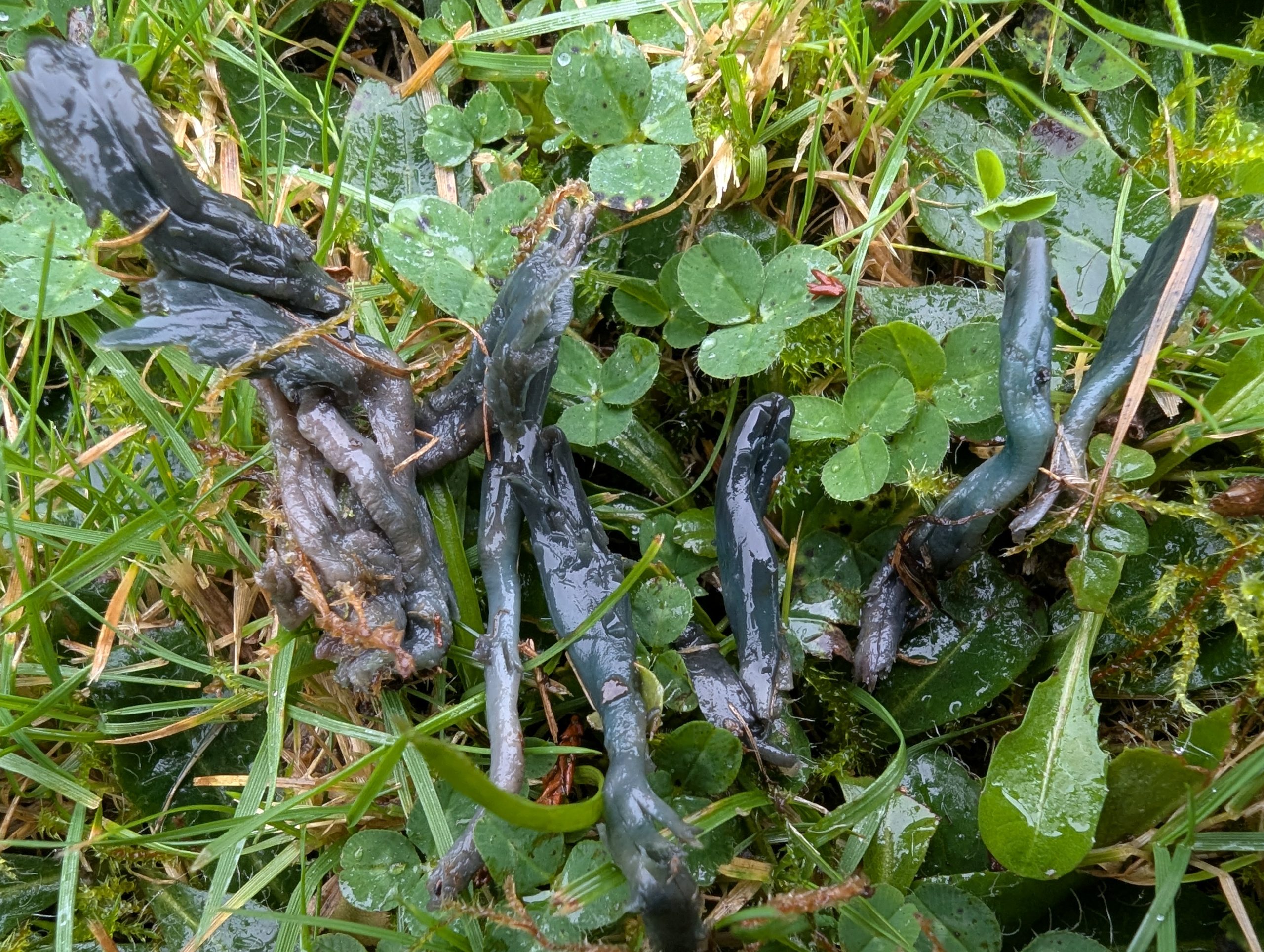
A rather rain sodden M. pratense, Ballynure Christ Church
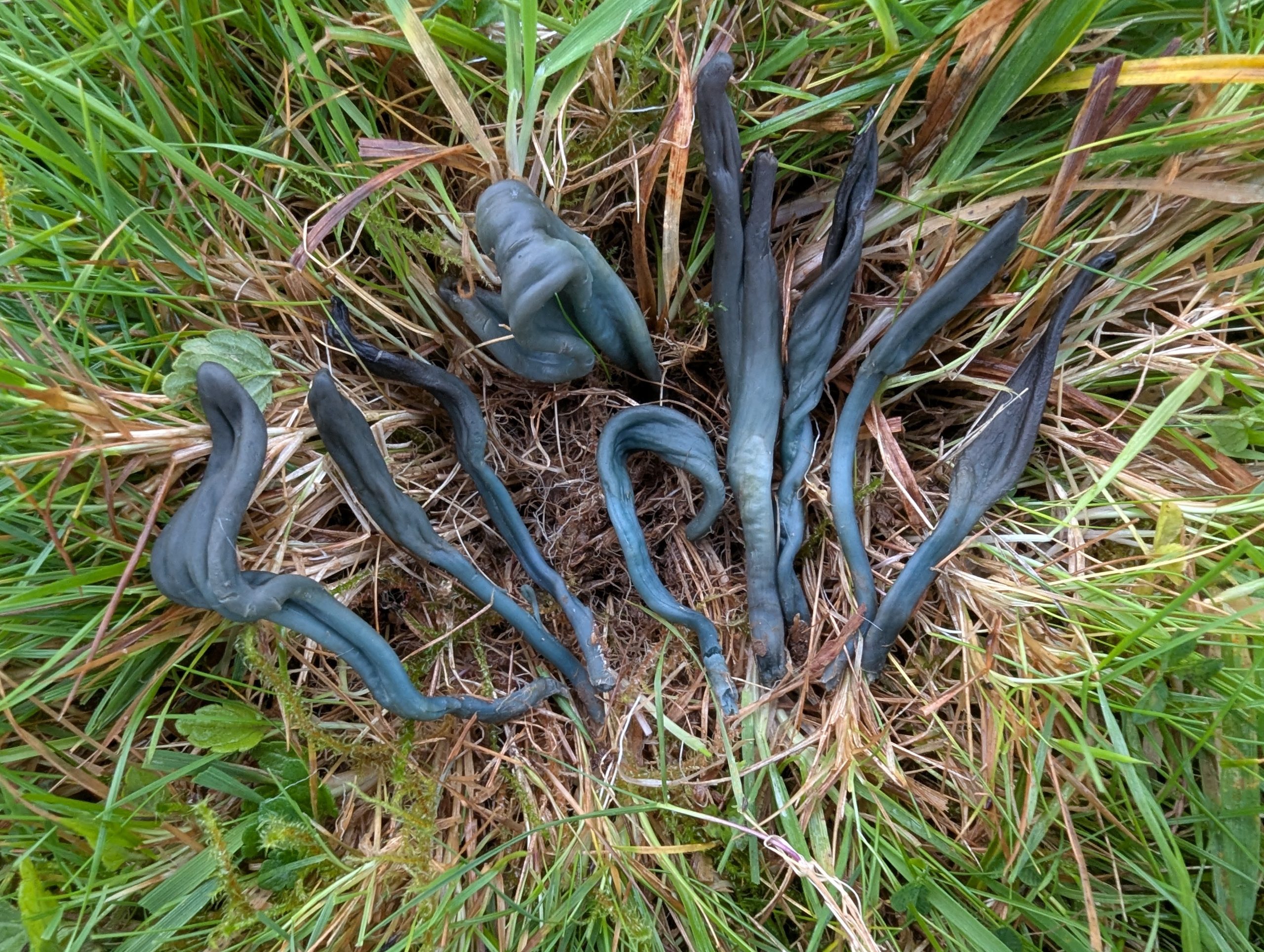
M. pratense, The Curragh. Found by Tomas Milan
Microglossum rufescens: One of the pure brown species, this was found at Runkerry at the Giant’s Causeway by Simeon Cathcart and Agnew’s Hill by myself.
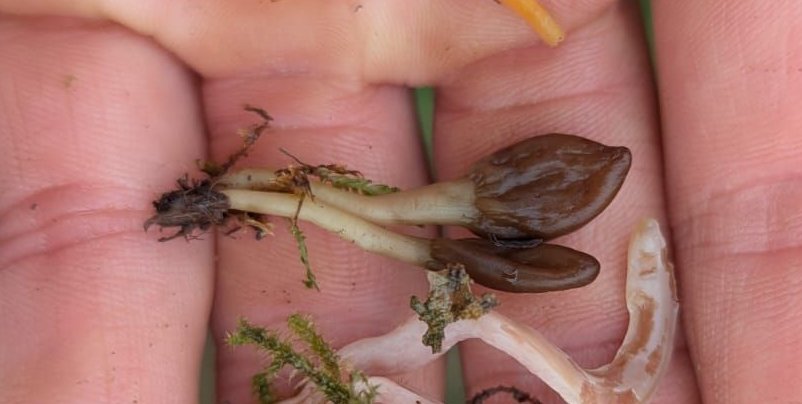
M. rufescens, Runkerry Point (Simeon Cathcart)
Microglossum truncatum: This one seems to be one of our most common species in the complex. A number of the finds seem to have large distorted heads to the club but I’m not sure if this is diagnostic.
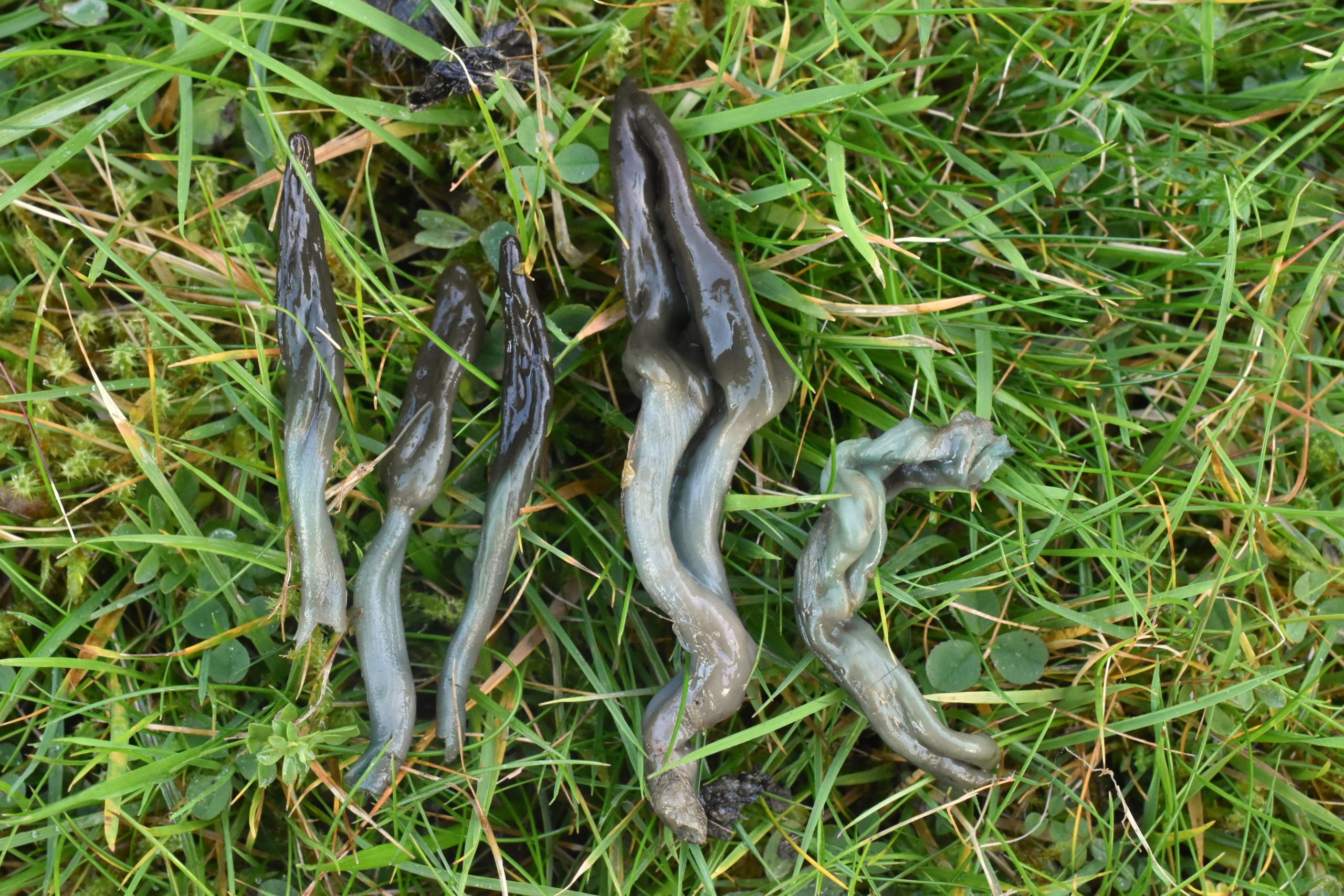
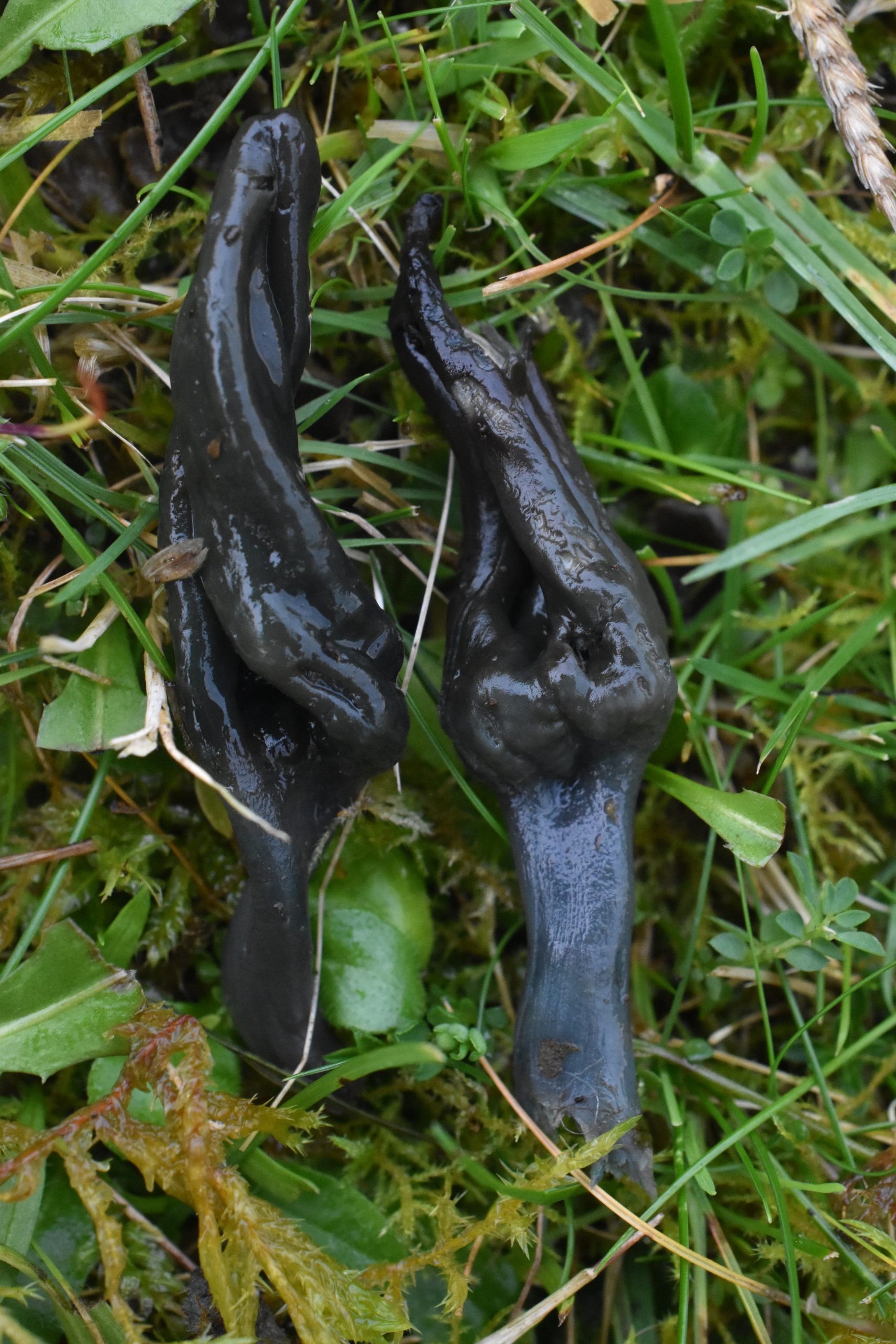
M. truncatum