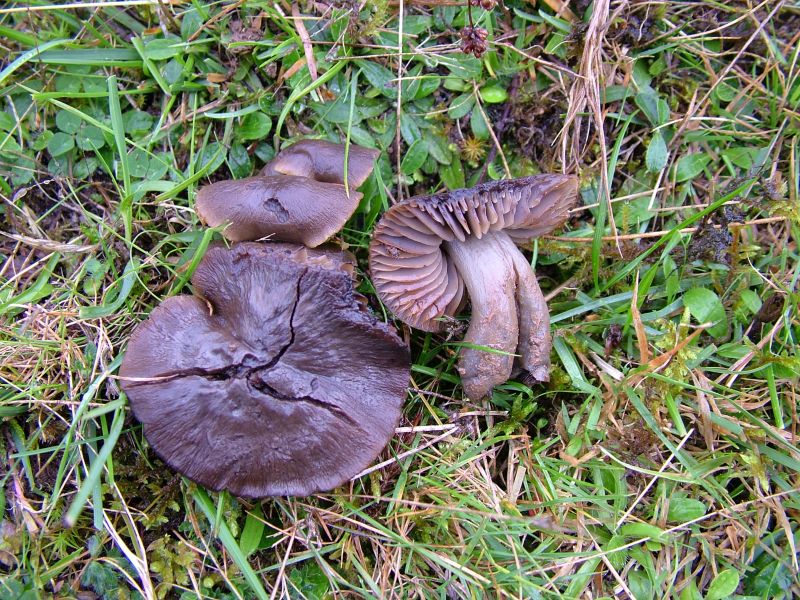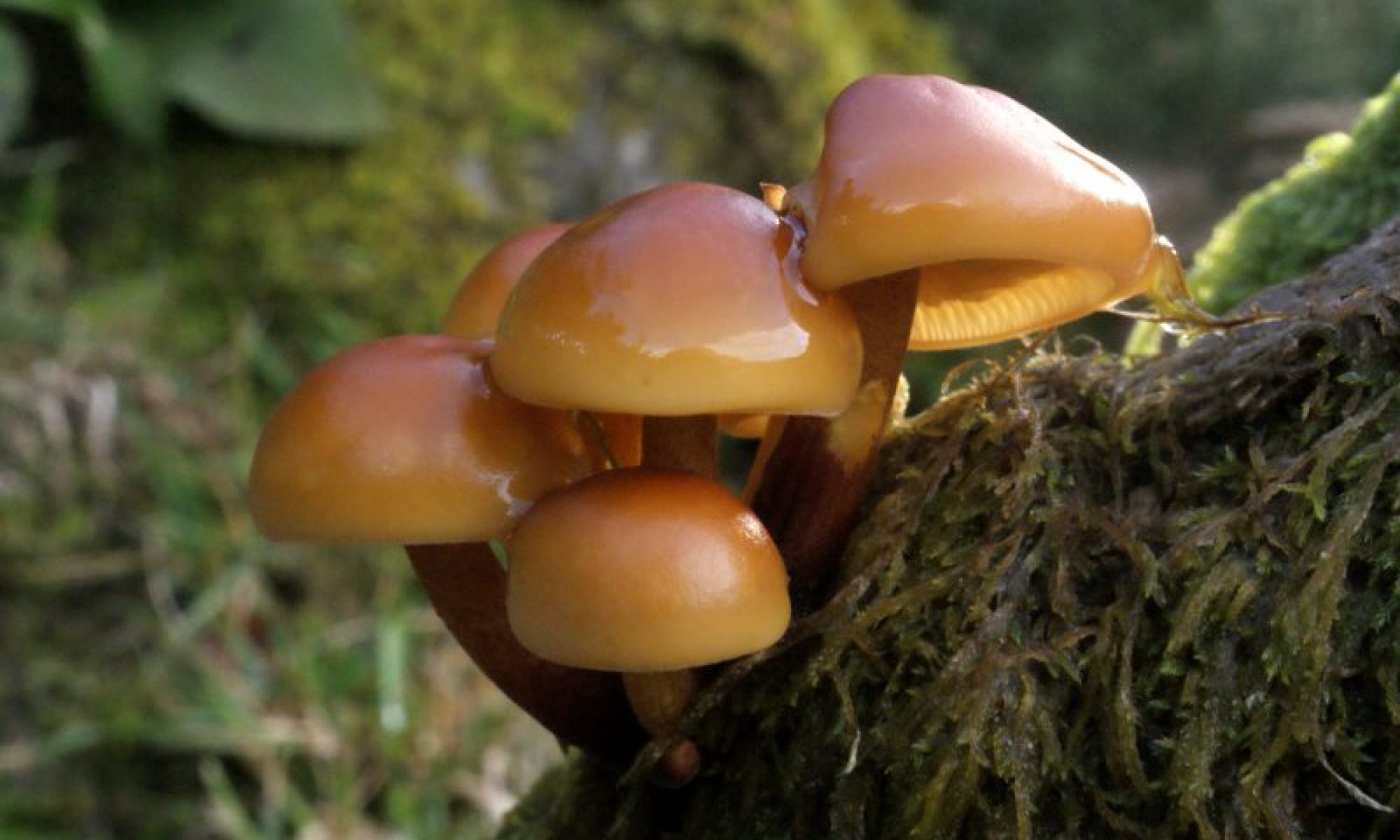
Cuphophyllus atlanticus – Leaden or Felted Waxcap
No Irish records and very rare in GB. A dry capped grey non-hygrophanus species with grey decurrent gills, this often has felty patches on the cap. It used to be called Cuphophyllus canescens but the European species was found to be different and was called C. atlanticus. However, we may have found the American species at Fair Head. This is an ongoing story – see below. For photos see iNaturalist
Cuphophyllus flavipes / flavipesoides or Yellow Foot Waxcap
The Yellow foot waxcap is easy enough to identify with its very obvious yellow base to the stipe. However, there has been another species described in Norway which is very similar also with a yellow foot. It only differs from flavipes by its spores. The spores of flavipes have a Q value (length/width) averaging between 1.2 and 1.27 hence are subglobose whilst flavipesoides spores have a Q value between 1.34 and 1.39 hence are more ellipsoid. The molecular differences are also not large. If your spore measurements suggest flavipesioides, this must be sequenced. There are no British fruiting body records yet although it has been found in soil eDNA surveys.
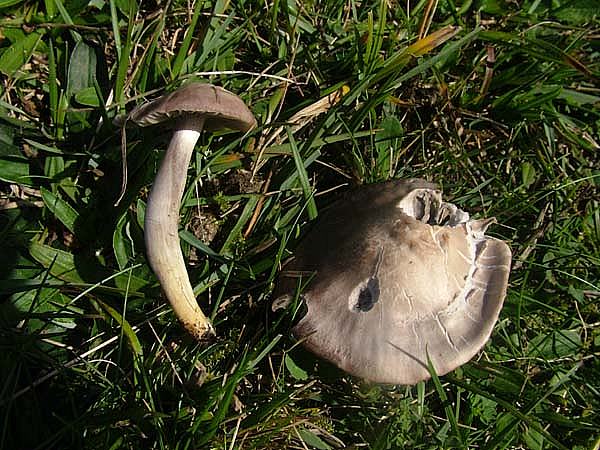
Cuphophyllus flavipes
Cuphophyllus lacmus or Grey Waxcap or Cuphophyllus canescens
Cuphophyllus lacmus is a very rare species in Northern Ireland with records only at Slievenacloy, Windy Gap on Divis, Cave Hill, Bangor (Smelt Mill Bay), Roonivoolin on Rathlin and Windy Hill above Binevenagh. It has no yellow foot and has a rancid taste and unpleasant smell.
There may be however other cryptic species in this area. There is bit of a question mark if a species called Cuphophyllus subviolaceus is different to lacmus or not. In David Boertmann’s books and Species Fungorum, they are synonyms but in a paper on new North American Cuphophyllus species, they were separated (and are on iNaturalist). A UK sequence was labelled as C. subviolaceus in their paper. So any specimens are gratefully received for sequencing.
The second photo below shows a similar species that when sequenced comes out near to the American Cuphophyllus canescens. I have been trying for some time to get a second sequence in the other direction to confirm what would be a first European find but have not had success yet.
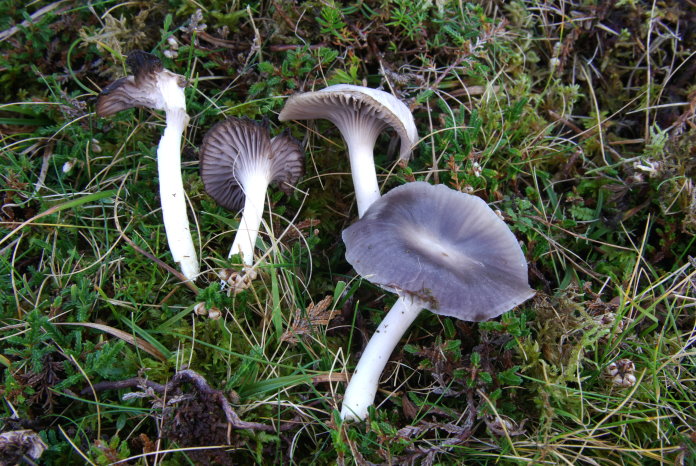
Cuphophyllus lacmus. Photo by Mark Wright
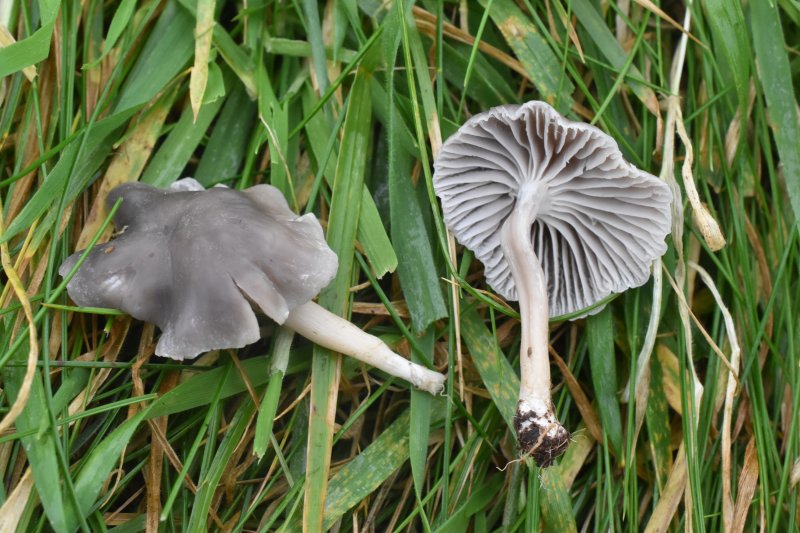
Cuphophyllus cf canescens from Fair Head
Cuphophyllus lepidopus or Scalyfoot Waxcap
This is very rare in GB and has no Irish records. However, it is very distinctive with a very scaly stipe. It looks like Cuphophyllus fornicatus.Â
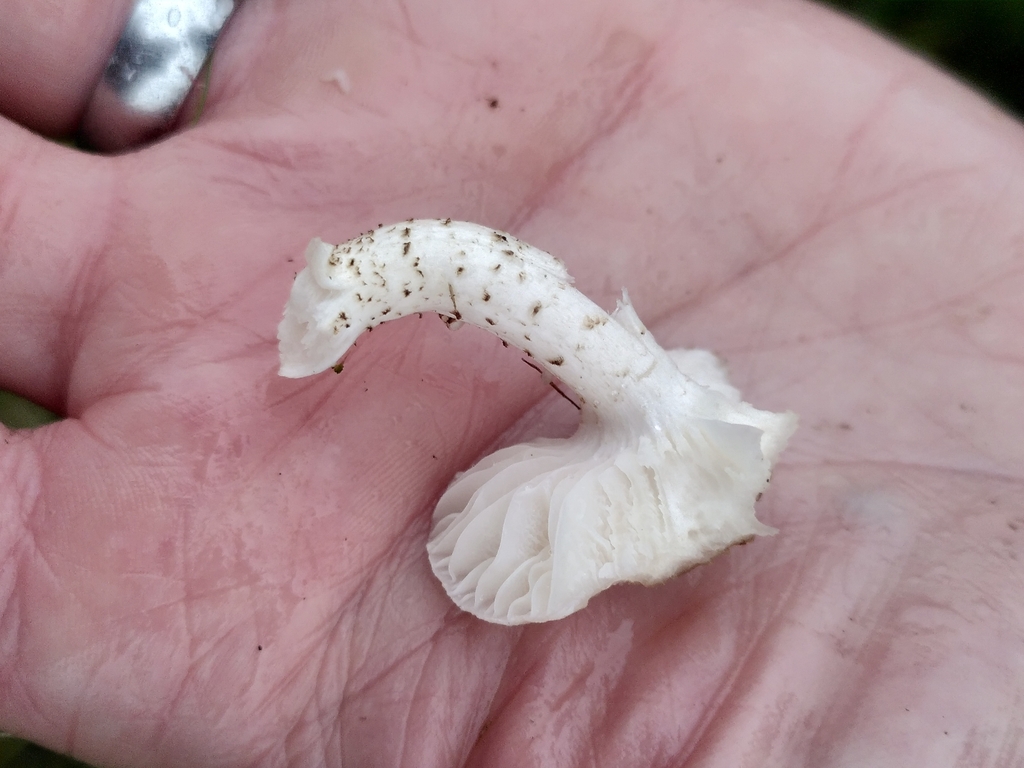
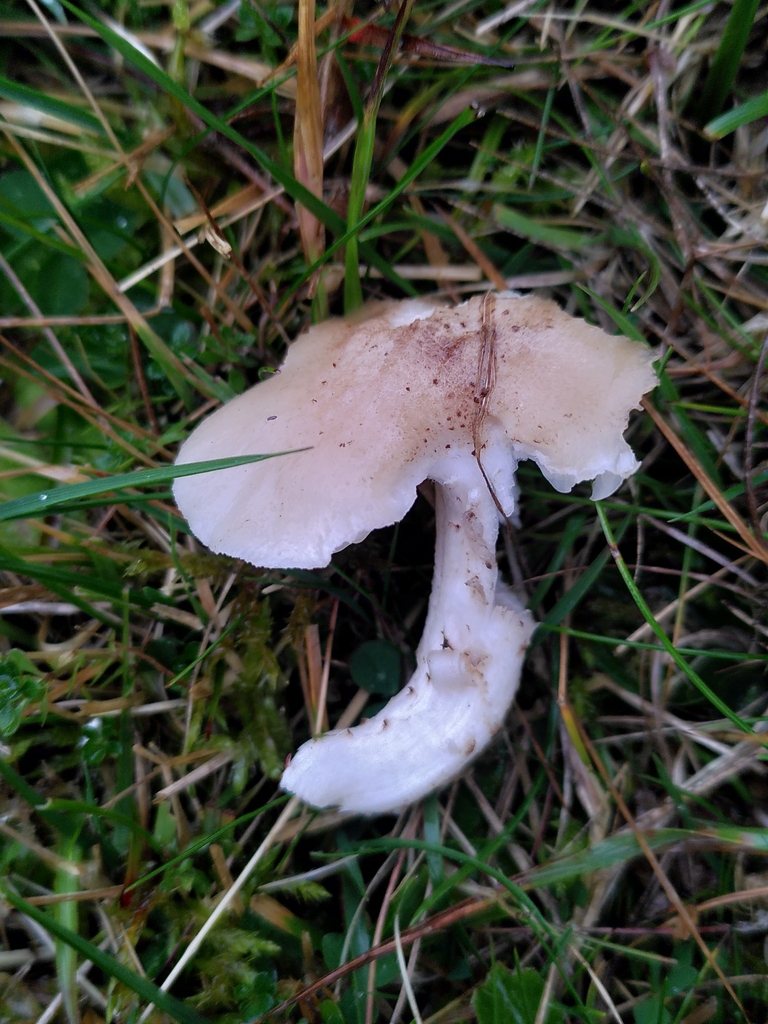
Cuphophyllus lepidopus – both photos by Matthew Jones
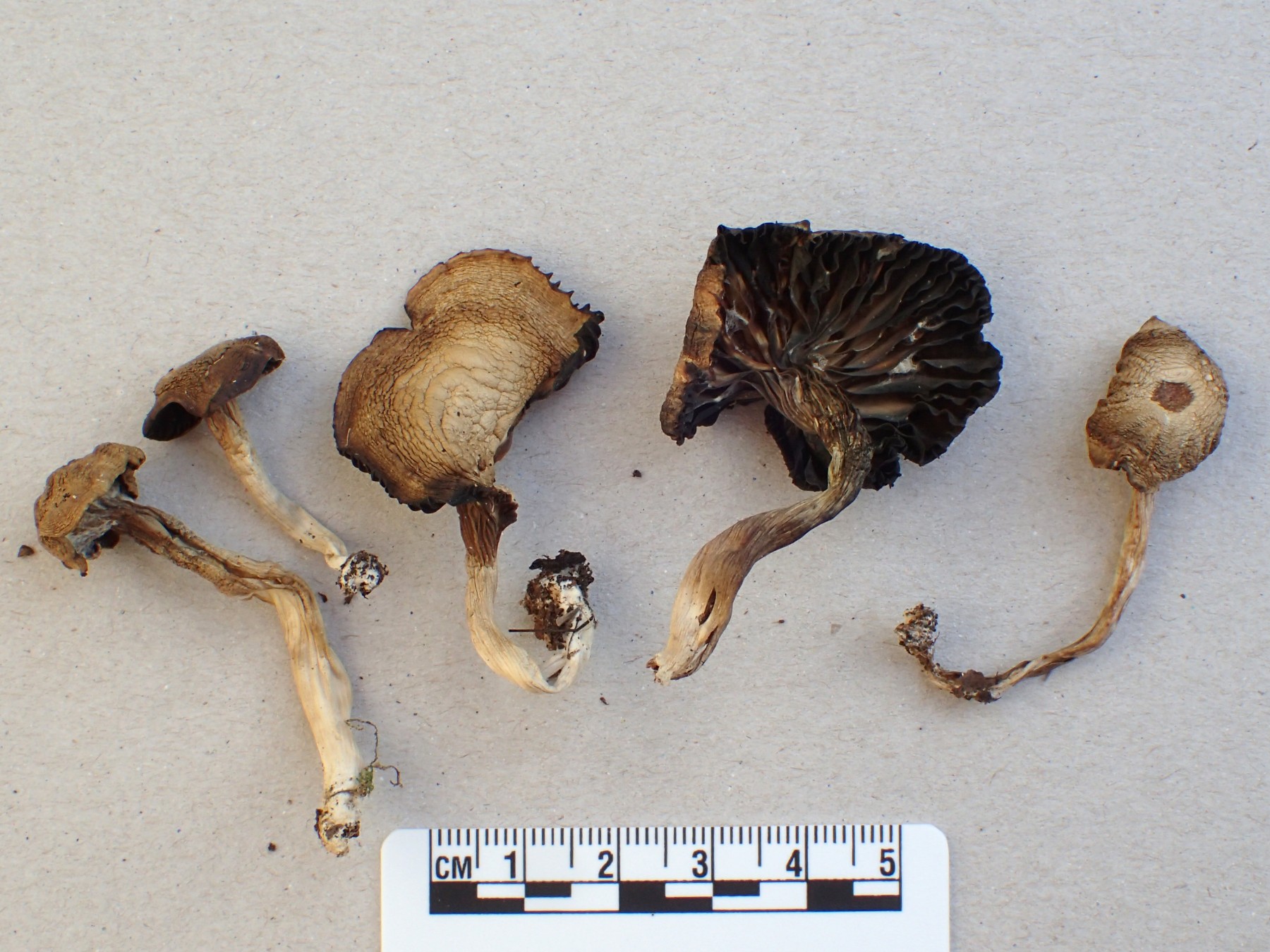
Cuphophyllus monteverde
Originally described in the Canary Islands and only recorded from Wales in the UK as far as I am aware, this is very similar to Cuphophyllus pratensis var. pallida but has larger spores (6-9 x 3.5-5µm compared to 5.5-6.5 x 4-4.5µm for C. pratensis var pallida) and a tendency for the gills to blacken when drying. It is different to the Snowy Waxcap as the cap is not greasy or translucent or striate.
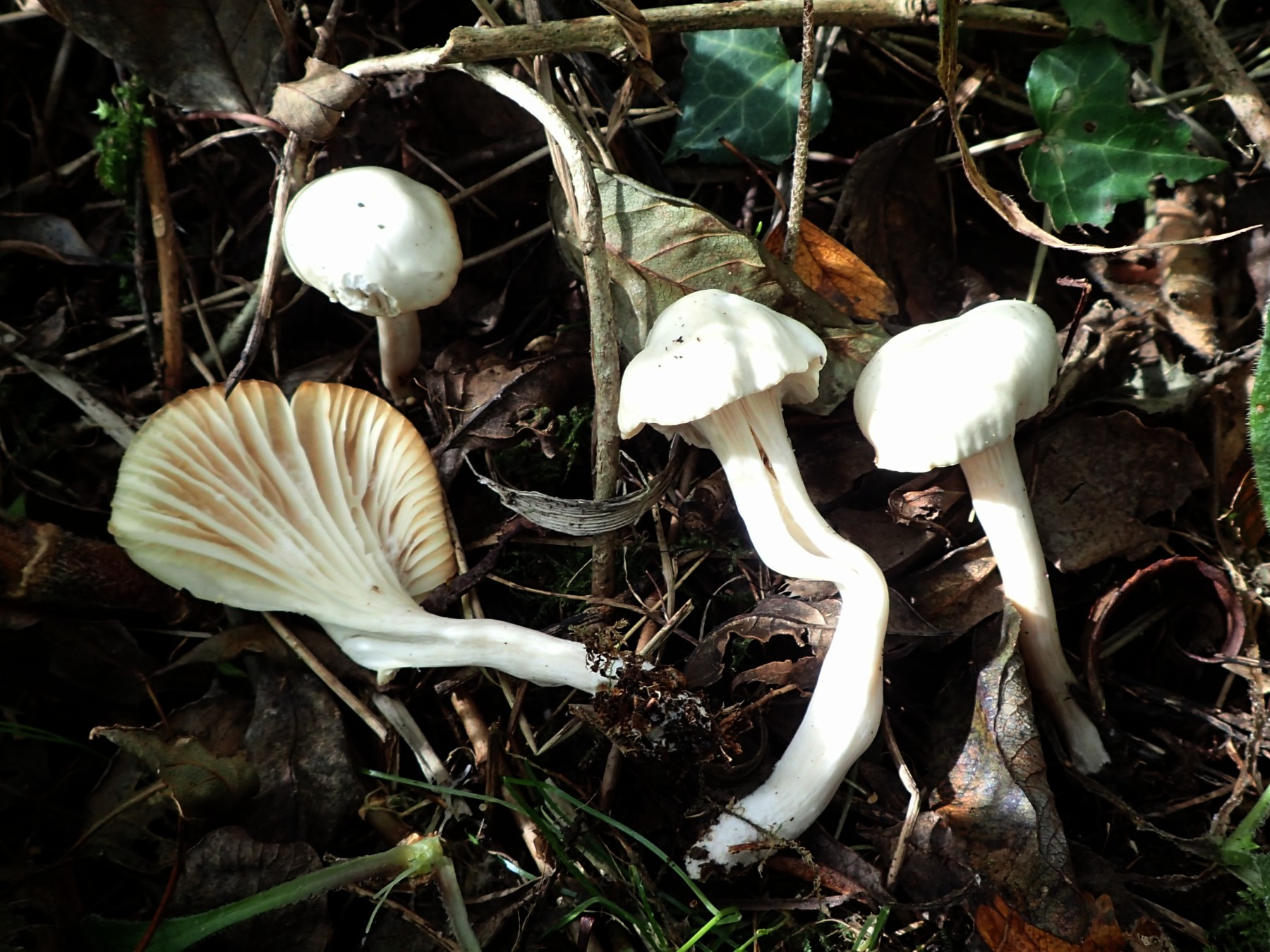
Cuphophyllus radiatus or Slender Waxcap
No Irish records and only scattered GB records. It is a very slender species with a purplish cap when young that fades leaving dark striations. The stipe is silvery grey.
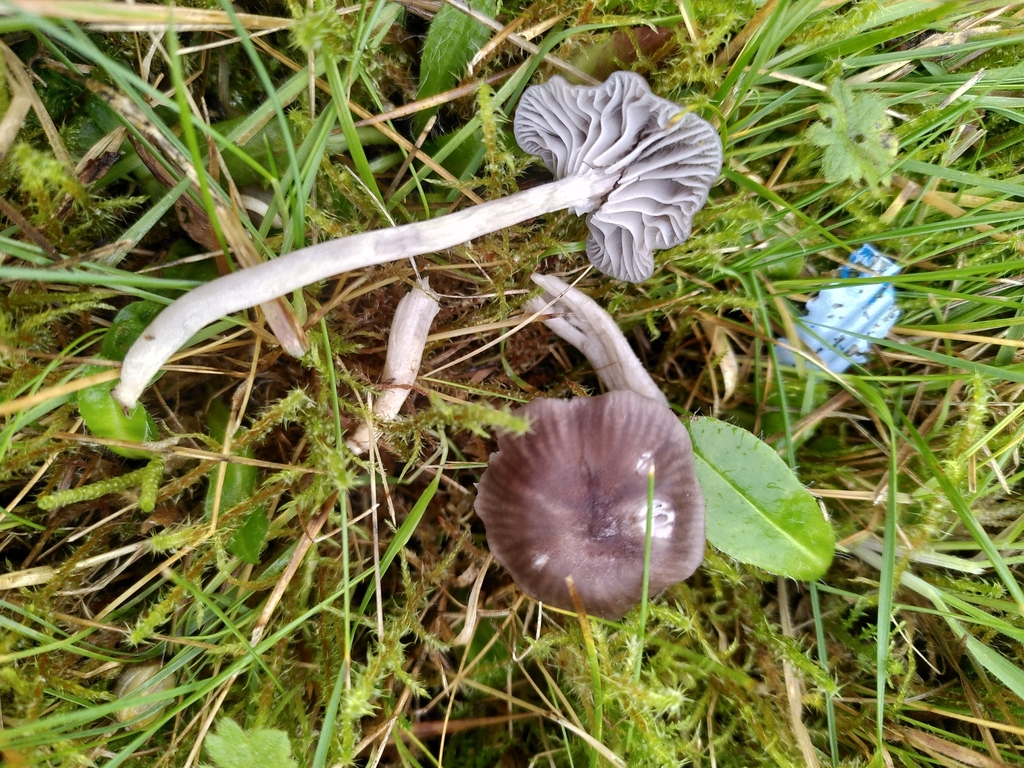
Cuphophyllus radiatus Photo by Matthew Jones
Gliophorus europerplexus / Gliophorus aff. perplexus
These are two new species split from the Parrot waxcap and used to be called Hygrocybe psittacina var. perplexa. However, as there are (at least) two species in what was called perplexa, we do not know what the older records were of. They are close together and are both very slimy capped. Gliophorus aff. perplexus is known as G. sciophanus on iNaturalist and Peachy Steve’s app but the Kew paper did present a long arguement why this is an invalid name. G. europerplexus or the Butterscotch waxcap has a apricot brown cap while G. aff. perplexus has a more toffee apple colour. We have two confirmed records of G. europerplexus from Knockdhu and Galboly and one of G. aff. perplexus from Rathlin.
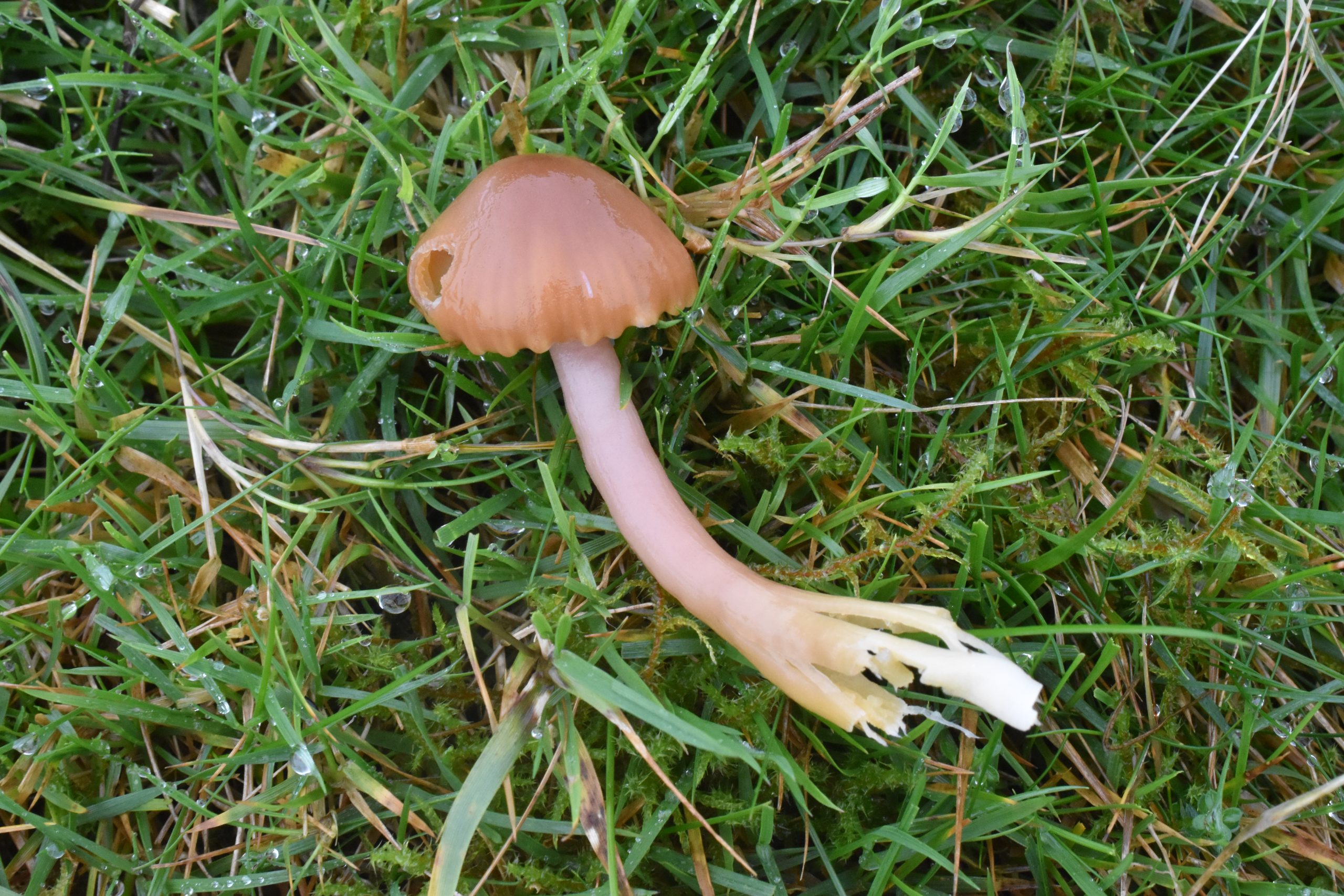
Gliophorus europerplexus from Knockdhu
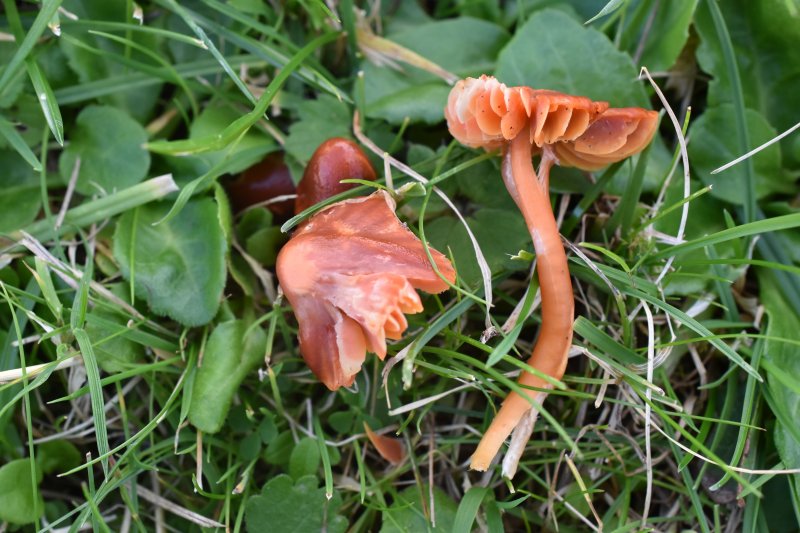
Gliophorus aff. perplexus from Rathlin
Gliophorus reginae or the Jubilee Waxcap
Like a slimy pink waxcap with a less pointed cap, it is very surprising that it took so long to be “discovered” as a good species. Only found at Slievenacloy, Divis and Rowallane in Northern Ireland so very rare but it should be easily recognisable.
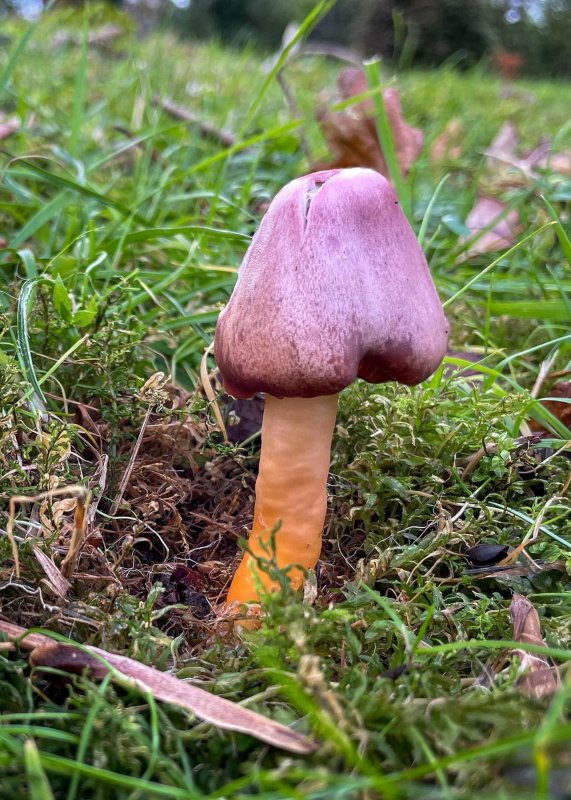
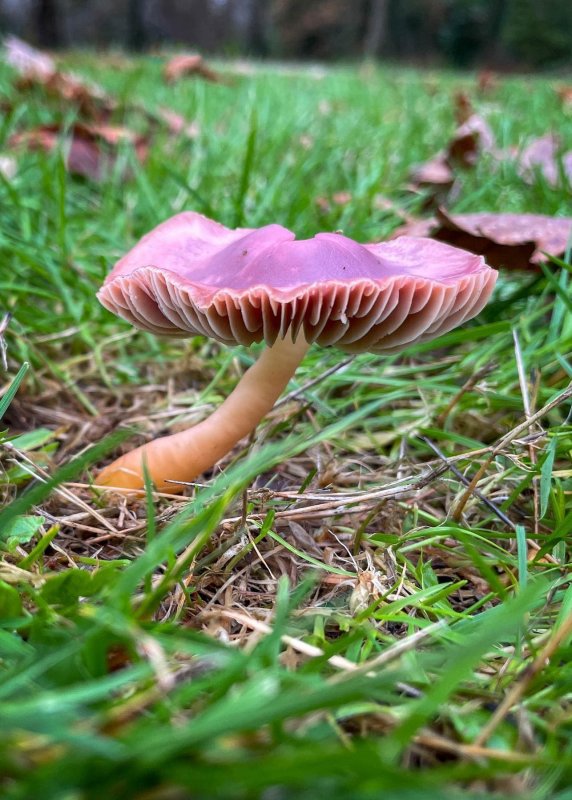
Gliophorus reginae. Photo by Tomas Milan from the Curragh
Hygrocybe acutoconica var. konradii
Hygrocybe acutoconica var. acutoconica or the Persistent Waxcap is a relatively common species but is now thought to be a species complex. Another variety, var. konradii was described in Boertmann’s book and this was one of only two varieties to be included in the 2018 JNCC scoring system for grassland fungi. There is a possibility that it will be raised to species level. As it can only really be determined by measuring its spores, we are maybe guilty of overlooking this one. There are no records for Northern Ireland but one from the Curragh and one from Clare Island. The spores of var. konradii have a Q value of 1.0-1.7 with an average of 1.2-1.5 while var. acutoconica has a Q value of 1.3-2.3 with an average of 1.8-2.0. Hence konradii has more broadly ellipsoid to subglobose spores. Finds with very white gills are also worth checking. Any possible finds of this need to be dried and preserved.
Hygrocybe constrictospora or the Hourglass Waxcap
Very rare in Ireland with only one record in Northern Ireland from Crom Castle lawn and three from the Republic. This is quite possibly overlooked. It has a dry cap unlike lookalikes like insipida or ceracea and slightly decurrent or adnate gills. More than 75% of the spores have a contricted waist hence the common name. Photos on iNaturalist.
Hygrocybe garajonayensis
This has recently been split from Hygrocybe insipida to which it is very similar. We are looking for specimens that are very greasy to slimy, crenulate at the cap edge, orange yellowish in colour, pale adnate to slightly decurrent gills with a stipe with red at the apex. So redder insipidas may be insipida s. str. but it is so unclear that I am going to sequence a range of forms to try and get a handle on this. There is a record from the Curragh confirmed by sequencing and the photos below are of this. It must be noted that the characters below may not be categoric as the paper did not examine insipida itself to work out what it now involves if the garajonayensis form is “removed” from the wider concept of insipida.
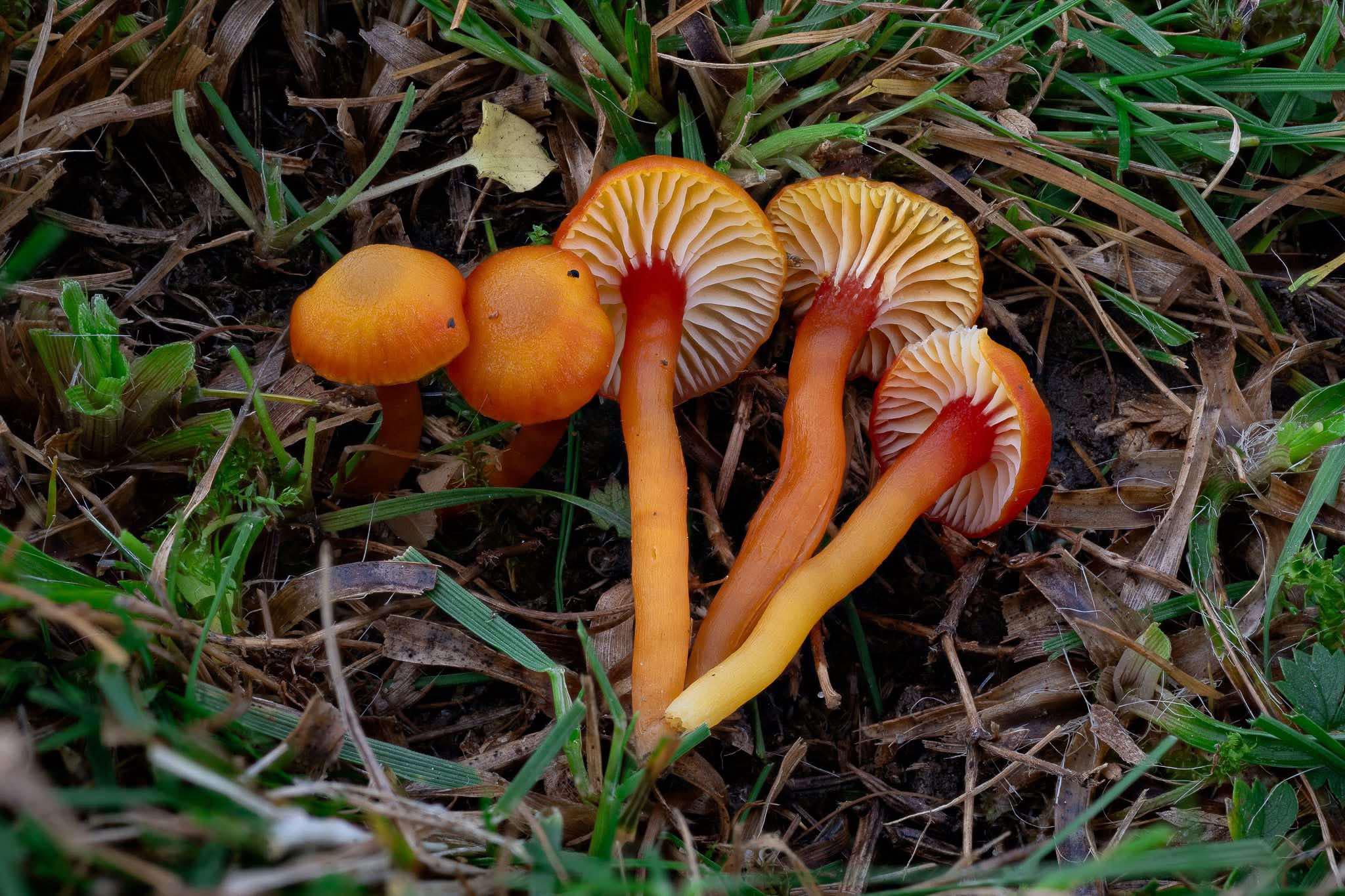
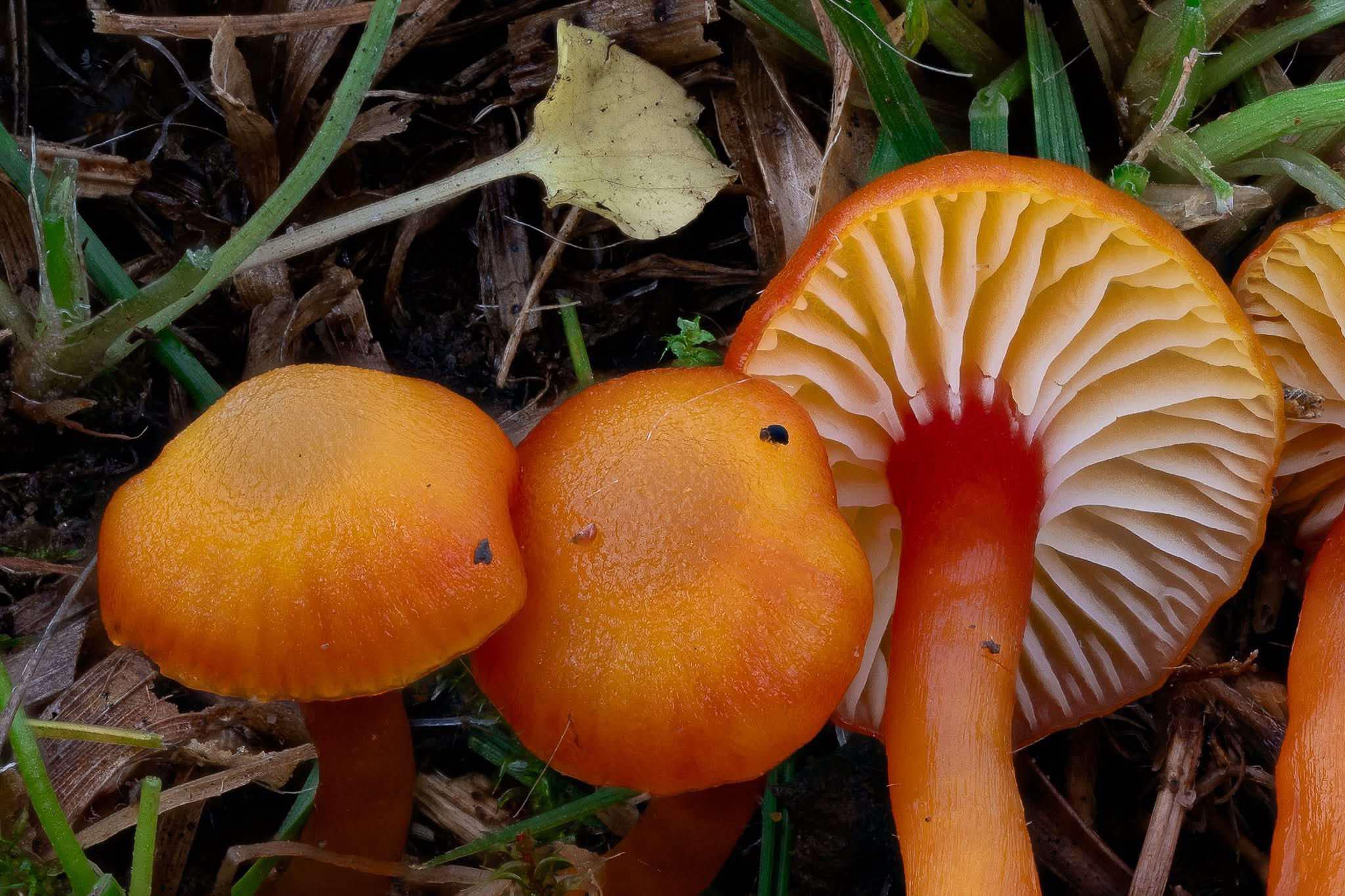
Hygrocybe garajonayensis. Photos by Tomas Milan
Hygrocybe mucronella / amara
Waxcaps that tasted very bitter if you licked the cap used to be simple – they were all mucronella. However, this has been discovered to be a complex with two other new bitter species. H. alpina is a high alpine species so the more possible one to find here is H. amara. This can be distinguished from H. mucronella by its more orange cap (mucronella is redder) and broader spores. It is back to measuring spores and Q values. H. amara has spores with a Q value of 1.32-1.39 while H. mucronella spores have a Q value of 1.51-1.63. Any finds would need to be confirmed by sequencing as there are no British records yet of H. amara. Form more information and photos, see this paper.
Hygrocybe marchii / neomarchii
The concept of Hygrocybe marchii has long been a bit confused and David Boertmann was a bit uncertain of it in the first edition of the book and dropped it in the second edition. It looks now like it does exist and will be given a new name to get away from the confusion of published concepts with any old records of marchii being abandoned but this has not yet happened. It is included in Peachy Steve’s Waxcap app and differs from H. coccinea by its crimson rather than scarlet colours and adnexed gills (not flat but angling up the stipe) rather than adnate or narrowly adnate gills with an occasional decurrent tooth. Steve finds that this is not too unusual in England so there is a good chance that it will be found here. Any finds needs to be confirmed by sequencing.
Hygrocybe phaeococcinea or the Shadowed Waxcap
Only two records from Ireland, one from Donegal and the other from the White Rocks near Portrush. It is a small species with a dark red to occasionally yellow cap with a strange black coating on the cap. It is not black scales like with turunda but the colour is inherent in the cap. The cap is dry and the gills are broadly adnate sometimes with a decurrent tooth.
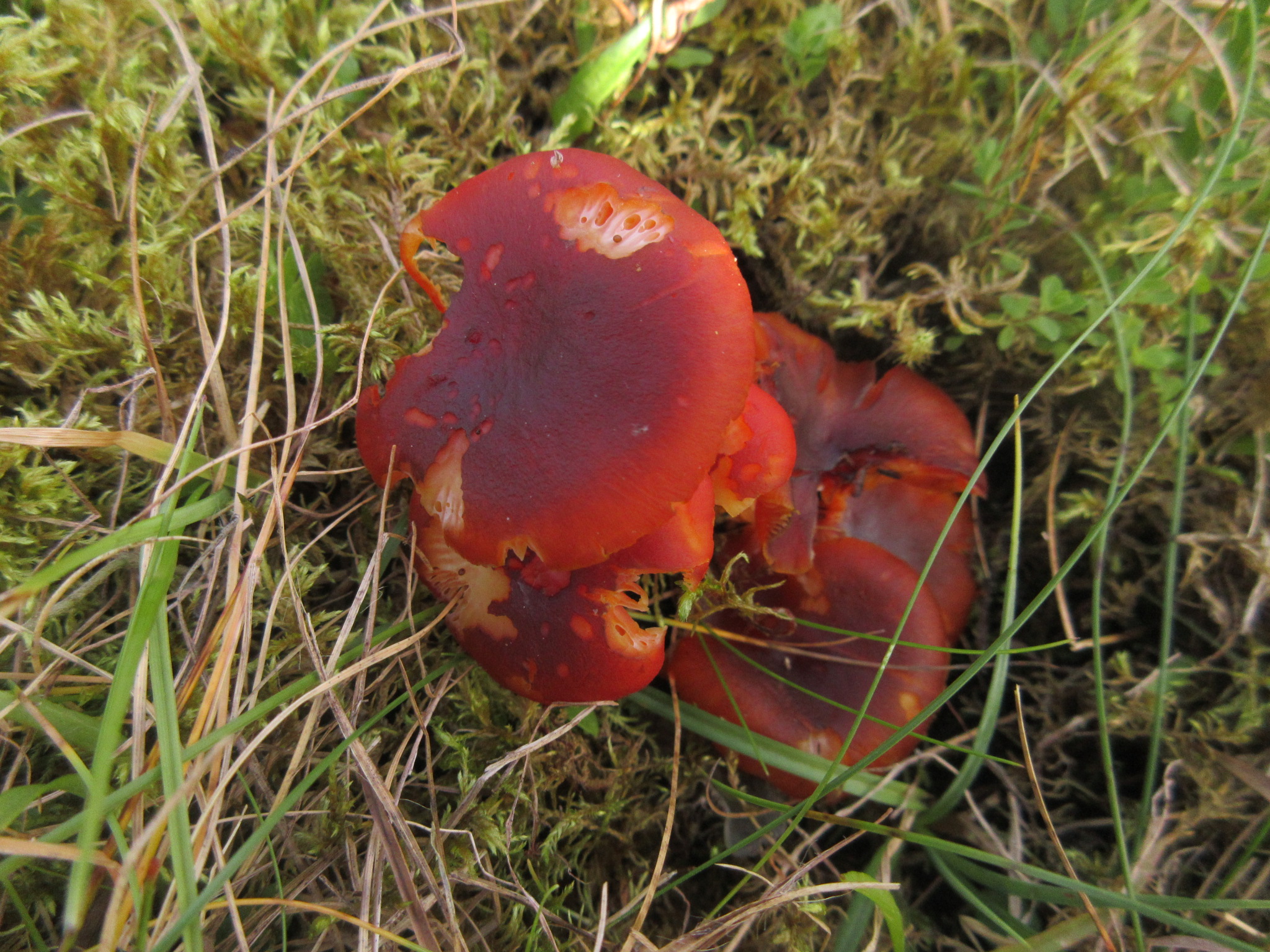
Hygrocybe phaeococcinea Photo by Liz Holden
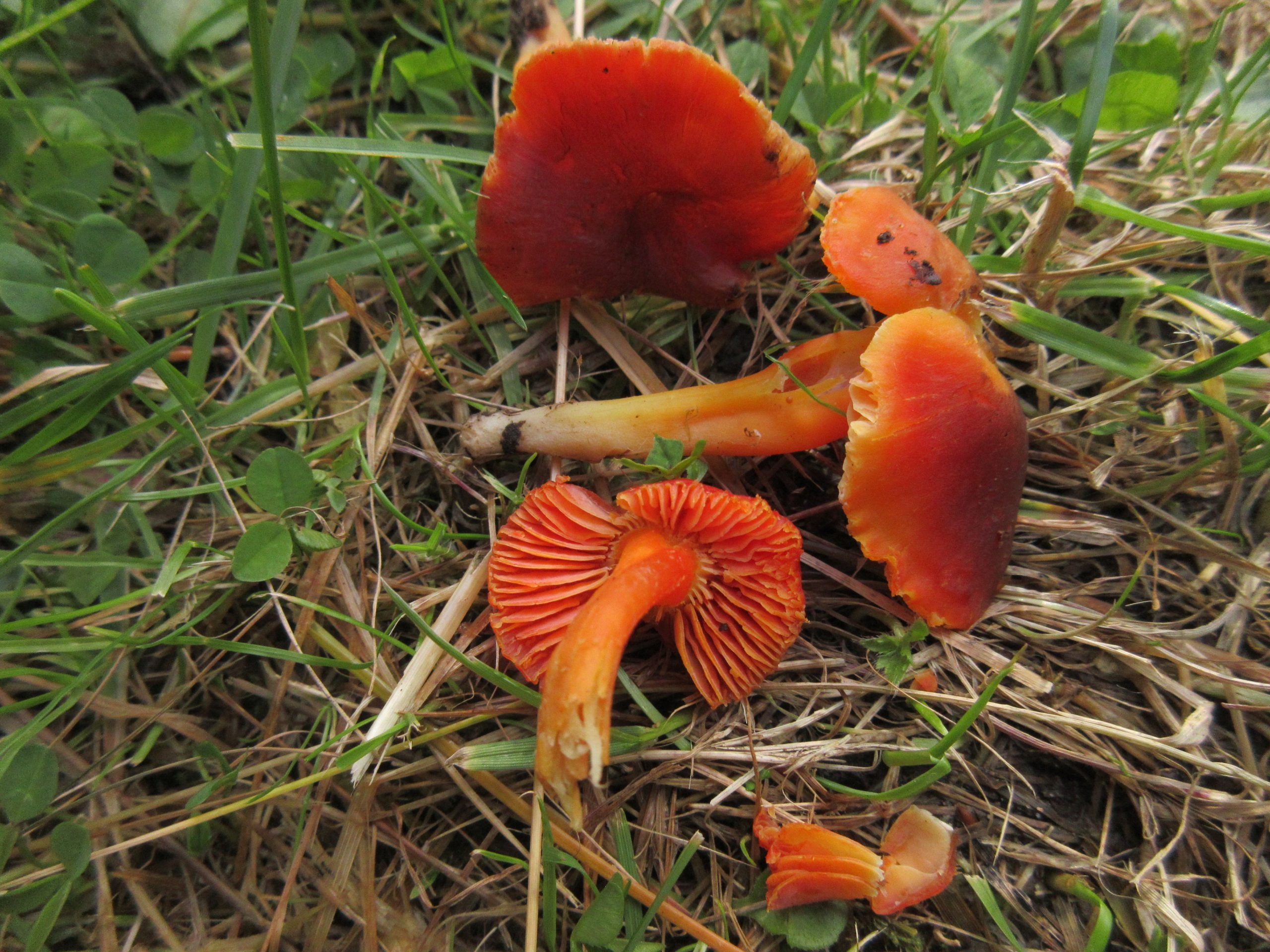
Hygrocybe phaeococcinea Photo by Liz Holden
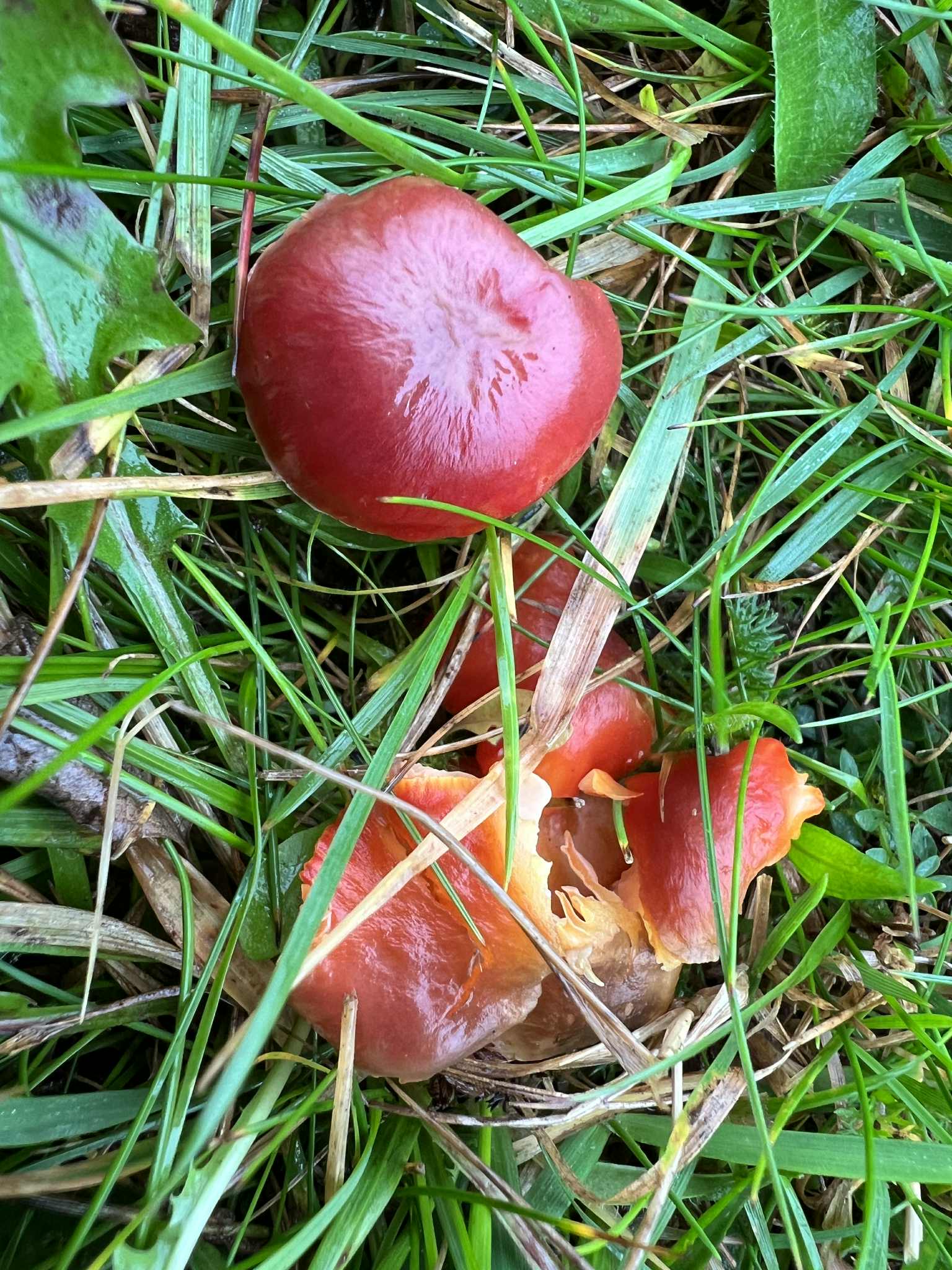
Hygrocybe phaeococcinea Photo by Simon Harding
Hygrocybe spadicea or the Date Waxcap
A very distinctive species with a date brown cap and bright yellow gills. Only two Irish records with the bizarre distribution of Rathlin Island and Inishbofin, two of Ireland’s extremities.
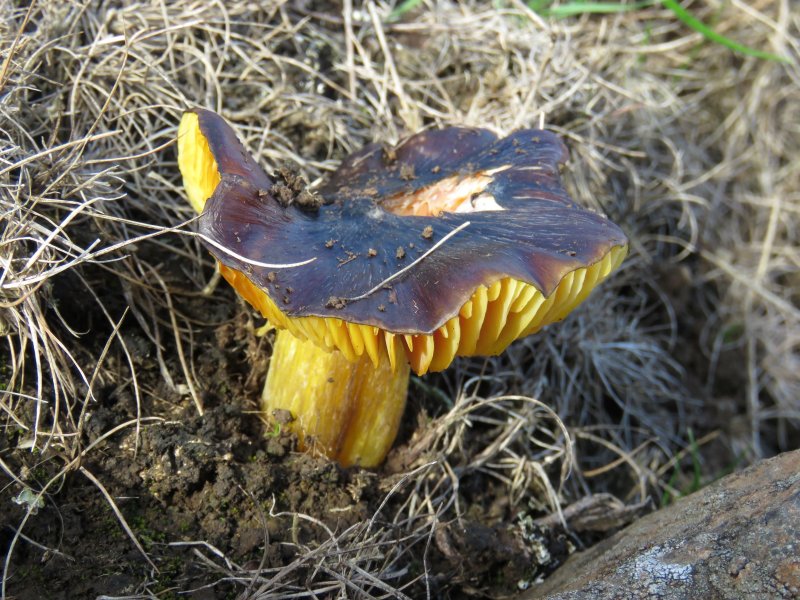
Hygrocybe spadicea. Photo by Hazel Watson
Hygrocybe subpapillata or the Papillate Waxcap
This is quite similar to H. glutinipes with a lubricous cap that is usually papillate but it has a dry stipe unlike glutinipes. The spores are slightly broader. Both species have long slender gill trama similar to chlorophana and conica which distinguishes it from other species like insipida. No Irish records and very few GB ones. For photos, see iNaturalist.
Hygrocybe substrangulata or Waisted WaxcapÂ
Only one record in Northern Ireland from Knockmore and unfortunately the specimen cannot be refound for checking so there is a bit of doubt about this record. A dry scurfy capped species that is more orange than other scurfy capped species and the gills are adnate rather than decurrent. The spores can be constricted. There is a pure red form but British records seem to be more typically orange. See First Nature for more information
Hygrocybe turunda or Singed Waxcap
Another dry scurfy capped species, this is another rarity that has not been found in Northern Ireland. With quite decurrent gills, it’s most distinctive character is the black scales on the cap.
Neohygrocybe ingrata or the Dingy Waxcap
Only known in Ireland from the Curragh and Barnett’s Park, this is a special find. It has a dry cap with a reddish brown colour and the stipe can be cream to brown. It has a fainter nitrous smell than N. nitrata (noticed especially if cut) but the gills and flesh reddens. There is another similar species called Neohygrocybe pseudoingrata but this has not yet been found in the British Isles. It differs largely by not reddening, having a pale brown cap with an often contorted compressed stipe. See this paper for more information
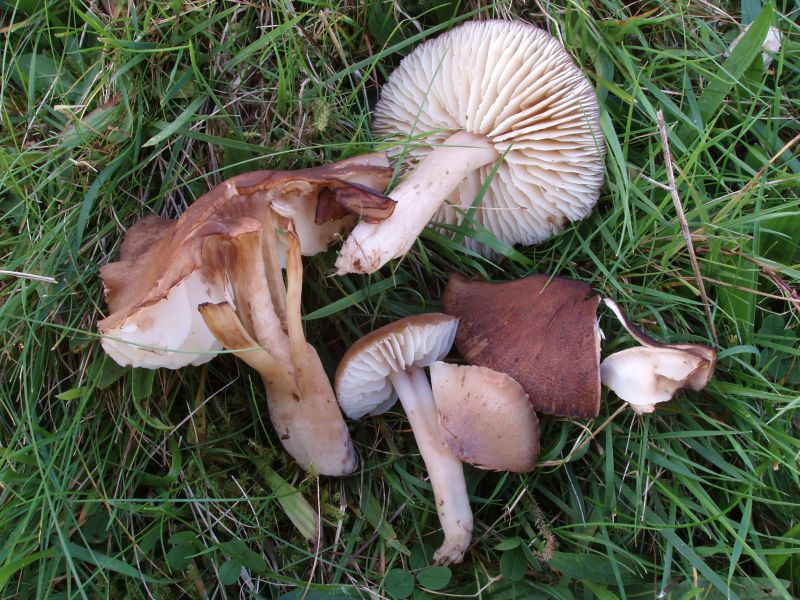
Neohygrocybe ingrata. Photo by Mark Wright
Neohygrocybe ovina or Blushing Waxcap
Another of the special finds, it is quite recognisable. It can be large and bulky, dark to black and very dingy. The gills can be very thick. It can have a very faint nitrous smell and reddens strongly when bruised. Microscopically, it can have long cells projecting out beyond the gill edge. Only scattered records in NI from Binevenagh, Slievenacloy, Knockdhu, Scawt Hill and Altnahinch.