The “D” group is a bit of a bucket shop that has had a lot of its buckets removed. Camarophyllopsis and Hodophilus have moved out and are now in the “C” group and only Dermoloma (the Crazed Caps) and Pseudotricholoma are left (the species in the latter used to be called Porpoloma metapodium). However, a recent paper has described a lot more Dermoloma species and we are now going to need to understand what species we actually have here. It is difficult at this moment to know what to ask for! Species to look out for:
Any brown or blackening Crazed Cap or any with amyloid spores
Crazed Caps are noted by their cracking cap and strong smell of flour. For a long time, we only had records of one species, D. cuneifolium but there are now 14 species known from Britain.
Whether spores go black in Melzer’s reagent or not (amyloid if they do, non-amyloid if not) is important when identifying so many fungi. Even if you don’t have a microscope, having a bottle of Melzer’s to make this test can really help you with your identifications. It is not expensive to get for example at this source.
To test for amyloid spores, make a spore print as it is easier to see the changes in the mass and put one drop of Melzer’s onto the spores. If amyloid, they will go black. The most common Crazed Cap, Dermoloma cuneifolium has non-amyloid spores. The only amyloid spored species we used to have in Northern Ireland was D. pseudocuneifolium but this has now been reduced to a nomen dubium so we don’t know what those records relate to. So, any amyloid Crazed Cap needs to be sequenced.
Any species with a brown cap are also worth looking at. We do now have sequenced records of D. intermedium (was called D. alexandri) and D. fuscobrunneum.Â
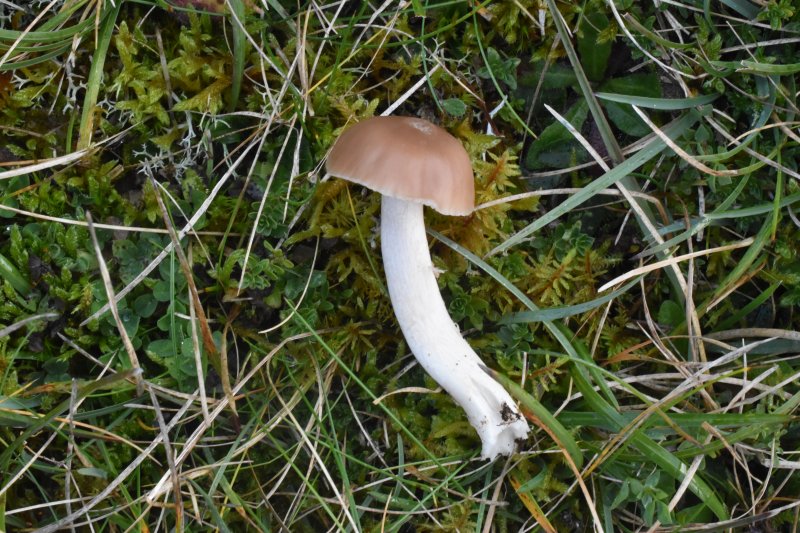
Dermoloma intermedium from the Marlbank
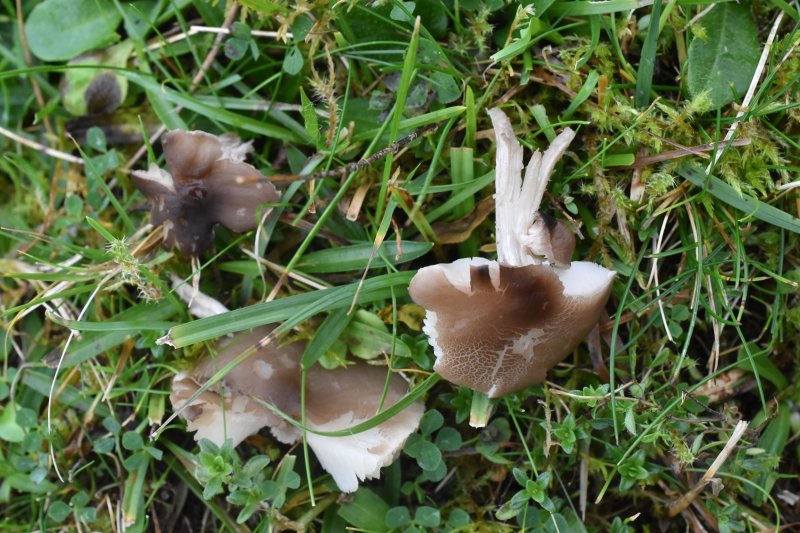
Dermoloma fuscobrunneum from Ballygalley Head
Very recently, Black Magic or Dermoloma magicum was found by Robert Cobain from Castle Park in Bangor. It is noted by strongly blackening fruiting bodies
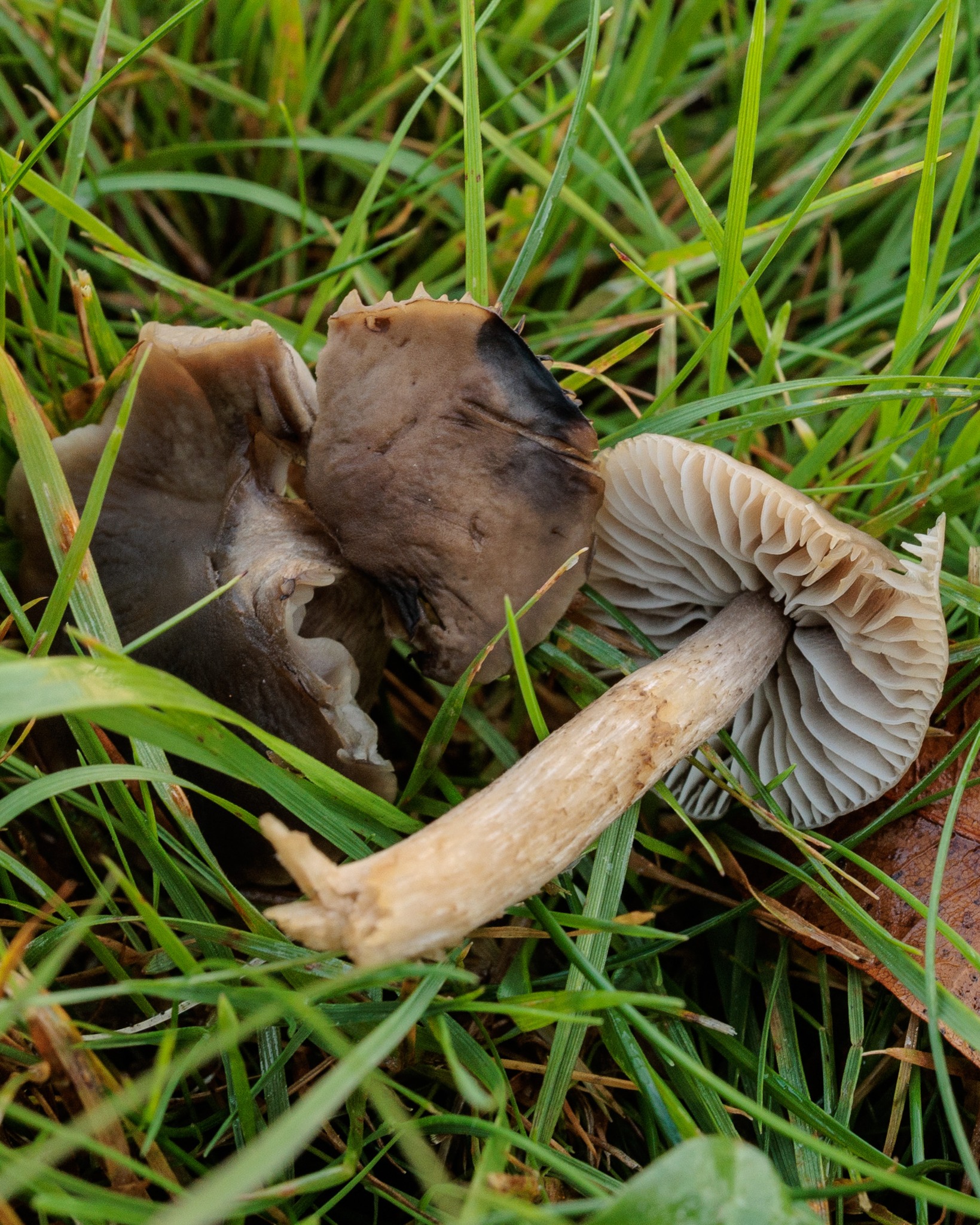
Dermoloma magicum. Photo by Robert Cobain
Pseudotricholoma (Porpoloma) metapodium
This is a very distinctive and very rare species. Only known from a car park in the Sperrins and Monawilkin ASSI in Fermanagh. It is a large chunky species with a strong floury smell, amyloid spores and flesh that reddens is cut or bruised.
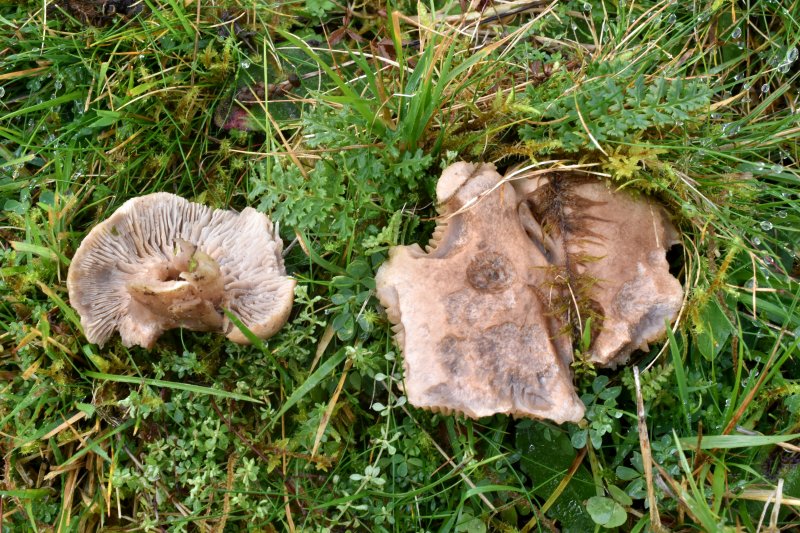
A battered Pseudotricholoma metapodium
The Powdercap Strangler, Dissoderma (Squamanita) paradoxa
This species is not an official CHEGD species but is special and any records of this are gratefully received. It is a parasite of the common Earthy Powdercap, Cystoderma amianthinum. It fruits up through the Cystoderma so you are left with the powdery stipe of the Cystoderma but with a totally different cap often with Cystoderma remnants on the cap. Very odd indeed! There is actually a second species in Britain, Dissoderma pearsonii so they do have to be checked carefully so please photograph well if you ever come across it. Only known from Altnahinch Dam in North Antrim.
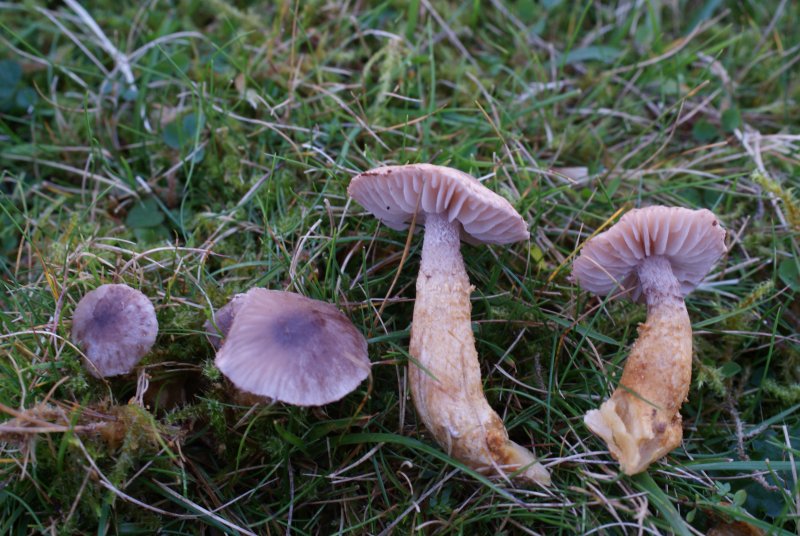
Dissoderma paradoxa from Wales