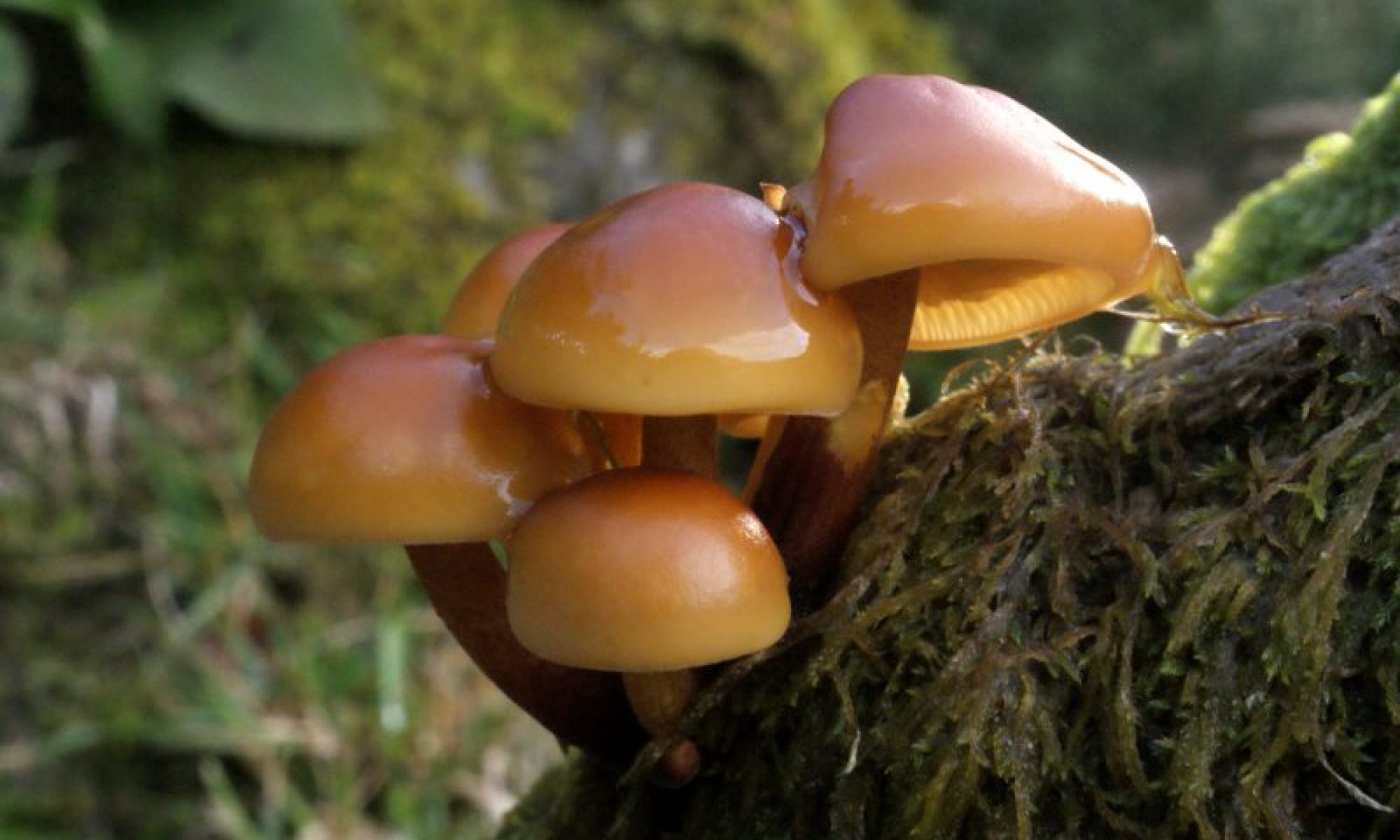
Dermoloma cuneifolium
The Dermolomas have recently been reworked and it is now known that there are a lot more species than previously thought. There are now 14 species known from the British Isles so we wanted to find out more about the group in Ireland. However, this year’s finds would suggest that the Irish list is not as diverse. It is still very early days but only three species were found this year. The other confirmed find we have is Dermoloma fuscobrunneum from Ballygalley Head in Antrim in 2023. Dermoloma cuneifolium was by far the most common species found with 11 finds. It is very hard to distinguish them in the field and cap colour is turning out to be more variable than I personally expected!!
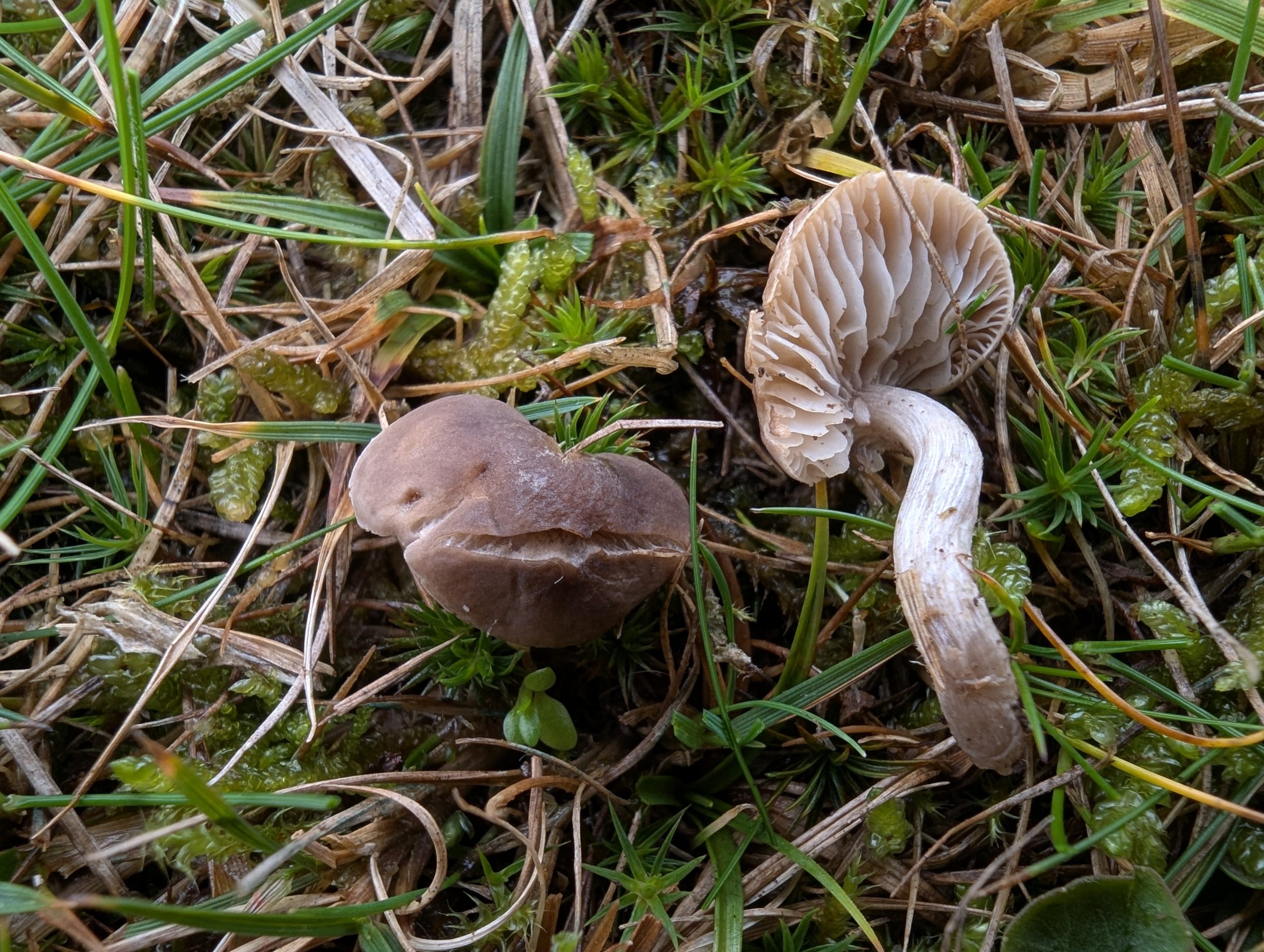
Dermoloma cuneifolium, Giant’s Causeway
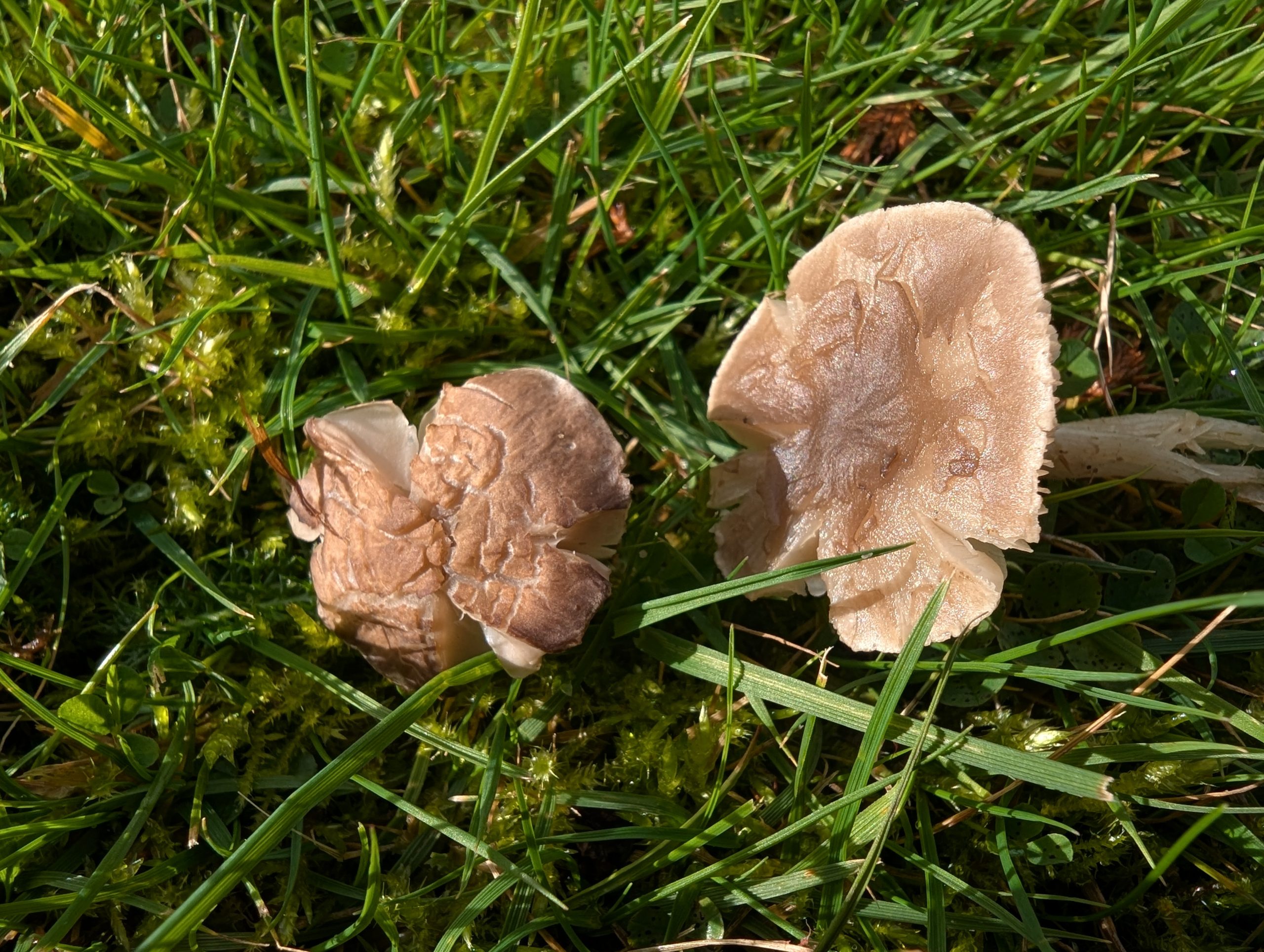
Dermoloma cuneifolium, Dungiven Church of Ireland
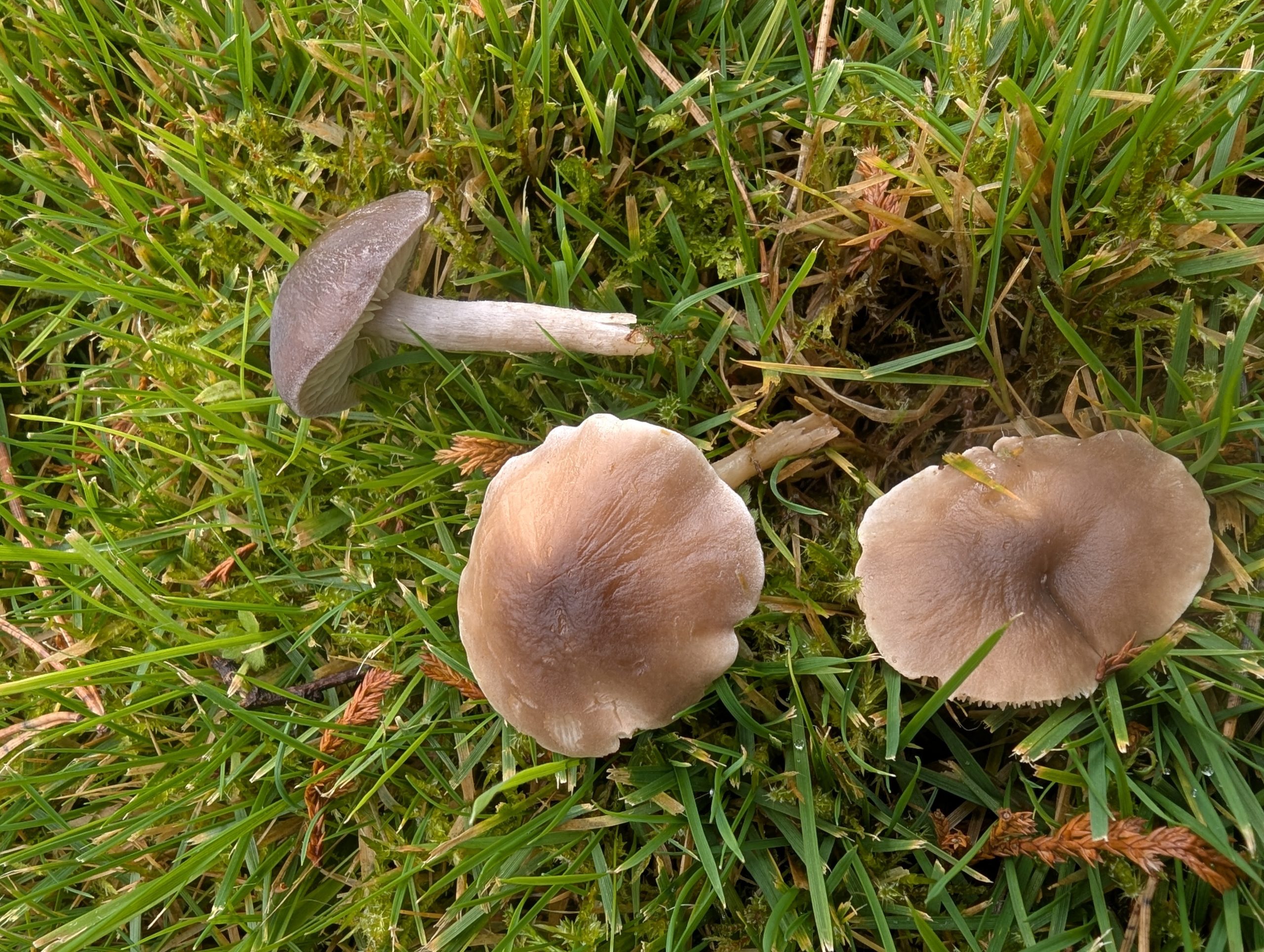
Dermoloma cuneifolium, Dungiven Church of Ireland
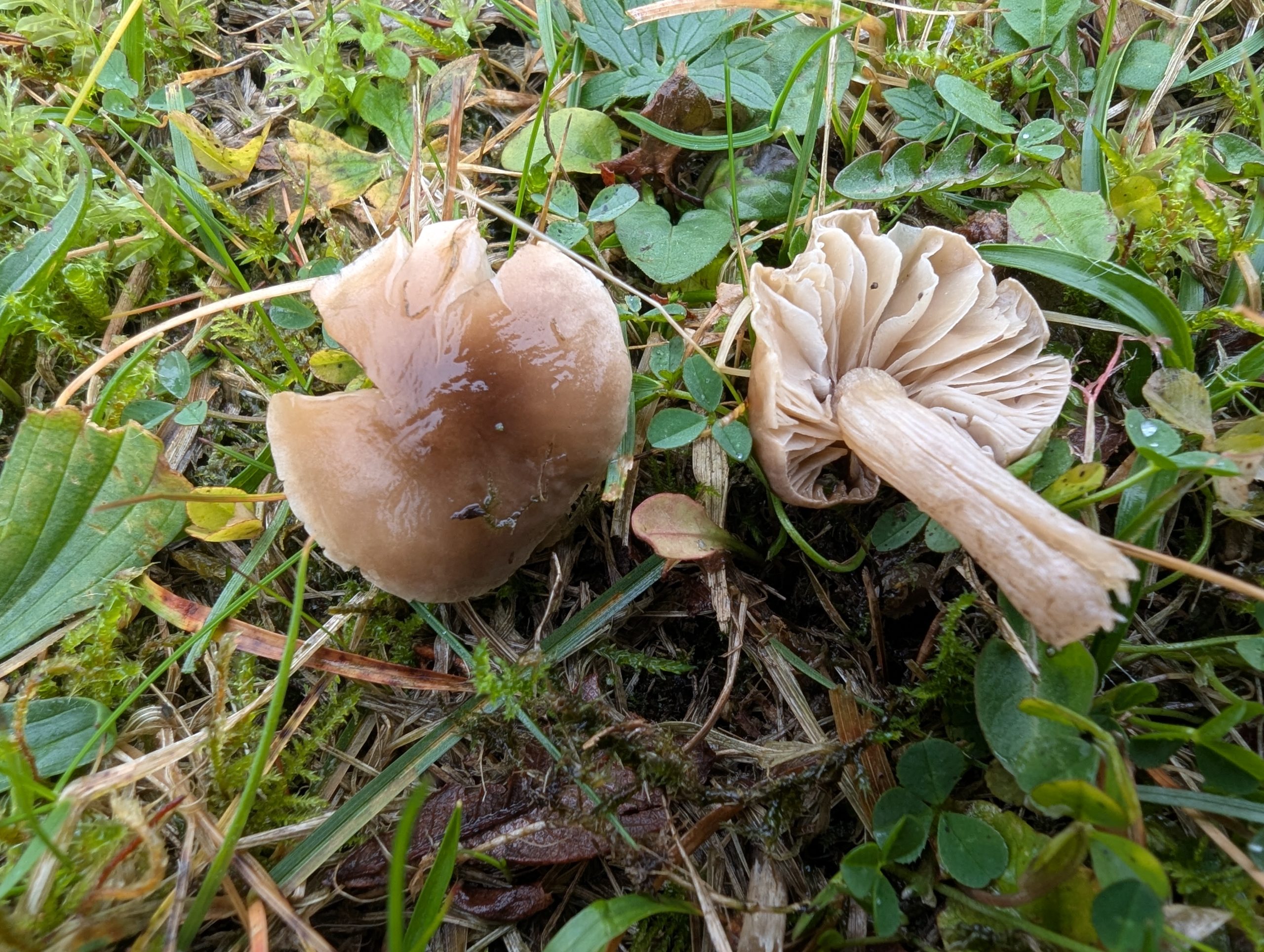
Dermoloma cuneifolium, Altnahinch Dam
Dermoloma intermedium
This is the second most commonly recorded species in Ireland now known from 5 sites. It is close to cuneifolium but is said to be hygrophanous which I am not sure that I have observed. Like all Crazed Caps, it is very important to take a spore print and look to see if the spores are amyloid with a drop of Melzer’s reagent. It is also important to look at the basidia to see if they are 2, 3 or 4 spored. This species should have non-amyloid spores and have basidia that are often less than 4 spored. Found this year at the Curragh at two different locations.
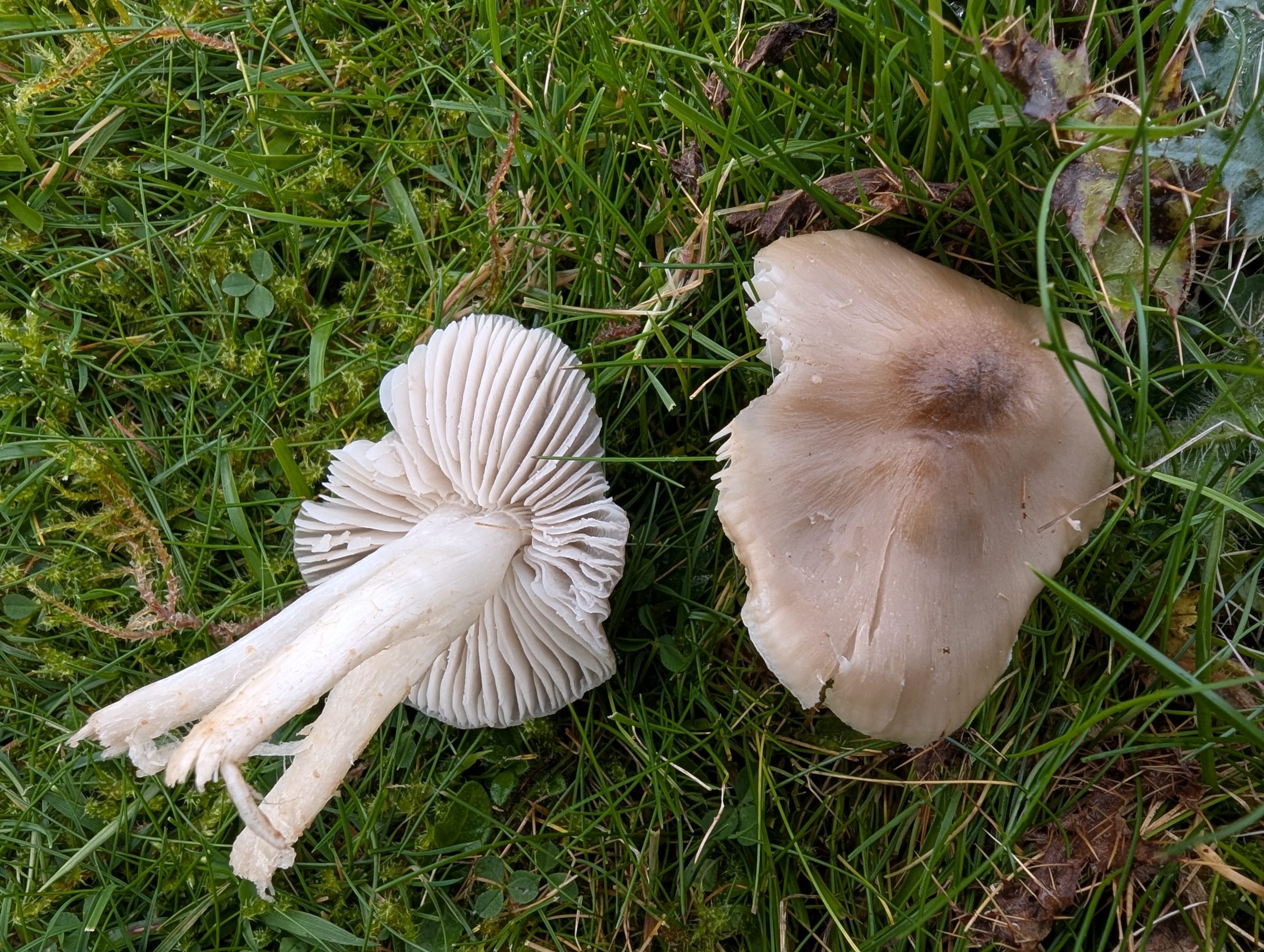
Dermoloma intermedium, The Curragh
Dermoloma magicum
This was the most interesting Crazed Gill find of the year – from Castle Park in Bangor by Robert Cobain. It is a large chunky blackening species with large spores for the genus. This was a first Irish record.
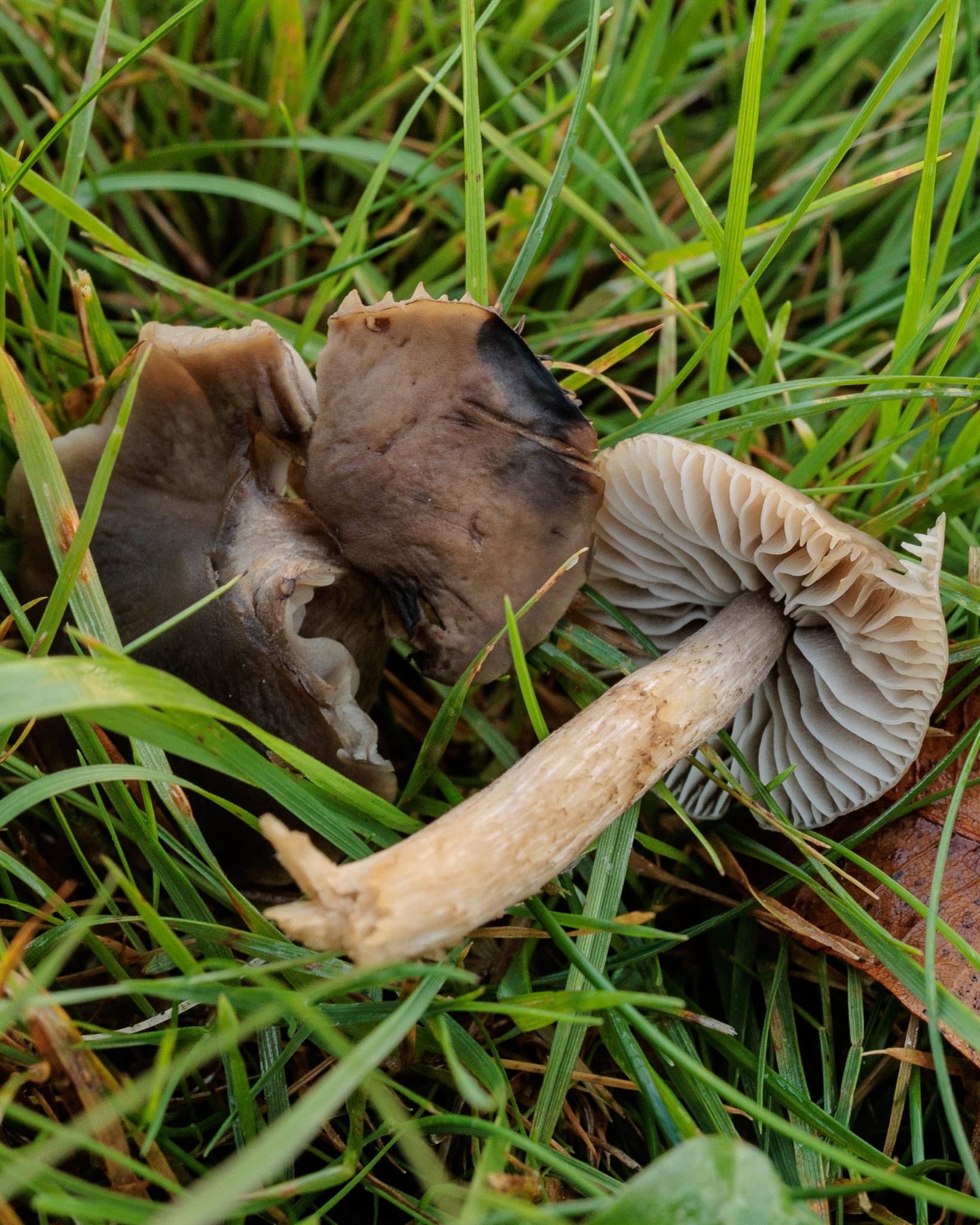
Dermoloma magicum, Castle Park, Bangor. Photo by Robert Cobain
Hodophilus anatinus
Strictly speaking, this should be in the Fairy Club group taxonomically but has not been officially moved there in terms of CHEGD site scoring. This species is proving not to be unusual in Ireland and this year was found three times on the Curragh, once on Ballycoos Hill (Jolanda Smit) and at Cloughey Dunes (Roy Anderson). It is in the yellow stiped group of Hodophilus and, as the photos show, sometimes this is obvious but it would also appear that the yellow colour fades quickly to a pale dirty brown that you would be hard pressed to describe as yellow so beware!
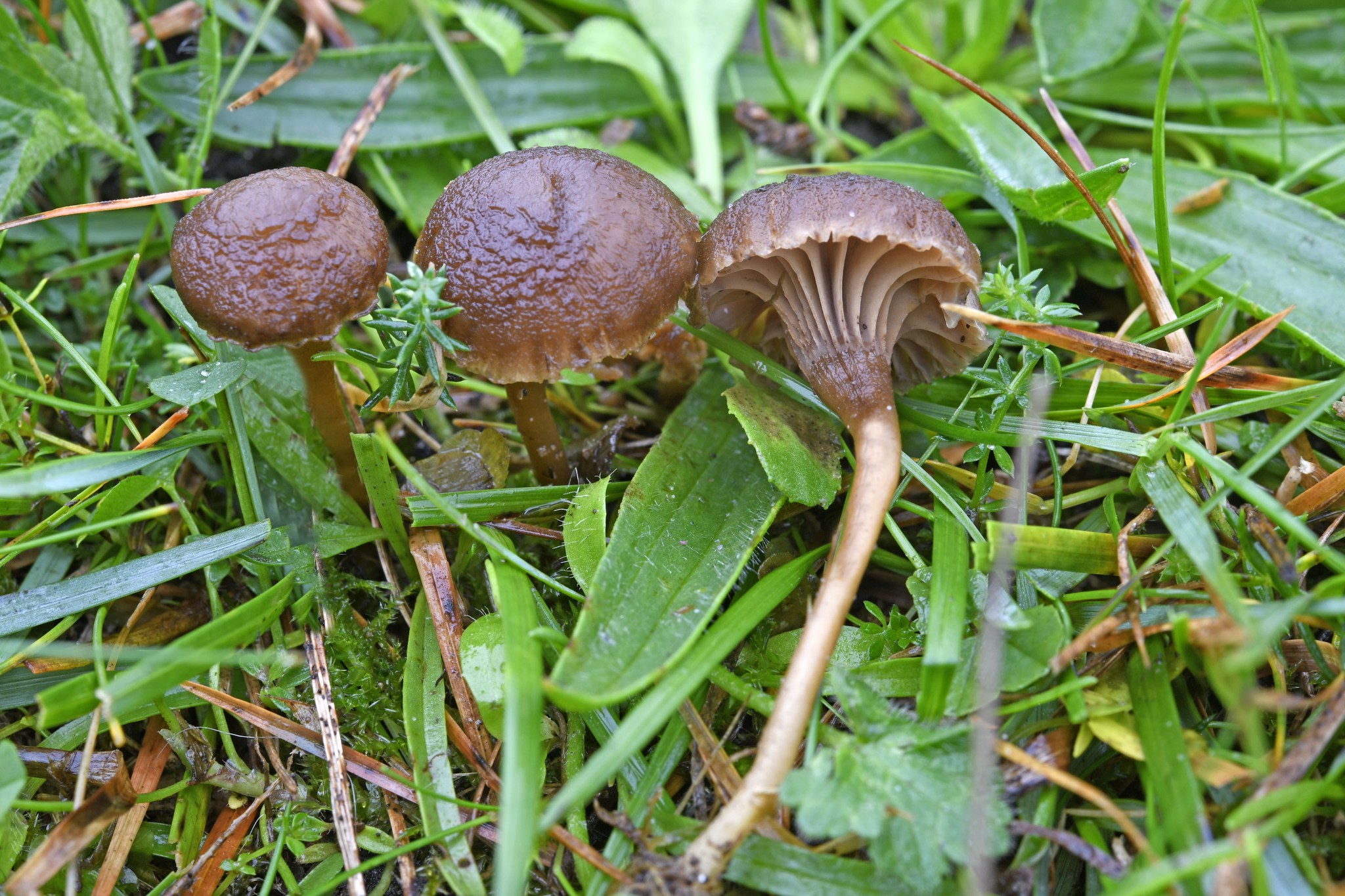
Hodophilus anatinus, Cloughey Dunes. Photo by Roy Anderson
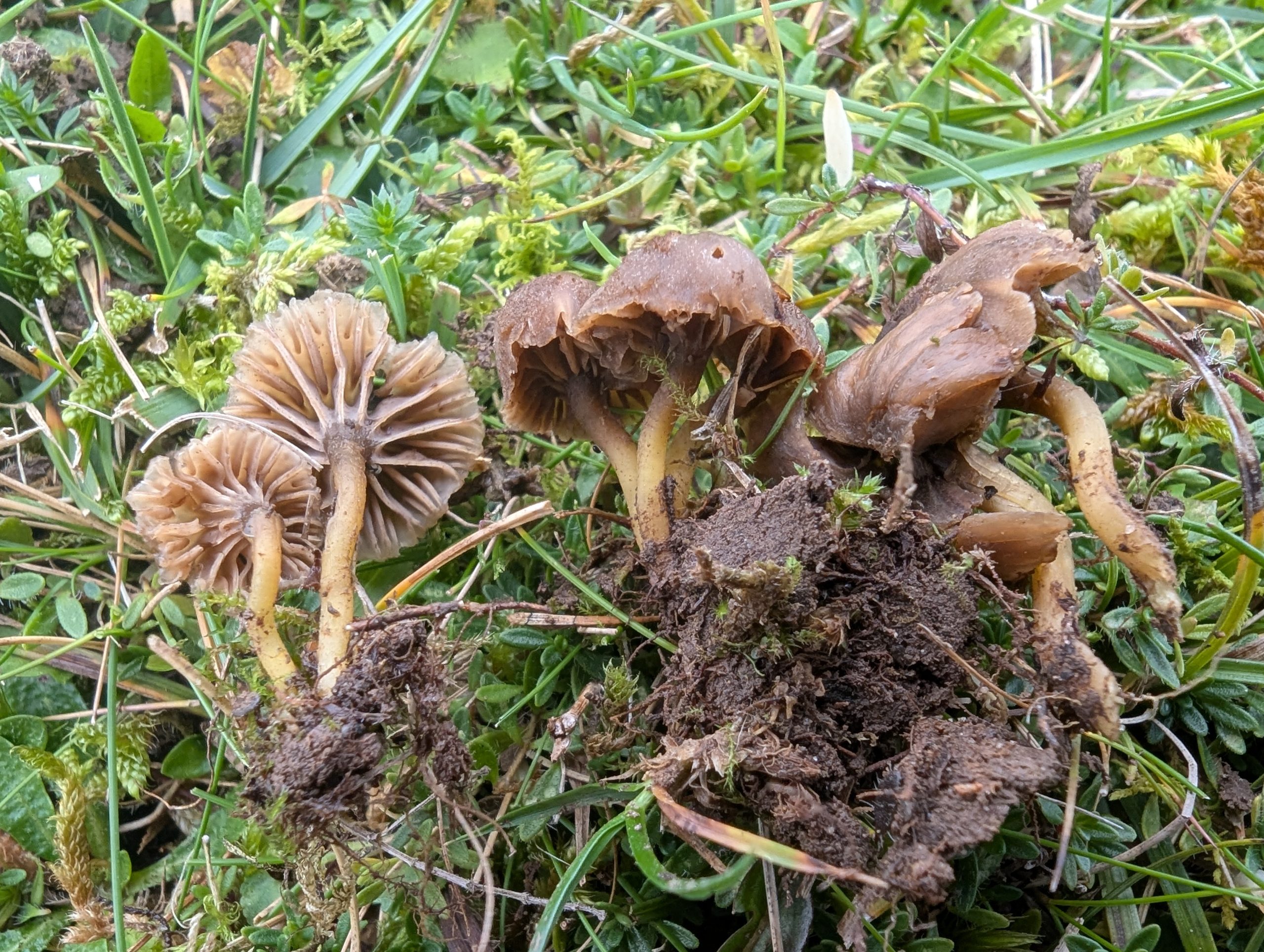
Hodophilus anatinus, The Curragh
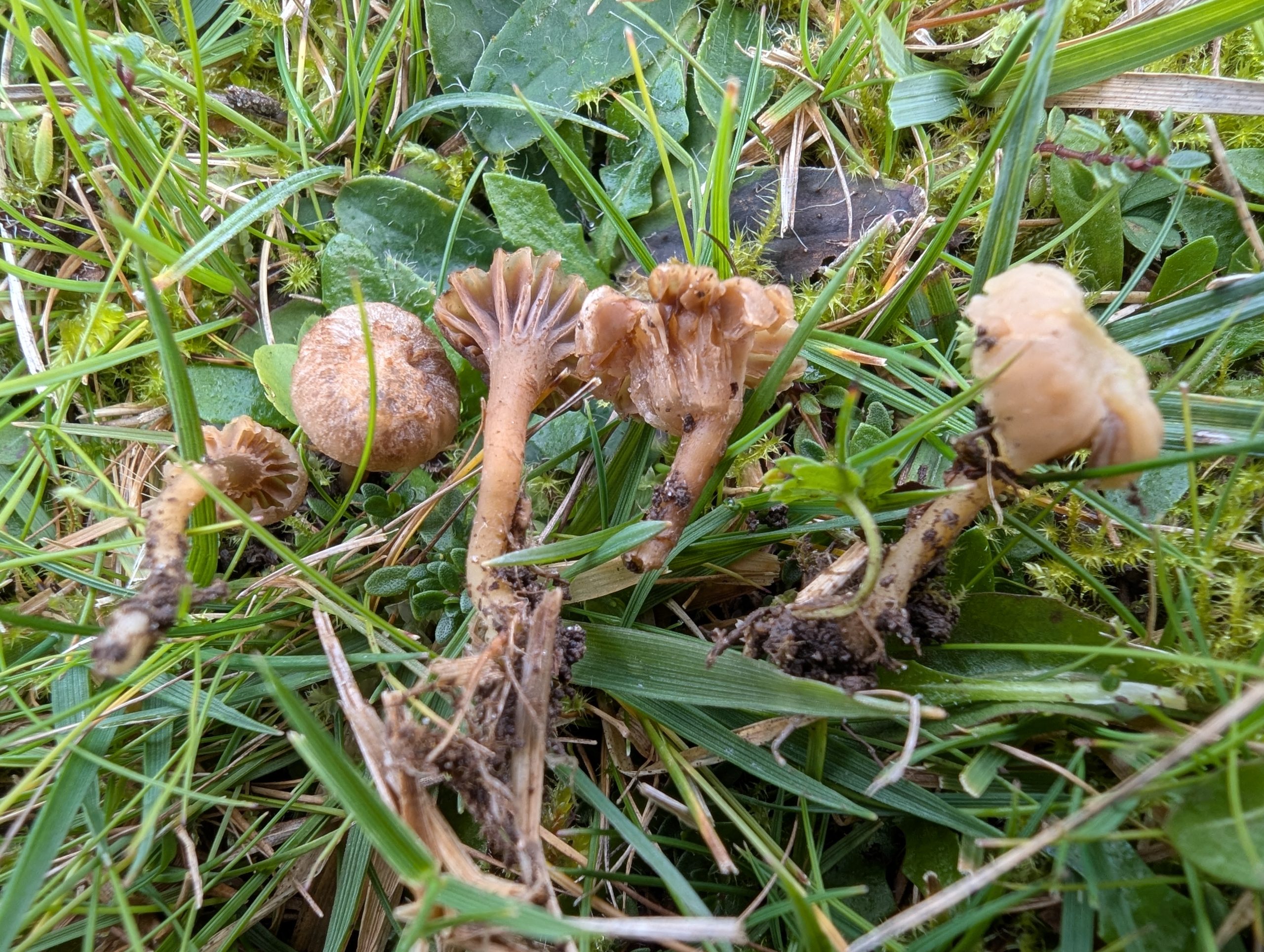
Hodophilus anatinus, The Curragh
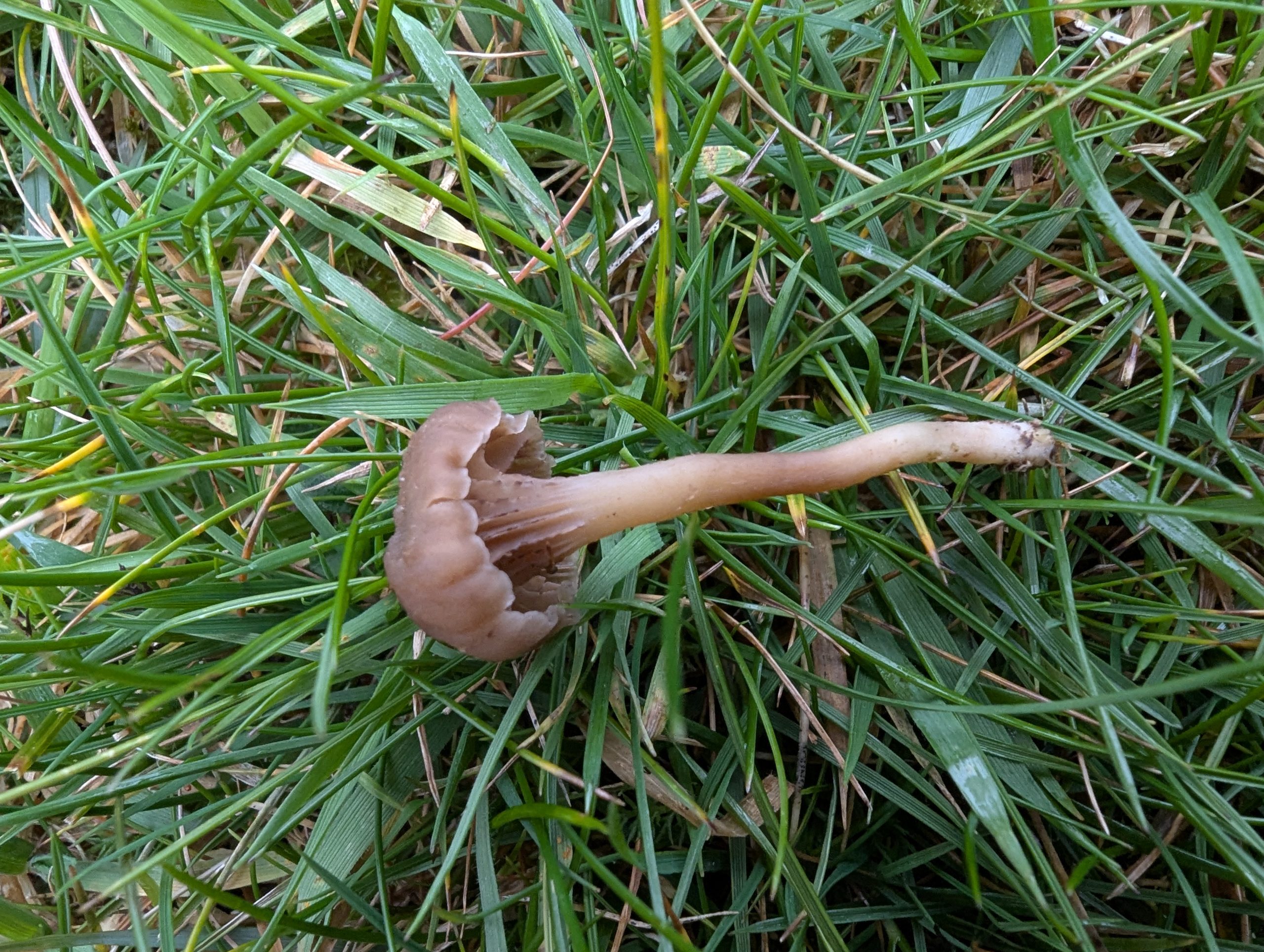
Hodophilus anatinus, Ballycoos Hill