Entoloma argillaceum
First found in the British Isles by Roy Anderson at Linford Barrows on an NIFG foray in 2024, this turned up at Binevenagh, Luriegethan, Cushleake Mountain (Sluggan Burn) and Rathlin Island, Ballyconagan as well. Roy thought at the time it was E. fuscomarginatum due to its red gill edge but it would appear this was a red herring and due maybe to a variable maturation of spores. E. argillaceum is a fairly non-descript Entoloma to be fair and I wonder if we’ve been coming across it on other sites this year as well. The key features are said to be its large size, a uniform beige cap colour with a persistent umbo on wide expanded non striate caps and broadly heterodiametrical spores meaning a Q value of 1.2 or greater. Its average spore Q value is 1.30-1.36. This would set it apart from E. sericeum which has spores with an average Q value of 1.15.
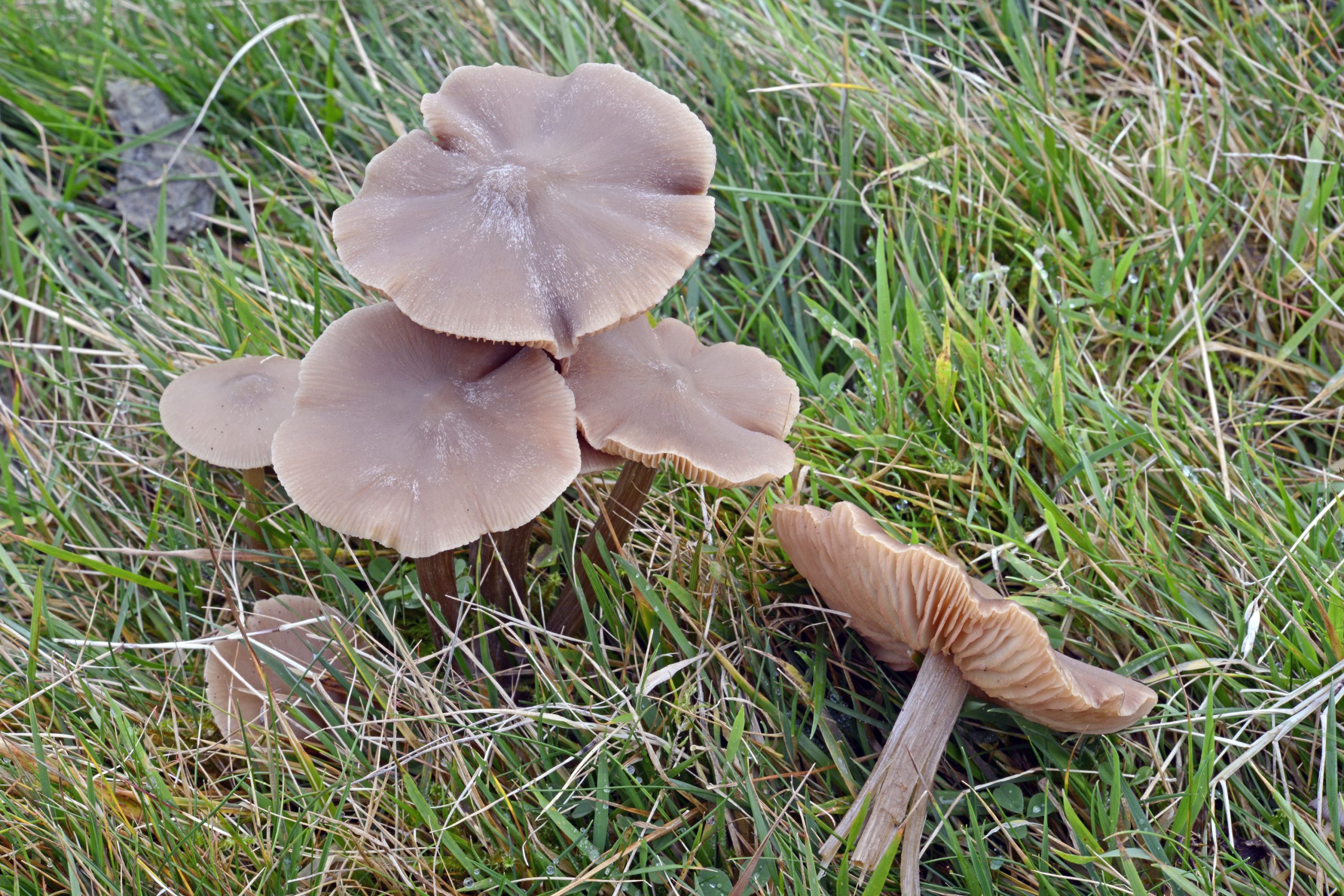
Entoloma argillaceum, Linford Barrows. Photo by Roy Anderson
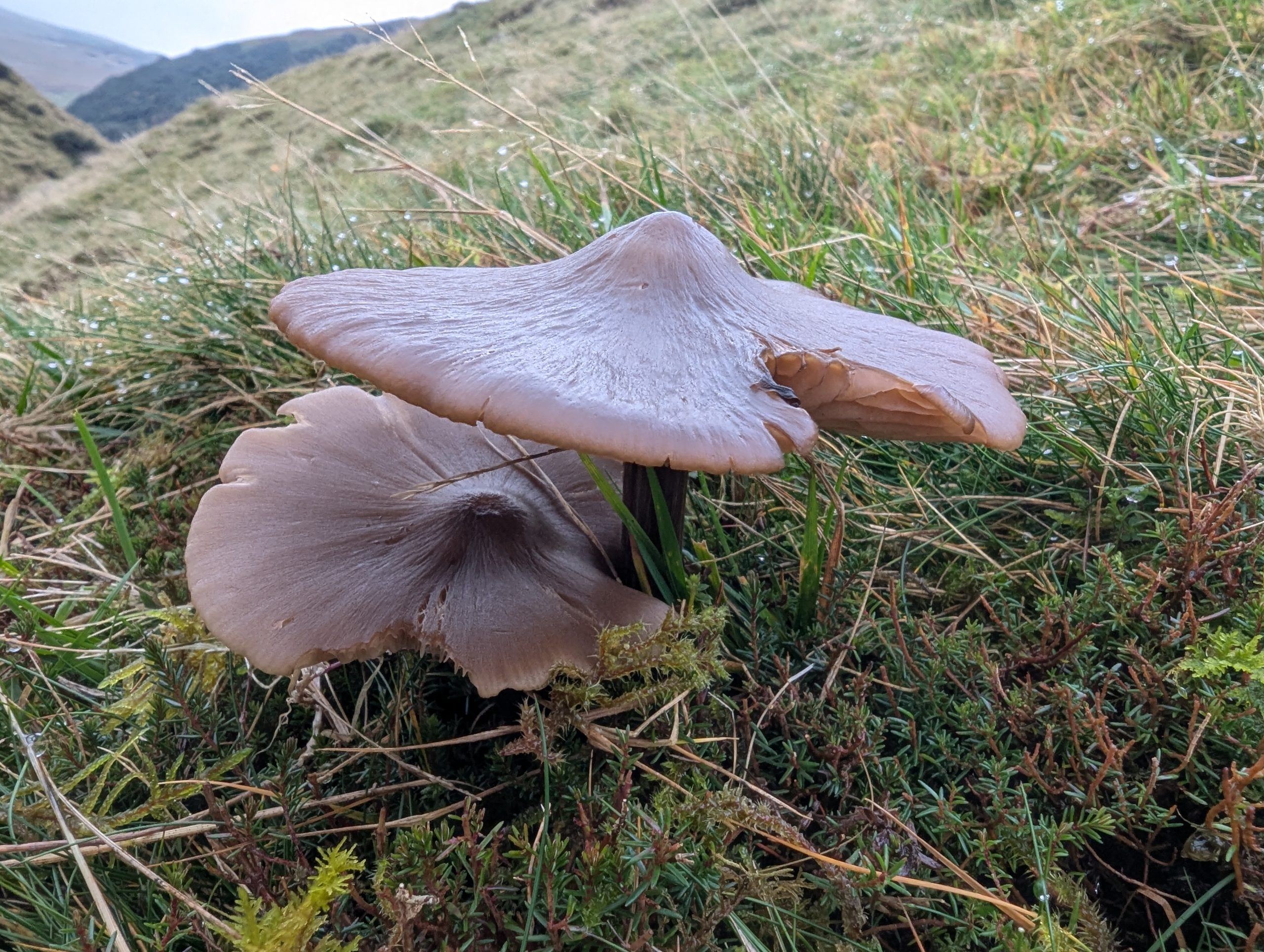
Entoloma argillaceum, Cushleake Mountain
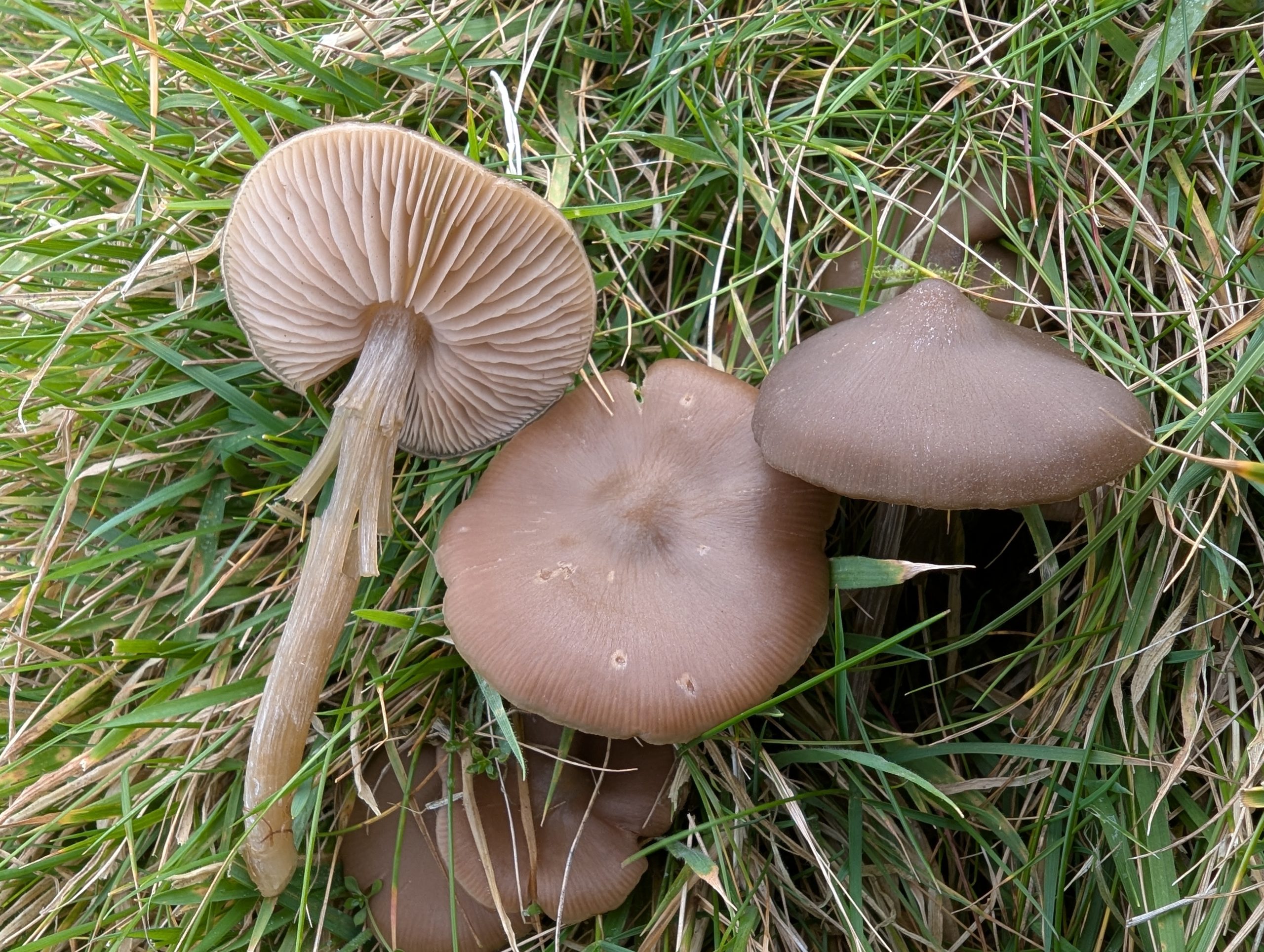
Entoloma argillaceum, Luriegethan
Entoloma coracis
We used to record the black Entoloma corvinum regularly with records from 52 sites in Ireland. However, it is now known to be a species complex and we may not even have E. corvinum in the British Isles. To date, it is only known from high in the Alps. It appears that Entoloma coracis is the most common member of the complex here and we know of it now from 6 sites in Ireland. It was found at the Giant’s Causeway, Little Deer Park ASSI near Glenarm and Roonivoolin on Rathlin in this survey. The other member of the complex with confirmed records in GB is E. porphyrogriseum but this has not yet been found in Ireland.
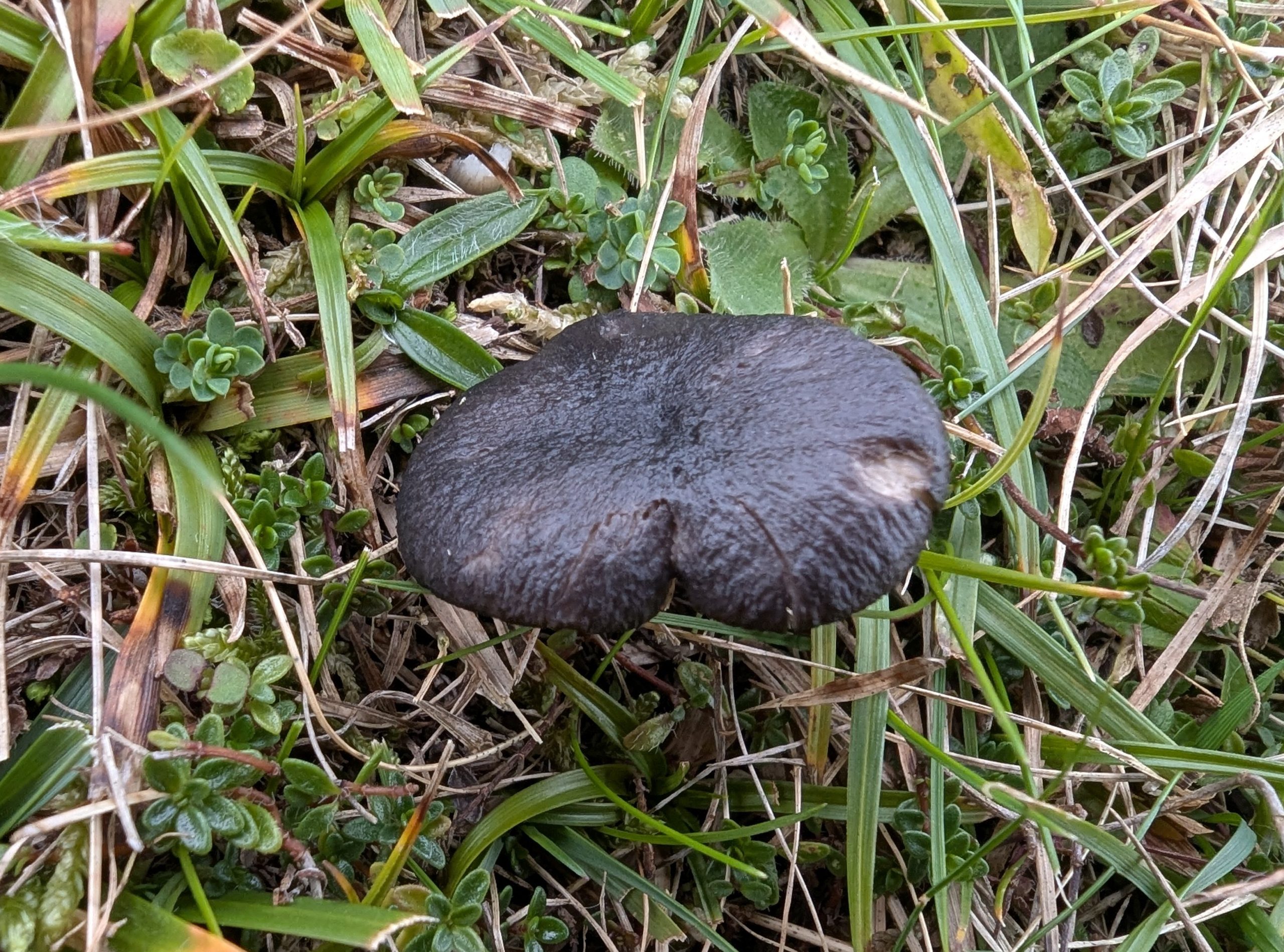
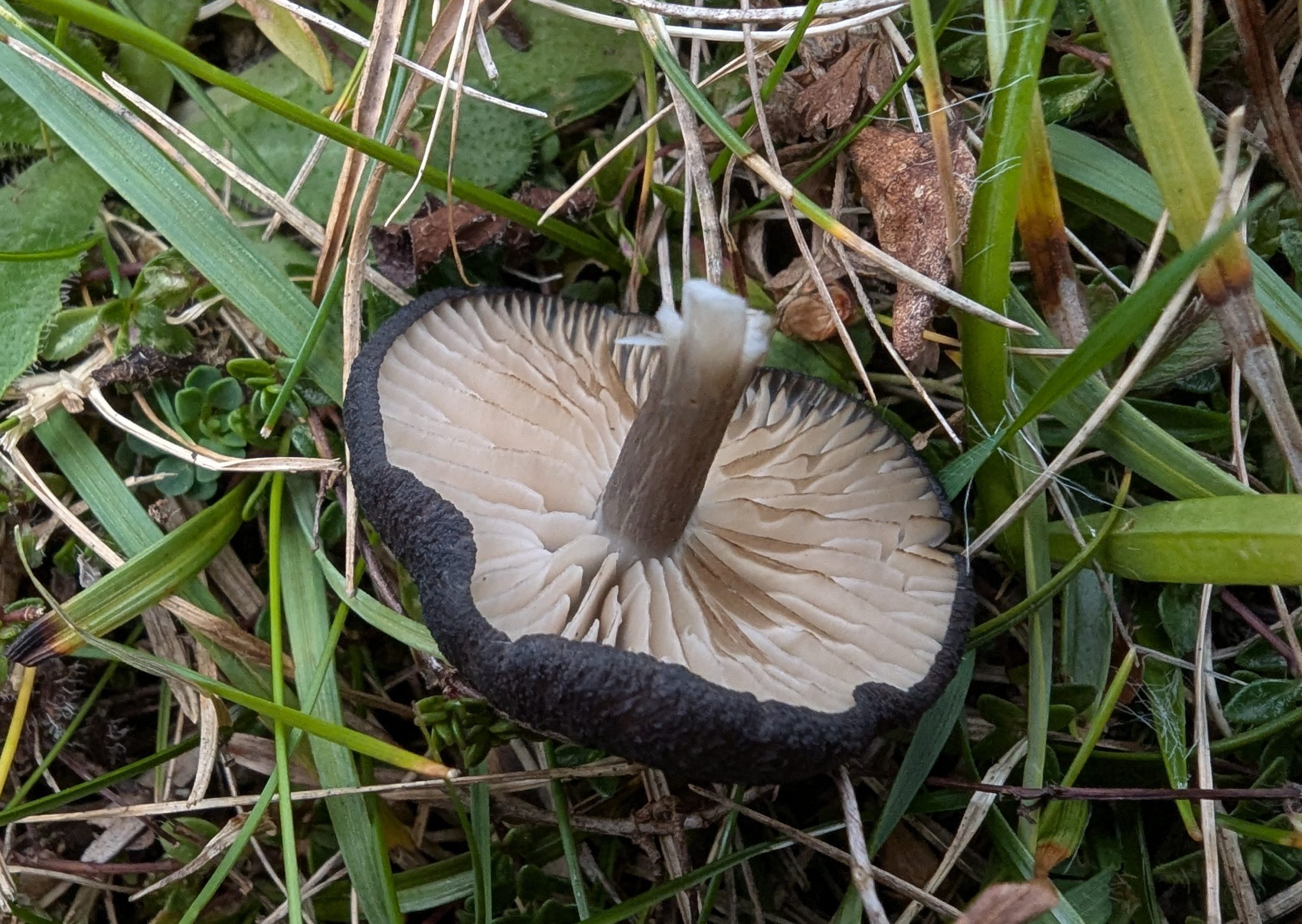
Entoloma coracis, Roonivoolin, Rathlin Island. Note it can have a dark gill edge
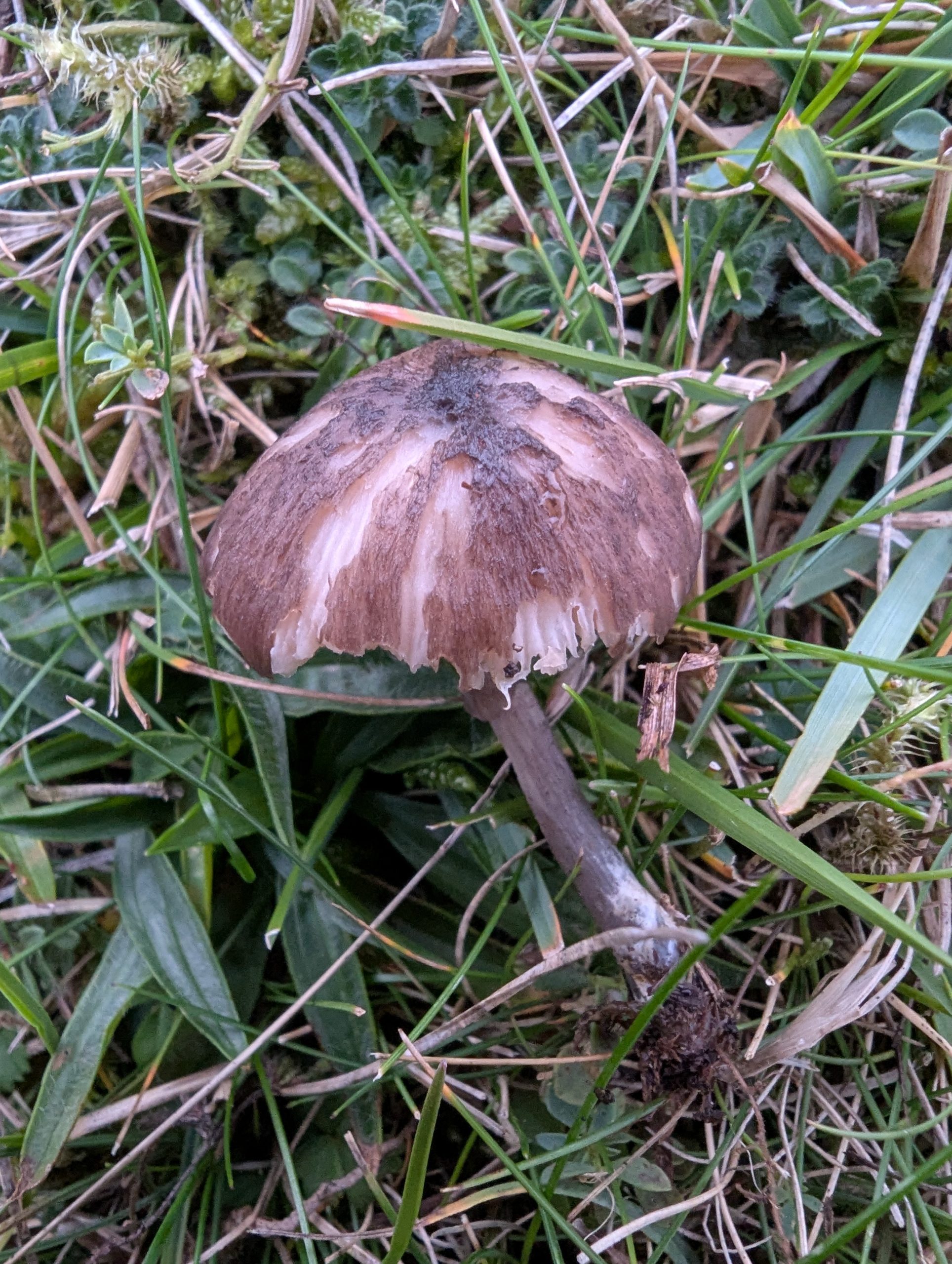
Entoloma coracis, Little Deer Park ASSI
Entoloma cf. mediterraneense
This Entoloma was found at Little Deer Park ASSI near Glenarm. Its sequence suggests that it is Entoloma mediterraneense which sounds a bit odd but there have been finds of this in Scandanavia as well. There is only one available sequence of this on GenBank and UNITE and neither is of the type. Work is ongoing in this area so it is a matter of waiting for its type to be published and then to review the match. We may have called these E. longistriatum in the past but that is now known to be an American species not in Europe.
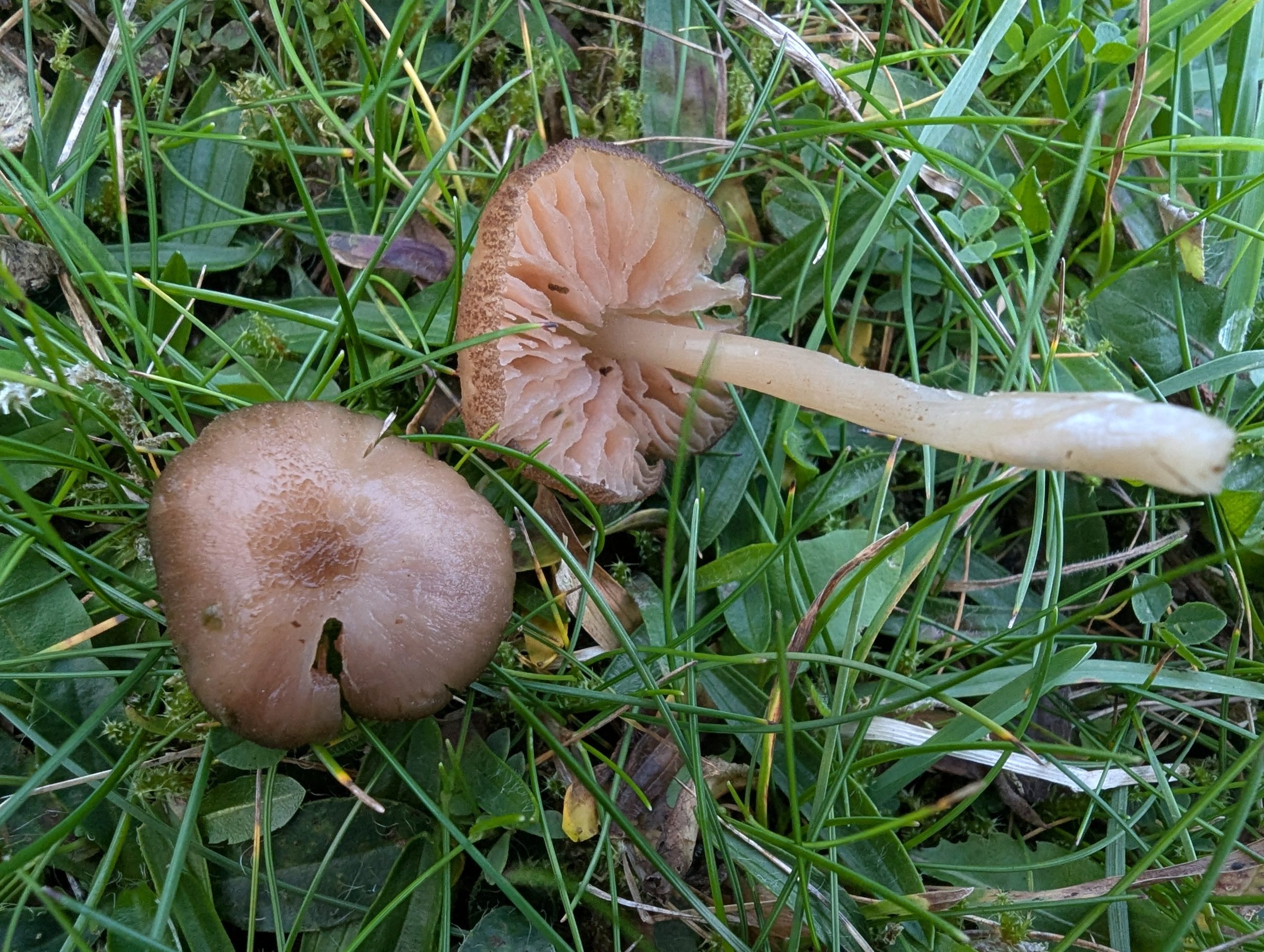
Entoloma cf. mediterraneense, Little Deer Park ASSI
Entoloma turbidum
There are two very close species, E. turbidum and E. pseudoturbidum both with small almost subglobose spores. Normally Entoloma spores are very distinctly shaped with 4 or more distinct angles but the angles on these spores are weak making them look subglobose. In some books, these were transferred to Entocybe but this has been rejected in recent works and they are back to Entoloma. The dark centre paling to the cap edges is typical. Descriptions say that turbidum is more typical on heaths and woods and it is pseudoturbidum that is in grasslands but these sequences are clearly turbidum. Two finds on Linford Barrows both by Chris Stretch. There are scattered records from all over Ireland.
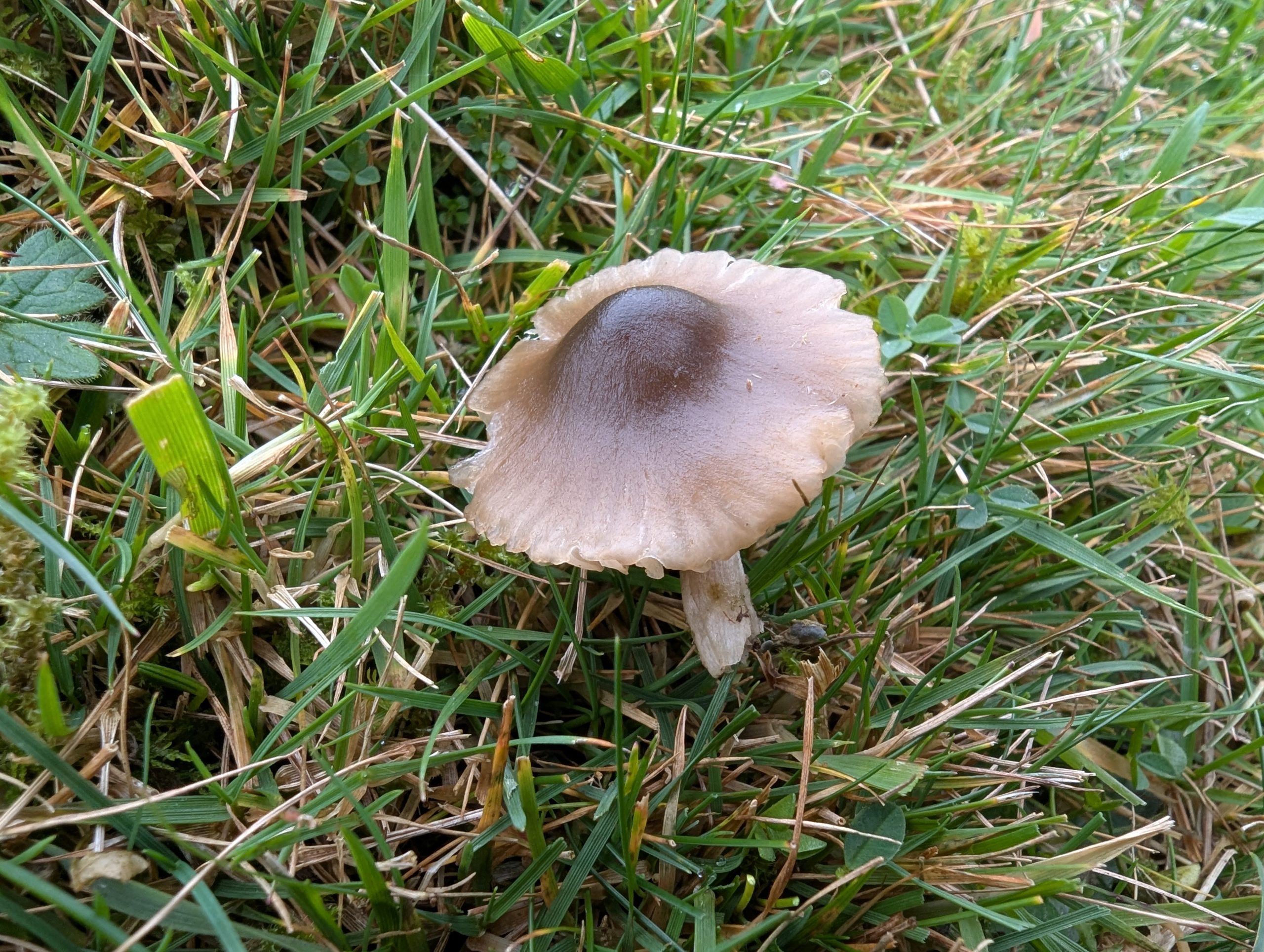
Entoloma turbidum, Linford Barrows Earth Rings. Found by Chris Stretch
Entoloma viiduense
A second Irish record, first found on Ballygalley Head in 2023. This was found at Binevenagh on the first training course right near the entrance gate. It is a noticeably scaly capped species that browns with age and with a polished blue stipe. I think that I have misidentified this in the past and it may not be uncommon. I think this is an older specimen with the scales less pronounced and the cap browner than illustrated in Field Mycology in Feb 2022.
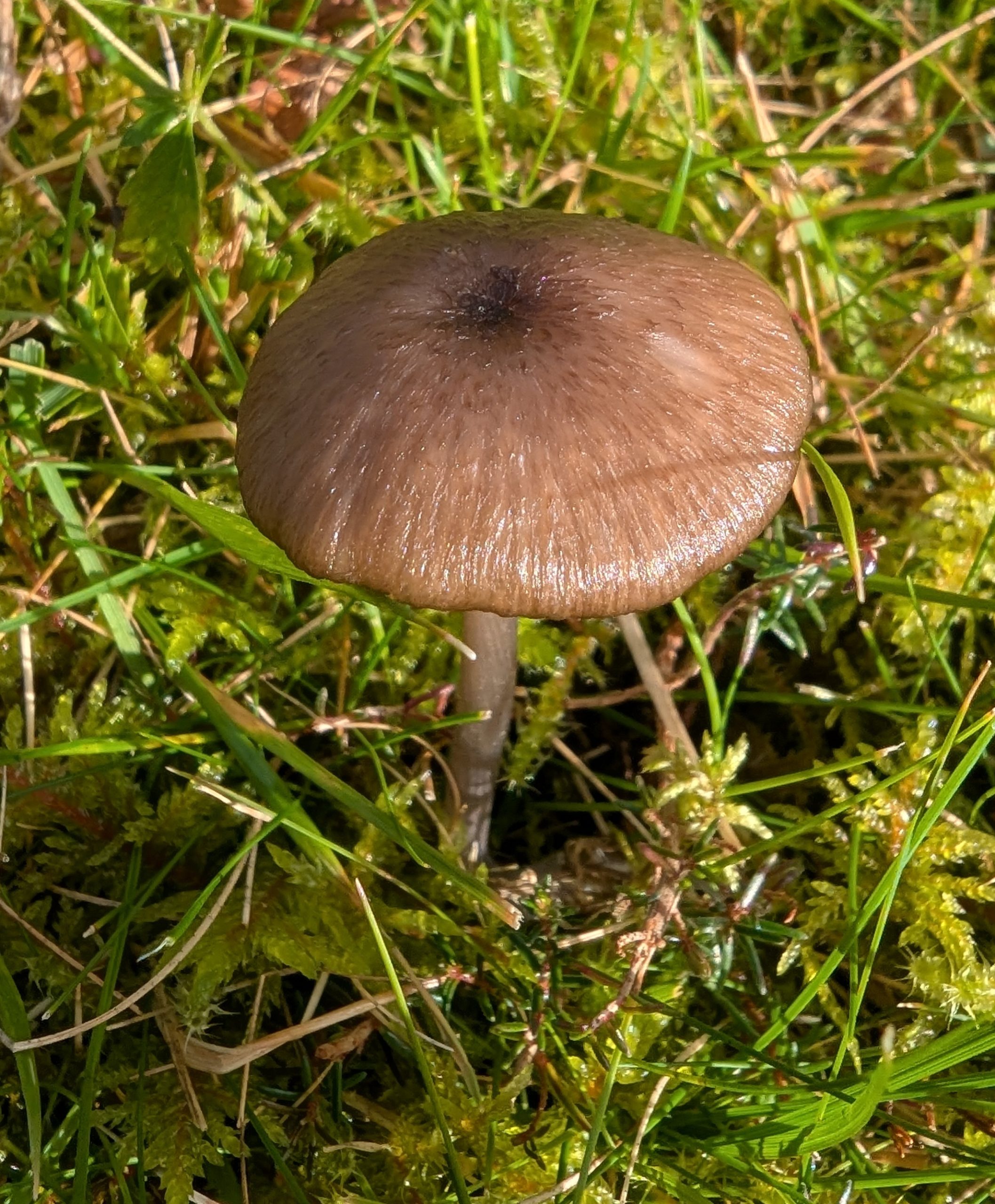
Entoloma viiduense, Binevenagh