Agaricus cf. vinosobrunneus
This Agaricus was found on Kebble by Jolanda. We are going to have to look at these dark grassland Agaricus species more carefully. We have found Agaricus sylvaticus in grassland before that redden significantly when sliced but these may also have to be checked. I have recorded a number of Agaricus impudicus on waxcap grassland sites before where they do not redden or yellow when sliced and with small spores but these are under question now. I’ve struggled a bit getting a good sequence from these but this one finally produced a good clean sequence. It came out nearest to a number of sequences labelled “Agaricus sp.” from Mexico on GenBank and UNITE but not near to impudicus. After a bit of googling, I found that these sequences were used in a paper describing Agaricus cervinoculus in Mexico and this sequence was a 99.28% match to the type. Sharing with others, David Harries in Wales had an identical sequence and Geoff Kibby suggested that we contact Luis Parra in Spain who wrote the Fungi Europaei volume on Agaricus. Luis responded very quickly as our sequences match a species that he is working on with collections from Spain and Italy. He thinks it is the same as Agaricus vinosobrunneus which was originally described by Peter Orton in England. It is now down as a synonym of Agaricus sylvaticus on Species Fungorum but if Luis is correct, it will be split out as a good species. Hence this is a “cf.” for now. Until this species is re-described, it is unclear as to what macro and micro features to look out for. Peter Orton’s original description says that it reddens especially at the top of the stipe but I have not observed that with it appearing to have no colour change.
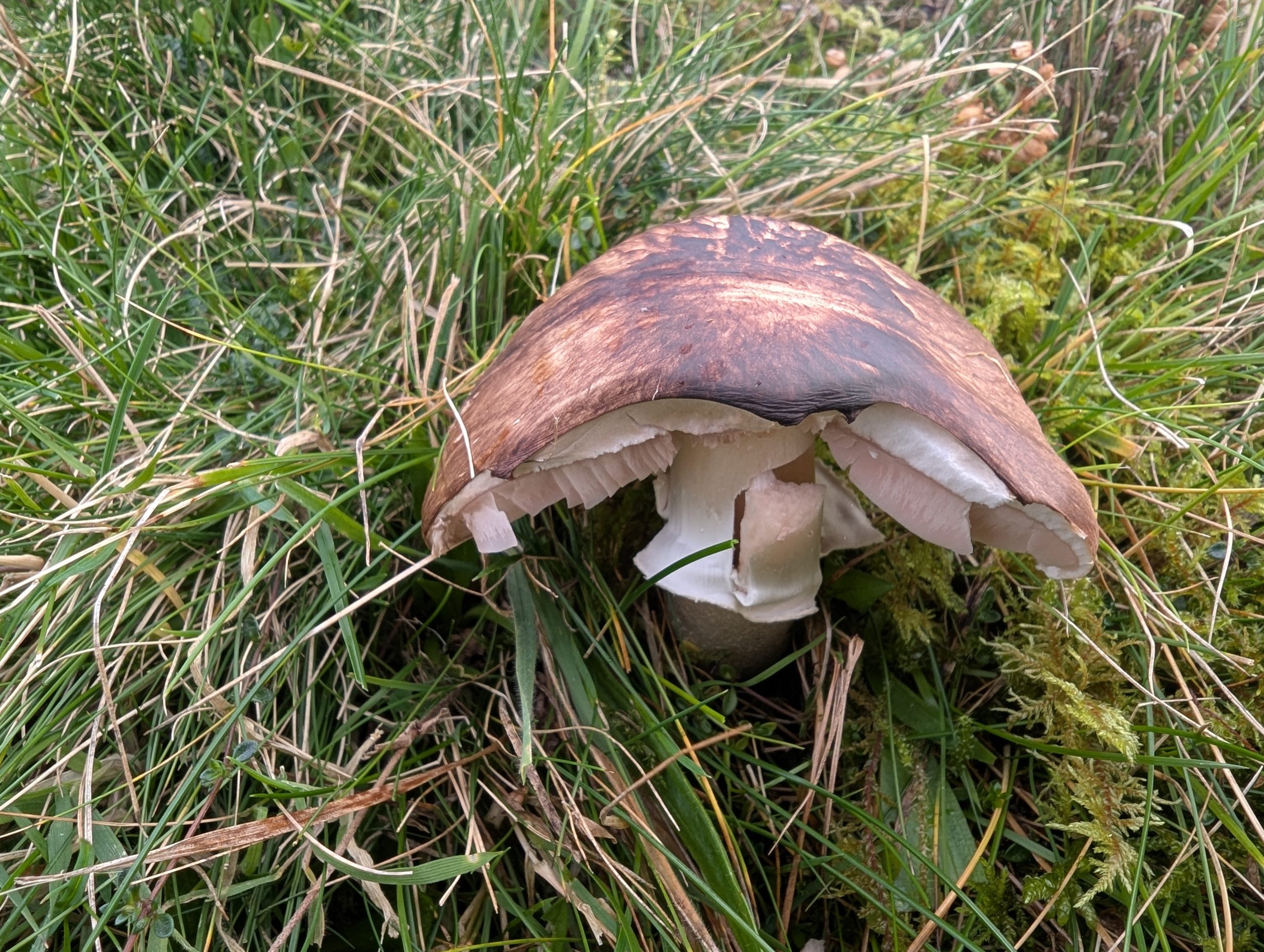
Agaricus cf. vinosobrunneus, Kebble NNR, Rathlin Island
Arrhenia cupulatoides
This is a tiny Arrhenia fruiting out of a Peltigerina lichen. This used to be known as Arrhenia peltigerina but sequencing revealed seven different clades. Two species which have been found in the British Isles – Arrhenia cupulatoides and Arrhenia mohniensis. The two are differentiated by subtle differences in spore sizes and sequencing really helps to differentiate them. One find by Jolanda Smit, from Dungiven Church of Ireland and a second by Chris Stretch at Linford Barrows. A new Irish record.
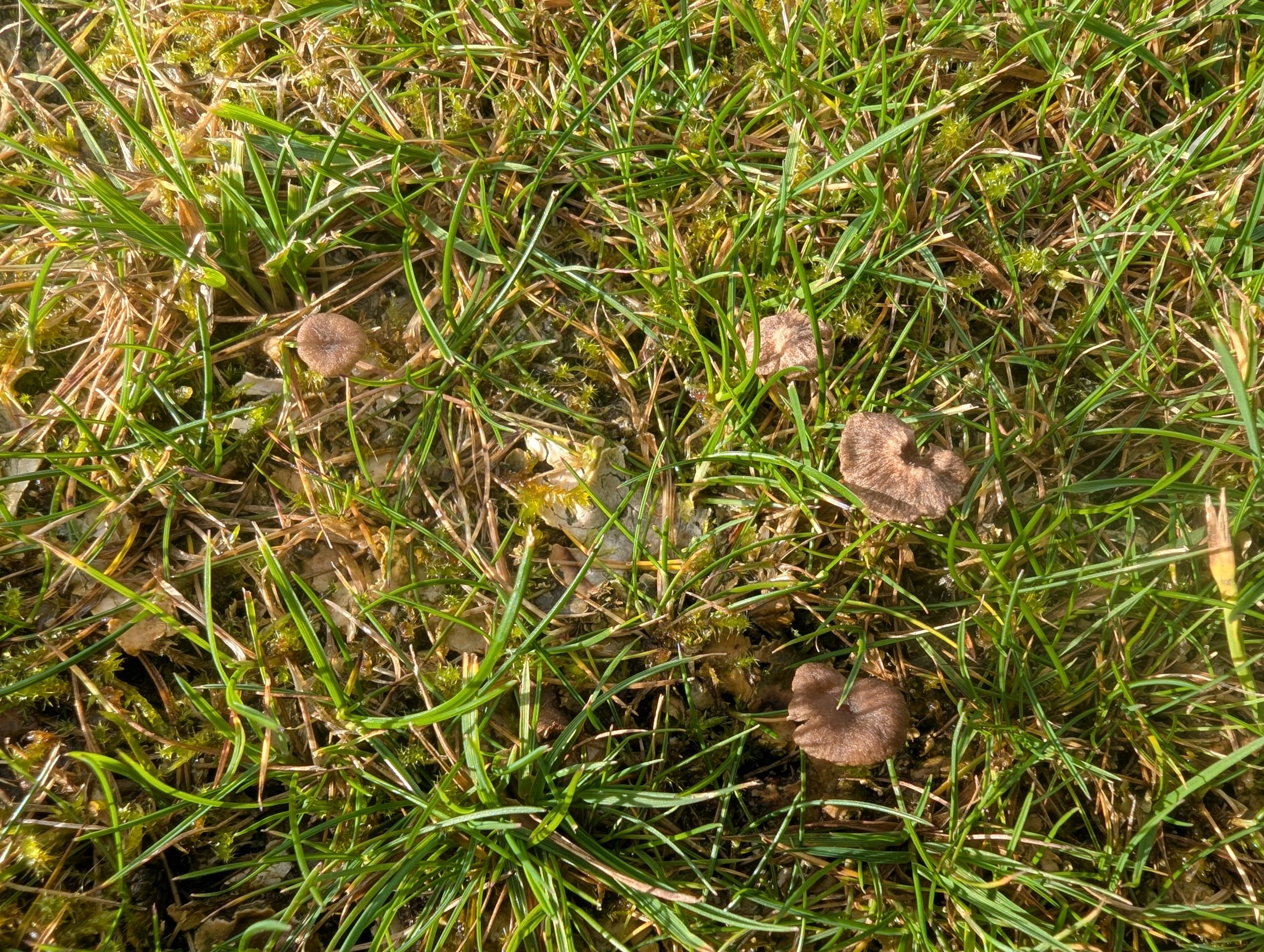
Arrhenia cupulatoides, Dungiven Church of Ireland. You can see the Dog Lichen in the grass
Calocybe gangraenosa
This is a very distinctive large blackening species. It used to be in Lyophyllum but now resides in Calocybe. Only the third record that we know of from Ireland only being recorded before from Galboly ASSI in Antrim and Florencecourt in Fermanagh. Found on the Curragh. by Patrick Mitchel.
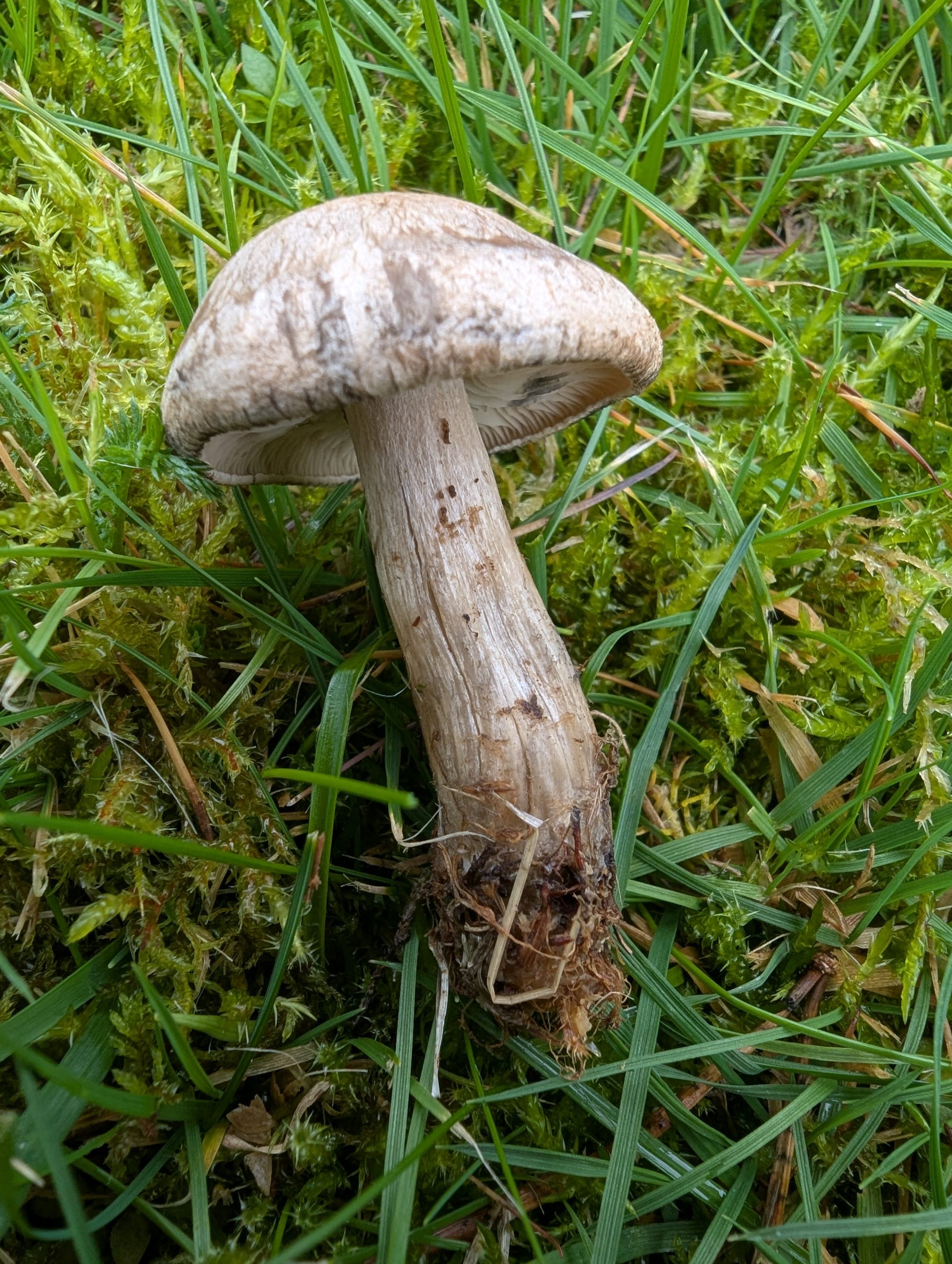
Calocybe gangreanosa, The Curragh
Dissoderma paradoxum
This spectacular fungus parasitises Cystoderma amianthinum and instead of the normal Cystoderma cap, something different appears bursting out of the stipe. Robert noticed these when looking at fungi with a UV torch and bizarrely spotted caps that fluoresced in UV but the stipes did not! What an incredible way to make a second Irish sighting of this incredible species. The only other site is Altnahinch Dam found in 2003. Previously called Squamanita paradoxa.
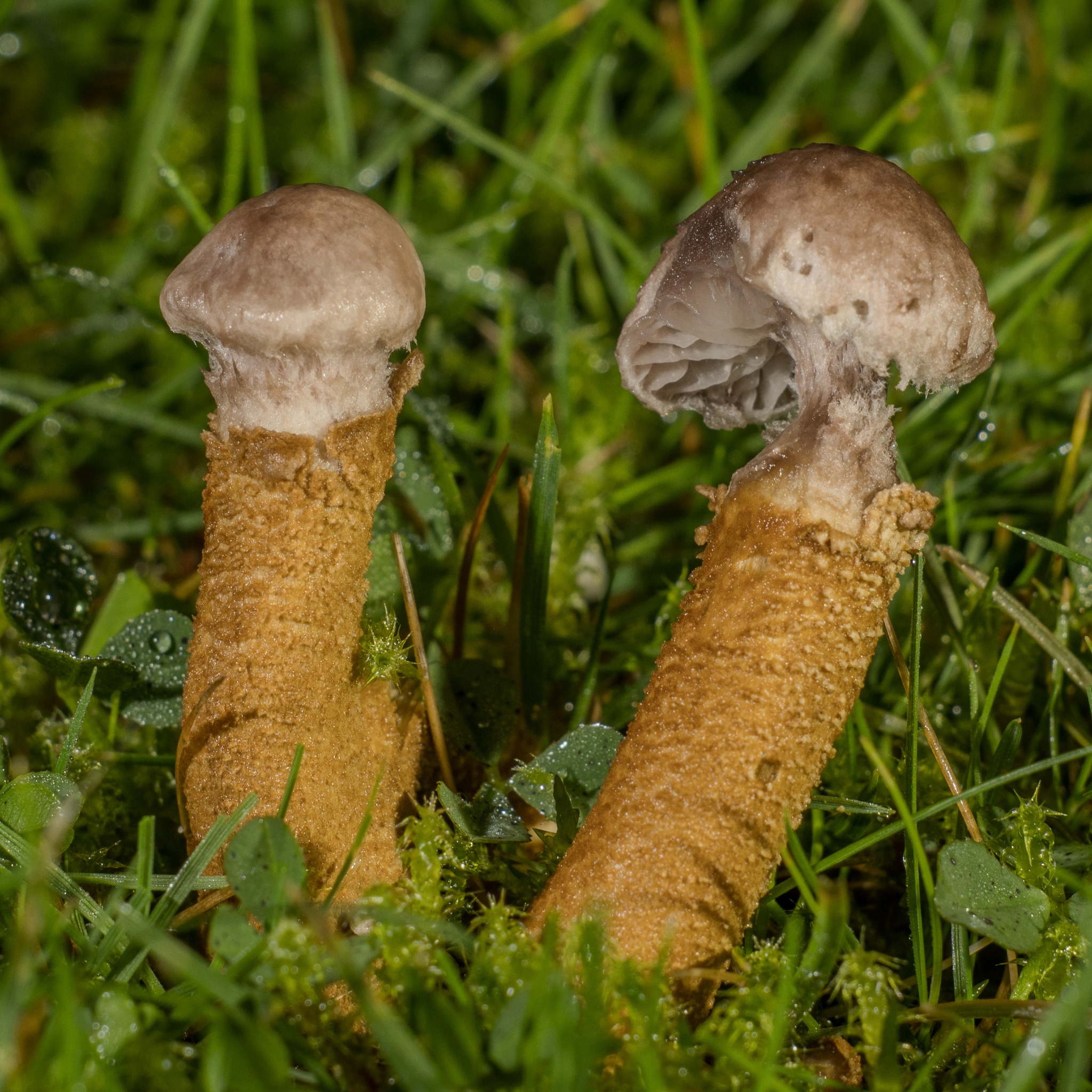
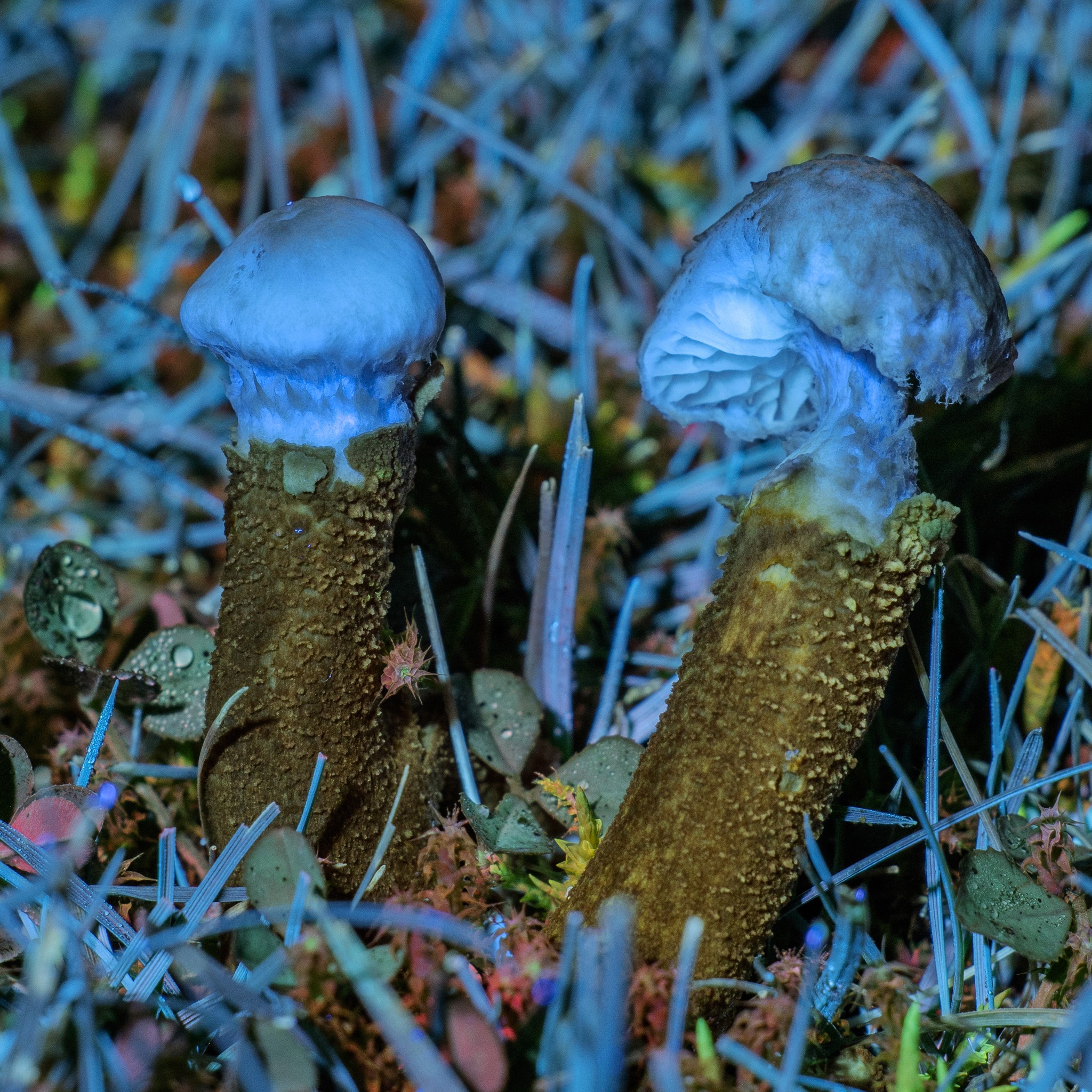
Dissoderma paradoxum, Castle Park, Bangor. Photos by Robert Cobain. The second photo is in UV light
Lyophyllum sp.
Puzzling microscopically and puzzling molecularly. Found on Ballycoos Hill by Chris Stretch. I thought in the field it could be a Mycena but the microscope said otherwise. It only comes close to one other sequence on GenBank to a specimen labelled Lyophyllum sp. A recent paper by Bellanger et al on the Lyophyllaceae puts this sequence in a clade which includes species of Lyophyllum, Clitocybe, Tephrocybe and Hypsizygus – a real hotch potch. This unnamed species is in a subclade all by itself. I will upload it to GenBank as “Lyophyllum sp.” so hopefully the sequence can be picked up by future researchers.
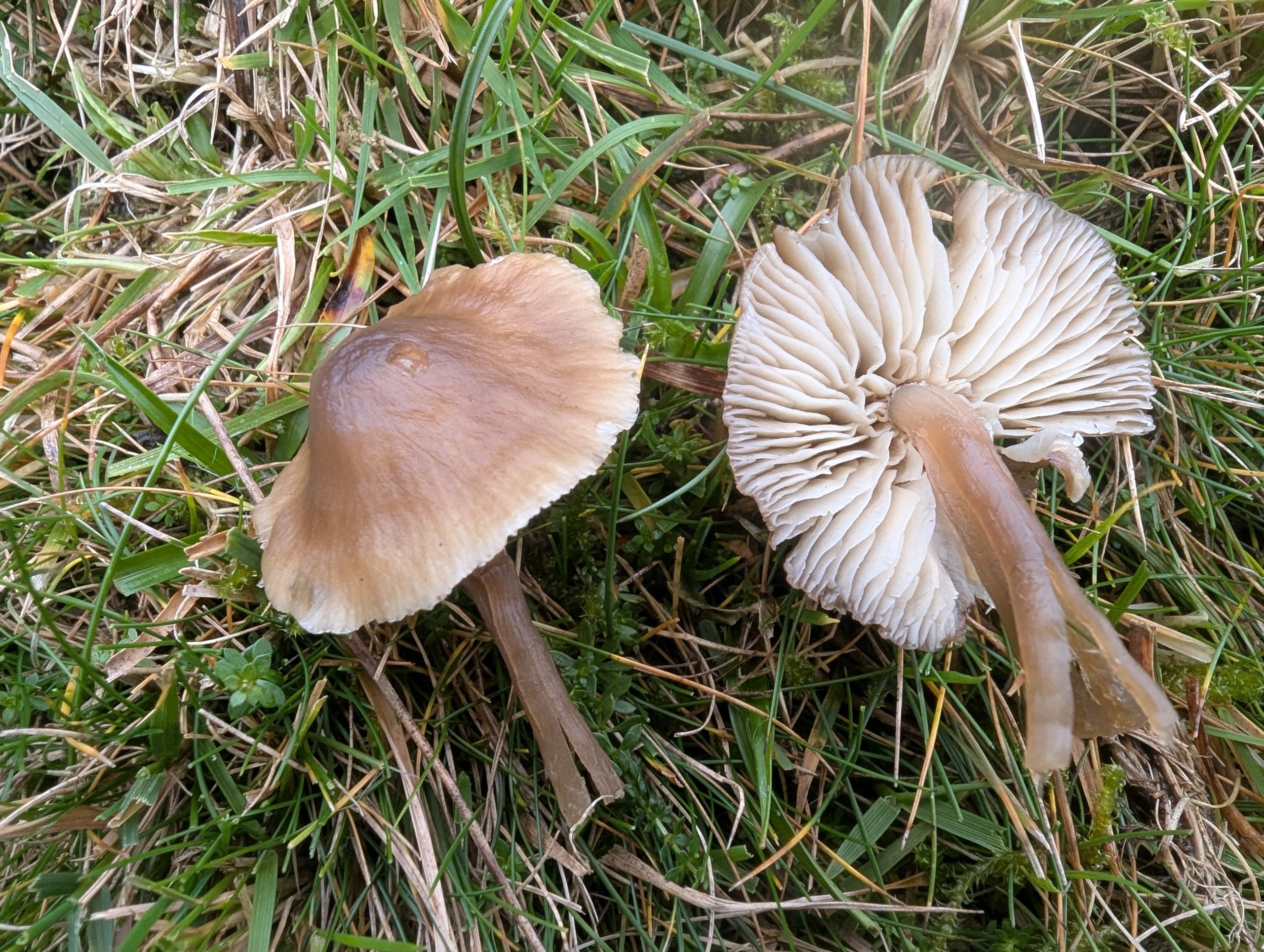
Lyophyllum sp., Ballycoos Hill
Mycopan scabripes
This one was a surprise as I had never heard of it before. It has been a Mycena before as well as a Hydropus but now it is the only species in the genus of Mycopan. I thought at the time that I may have had Camarophyllopsis atrovelutina but that was not to be. The books say it is a woodland species but on both sites, there was not a tree to be seen. Found at Cushleake Sluggan Burn and Ballycoos Hill. A first Irish record. There are about 29 records on the FRDBI for GB but this is the most northerly record.
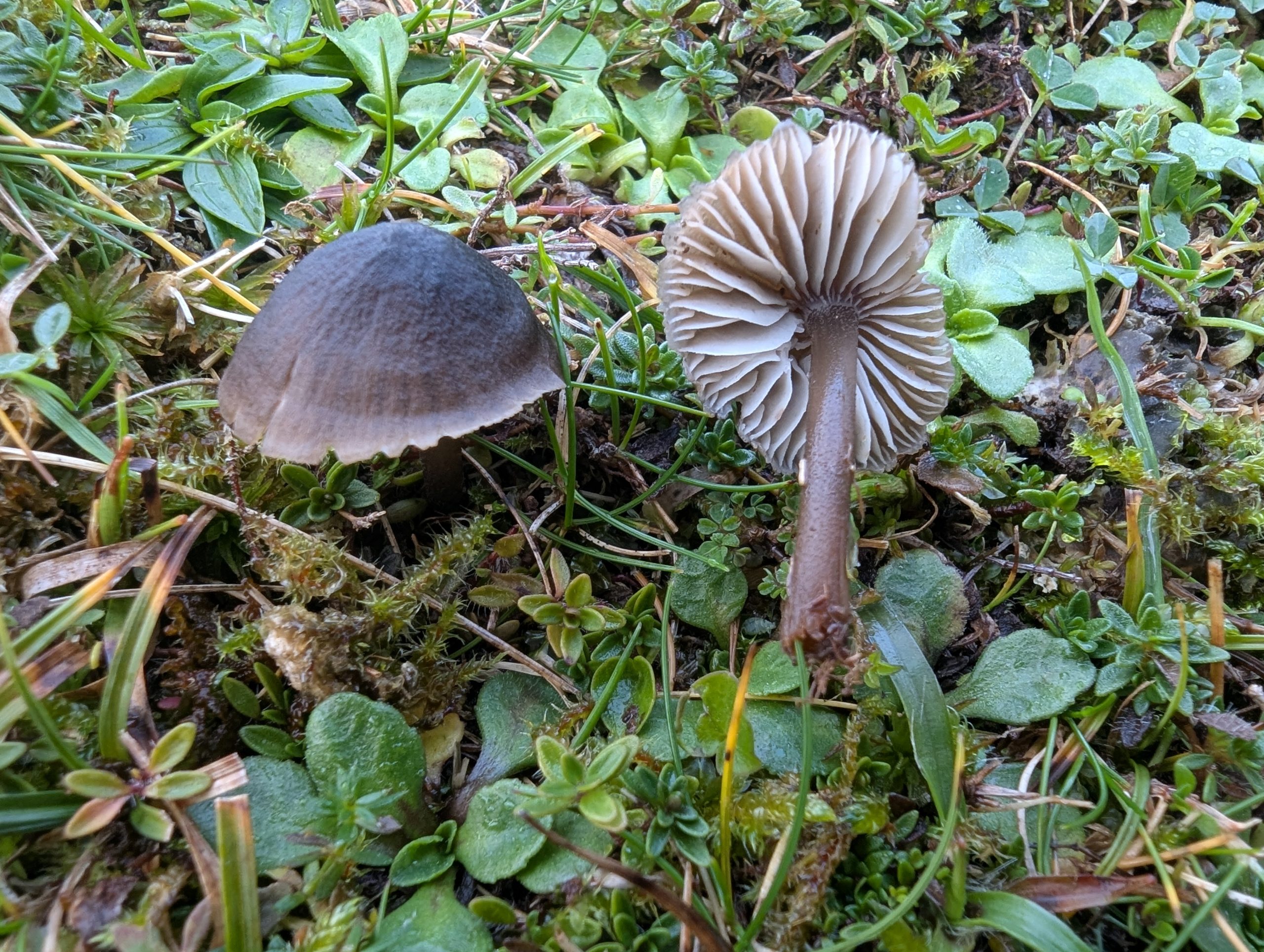
Mycopan scabripes, Cushleake Mountain
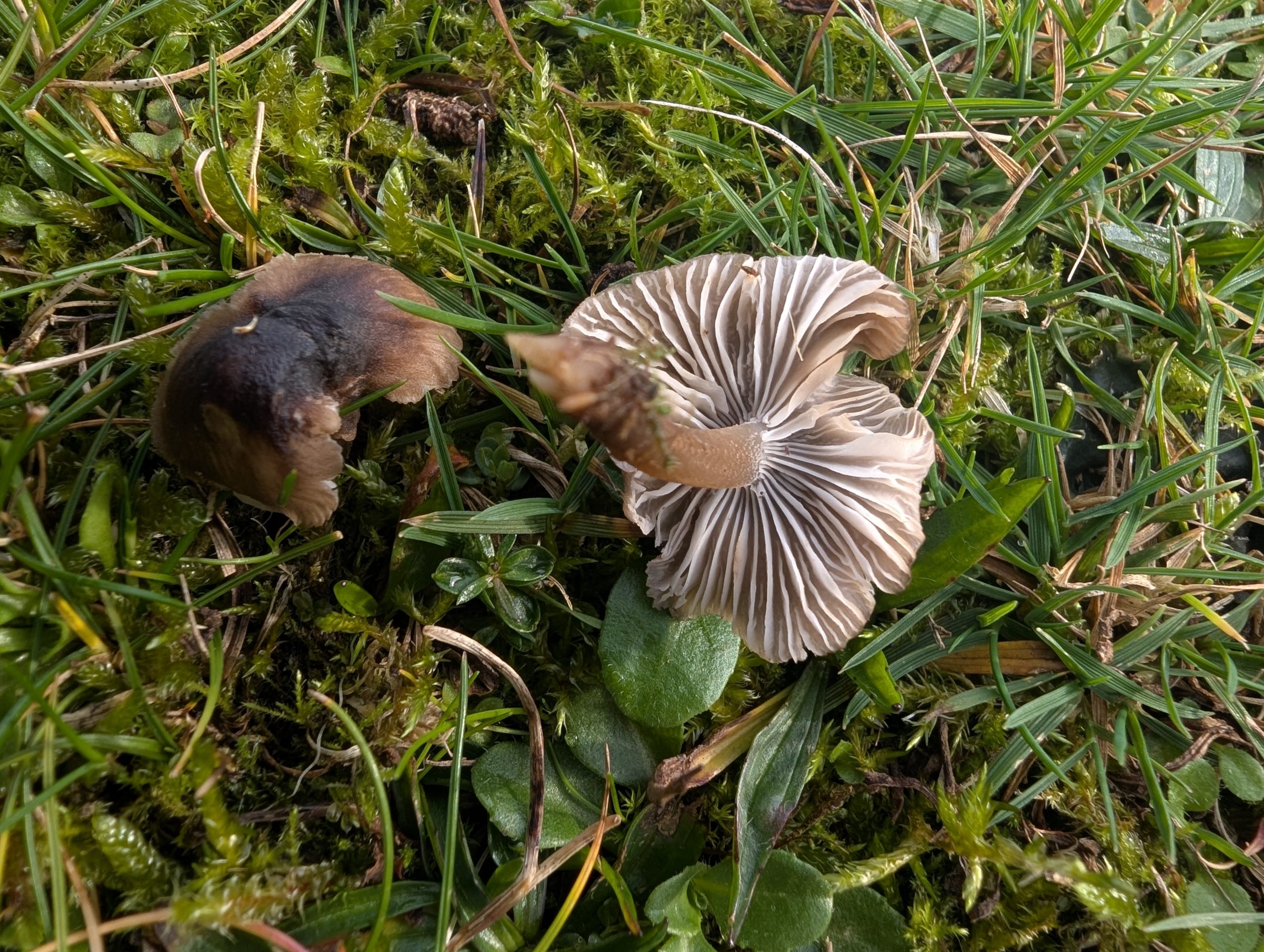
Mycopan scabripes, Linford Barrows Earth Rings
Pseudoomphalina sp.
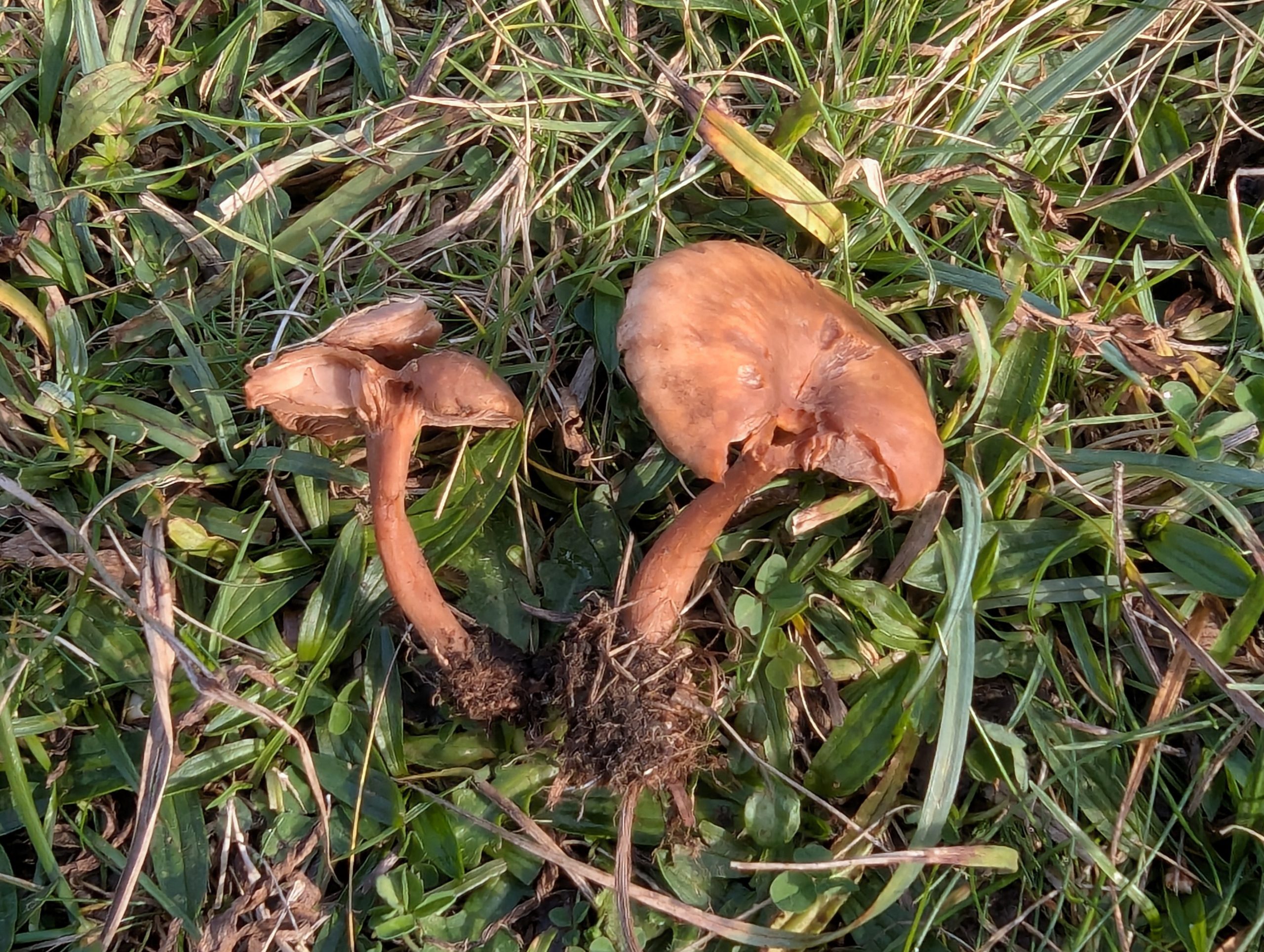
Pseudoomphalina sp. , Kebble NNR, Rathlin Island
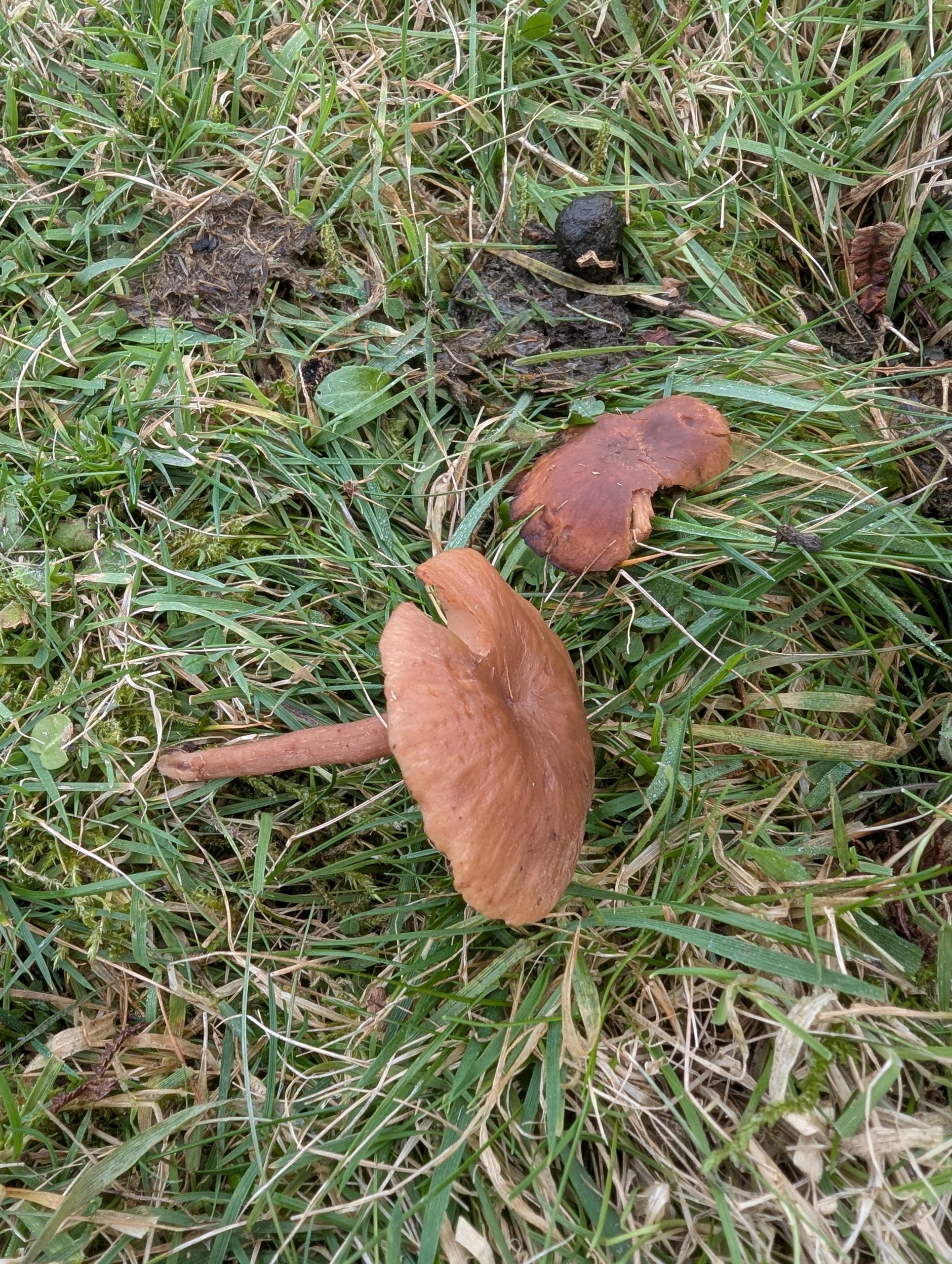
Pseudoomphalina sp. , Roonivoolin, Rathlin Island
Volvariella similis
A first British Isles record and yet another notable find from the Curragh. This grassland species was only described in Denmark in 2024 and, until now, was only known from there. A very silky pale cap with a pubescent stipe and a brownish volva at the base of the stipe. The gills were white when fresh but are orangey pink when dried. Typical of Volvariella, with large smooth pink spores. Two finds, one by Patrick Mitchel and one by Mo Rainey both just outside the military graveyard on the Curragh. I have no idea who had the first record so both can have the honour.
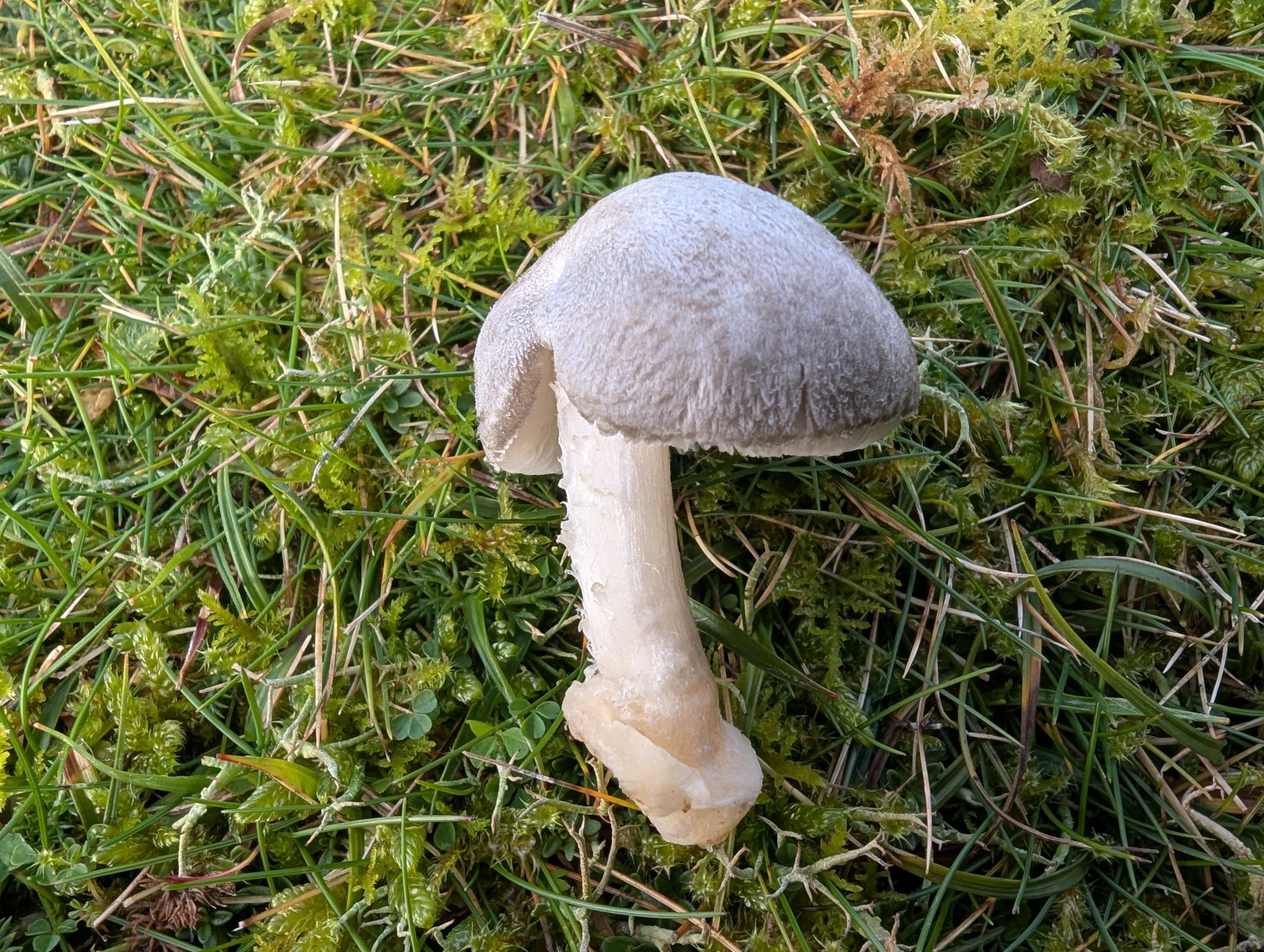
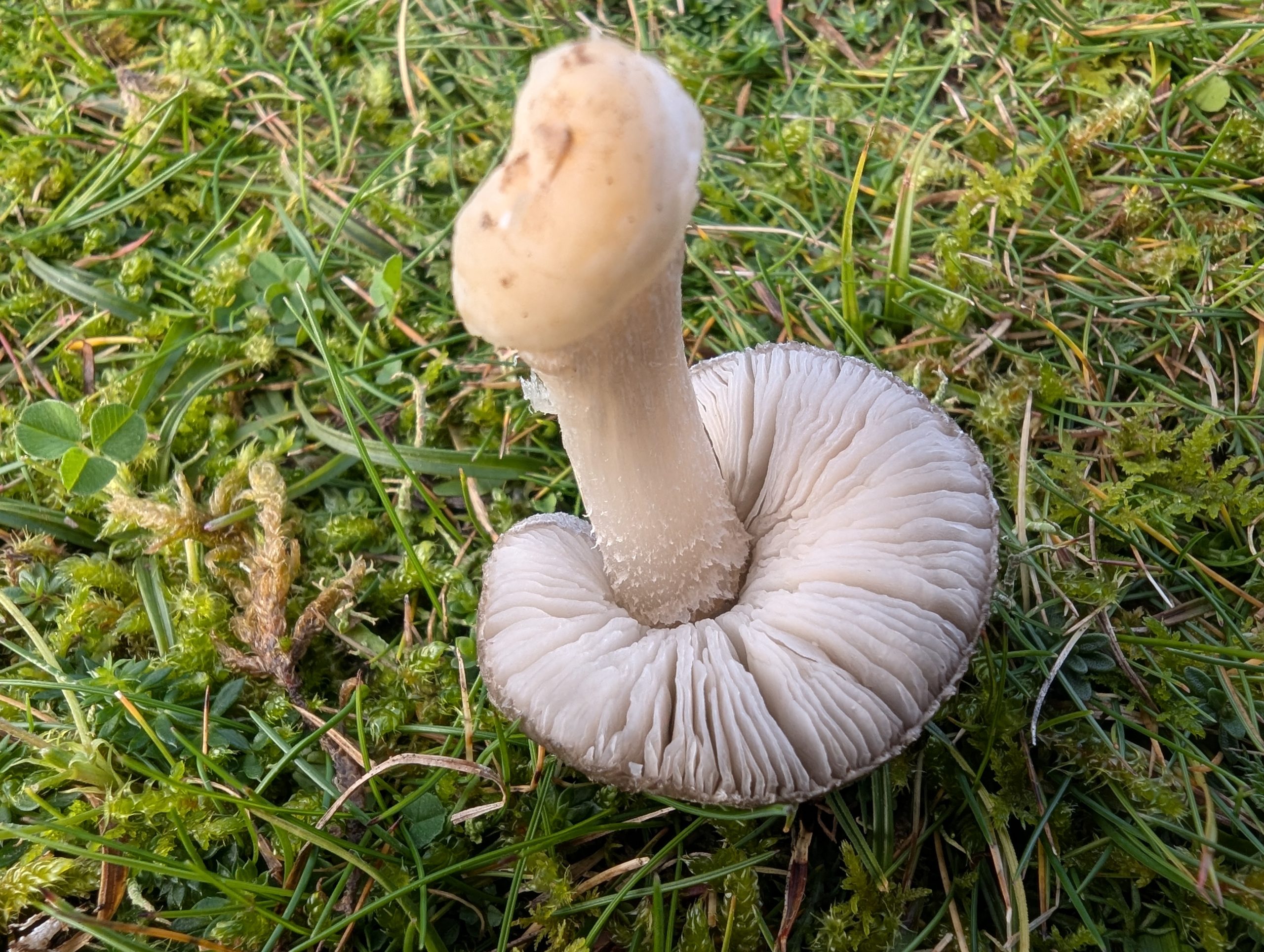
Volvariella similis, The Curragh